Please wait a minute...
科技与出版  2025, Vol. 44 Issue (1): 48-60    
特别策划·从“十四五”到“十五五”:出版业的转型与升级
中国科技期刊“十四五”提升路径与“十五五”战略创新思考
林润华1,张昕2,*,李娜1,卫夏雯1
1. 科技导报社,100081,北京
2. 中国高校科技期刊研究会,100083,北京
The Path to Improvement of Scientific Journals of China during the 14th Five-Year Plan Period and Strategic Innovation for the 15th Five-Year Plan
LIN Runhua1,ZHANG Xin2,*,LI Na1,WEI Xiawen1
1. Science and Technology Review Publishing House, 100081, Beijing, China
2. Society of China University Journals, 100089, Beijing, China
全文: HTML    PDF(1894 KB)  
输出: BibTeX | EndNote (RIS)      
摘要: 

迈向世界一流科技期刊是提升国家科技竞争力和文化软实力的重要战略目标,文章系统梳理了中国科技期刊在“十四五”期间取得的主要进展与成就,包括政策支持、重点项目实施、引证指标提升和办刊模式创新等方面的成果;深入分析了“十四五”期间科技期刊面临的高水平期刊数量不足、国际影响力提升受阻、人才与运营支撑薄弱、资源分散与集群化程度低等问题和关键挑战;面向“十五五”发展新格局,展望了中国科技期刊在全球科技发展、数字化出版、政策支持及市场竞争等方面的趋势和发展机遇,为“十五五”期间中国科技期刊高质量发展规划提供参考。

关键词 中国科技期刊“十四五”“十五五”提升路径出版创新    
Abstract

Striving for world-class scientific journals is a critical strategic objective to enhance national scientific competitiveness and cultural soft power, as well as a key initiative to build China into a global technological powerhouse. Scientific journals, as essential platforms for knowledge dissemination and academic exchange, are entrusted with the mission of aggregating research outputs, facilitating academic communication, and advancing scientific progress. This paper systematically reviews the major progress and achievements of scientific journals of China during the 14th Five-Year Plan period, including policy support, implementation of key projects, improvements in citation metrics, and innovations in publishing models. Concurrently, it delves into the multiple challenges faced by scientific journals during this period. First, the number of high-quality journals remains insufficient to meet the rapidly growing demand for publishing scientific findings, causing many high-caliber papers to be submitted to international journals. Second, efforts to enhance international impact have been hindered, as scientific journals of China lag behind top-tier global journals in terms of paper impact, citation frequency, and recognition within the international academic community. Third, there is a lack of support in terms of talent and operations, with a shortage of skilled editors and technical personnel, and inadequate capabilities in digital publishing and operations. Fourth, publishing resources are fragmented, and clustering remains underdeveloped, hindering the formation of globally competitive publishing ecosystems. In light of the new development landscape under the 15th Five-Year Plan, this paper identifies several persistent challenges, such as small journal scale, insufficient capacity to accommodate scientific output, scattered and weak publishing units, a lack of high-impact journals, limited capacity to publish high-quality research, incomplete tiered journal development, low open access levels, and a shortage of top-tier editorial talent. It proposes measures to optimize the disciplinary layout of scientific journals, emphasize the development of foundational science journals, leverage AI technologies to enable the high-quality development of Chinese-language journals, accelerate the digital transformation of scientific journals, and expedite the clustering process. This paper further explores trends and opportunities for scientific journals of China in global scientific development, digital publishing, policy support, and market competition. It highlights three key strategies: The widespread application of digital and intelligent technologies provides robust support for the comprehensive digital transformation of journals, revolutionizing content production, dissemination, and service models through smart tools and big data. Sustained government efforts in policy support, funding, and intellectual property protection inject strong momentum into the high-quality development of scientific journals. Evolving market demands and improvements in academic evaluation systems offer new opportunities for domestic scientific journals to expand their global influence. Furthermore, the paper envisions that scientific journals of China will occupy a more prominent position in global academic competition, gradually becoming vital drivers of international scientific innovation. In the context of emerging new quality productive forces, the publishing industry is undergoing accelerated transformation, characterized by advancements in labor, tools, and production materials. Scientific journals of China are set to fully embrace internationalization, digitization, clustering, and intelligent development, thereby strengthening their voice and impact in the global academic community, promoting the publication and international dissemination of high-quality domestic research, and aligning with the demands of global scientific competition and technological innovation.

Key wordsscientific and technical journals of China    14th Five-Year Plan    15th Five-Year Plan    enhancement path    publication innovation
出版日期: 2025-03-12
基金资助:2024年首都科技期刊卓越行动计划“北京科技期刊建设”调研项目
通讯作者: 张昕   
Corresponding author: Xin ZHANG   

引用本文:

林润华,张昕,李娜,卫夏雯. 中国科技期刊“十四五”提升路径与“十五五”战略创新思考[J]. 科技与出版, 2025, 44(1): 48-60.
LIN Runhua,ZHANG Xin,LI Na,WEI Xiawen. The Path to Improvement of Scientific Journals of China during the 14th Five-Year Plan Period and Strategic Innovation for the 15th Five-Year Plan. Science-Technology & Publication, 2025, 44(1): 48-60.

链接本文:

http://kjycb.tsinghuajournals.com/CN/      或      http://kjycb.tsinghuajournals.com/CN/Y2025/V44/I1/48

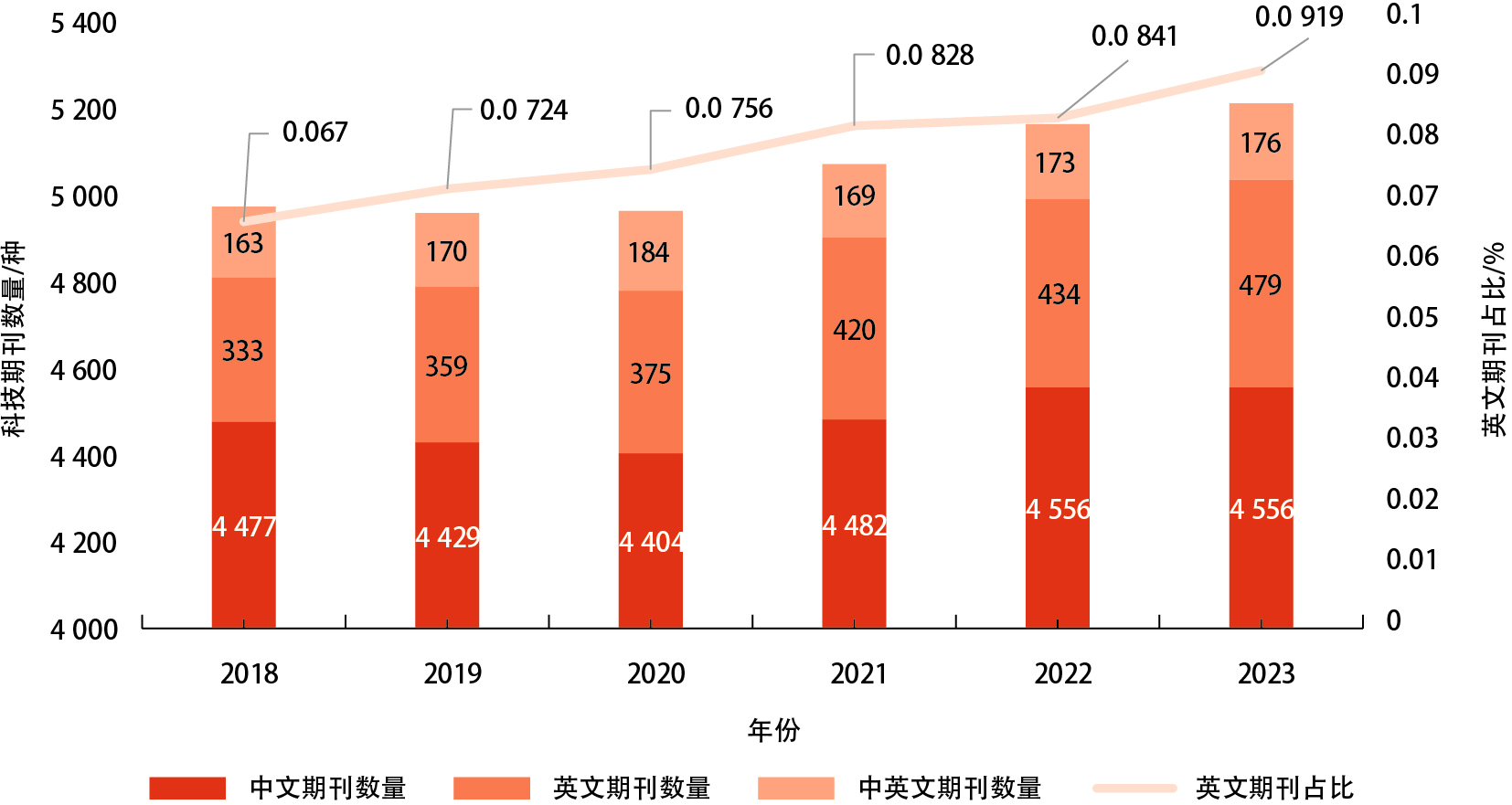
图 1  2018—2023年中国科技期刊数量变化
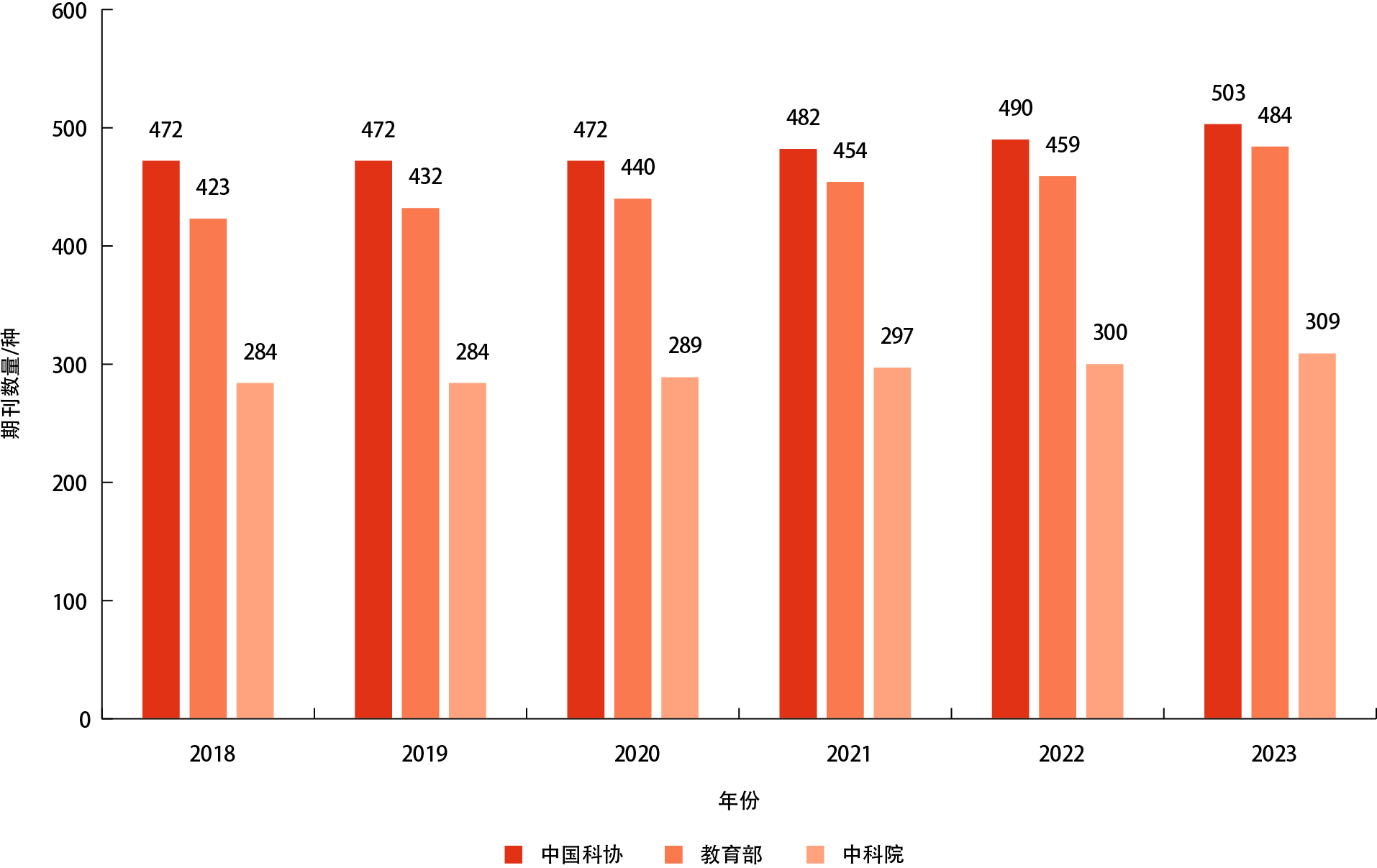
图 2  2018—2023年三大期刊部门主管期刊数量变化
表 1  国家层面、地方层面的期刊支持政策梳理
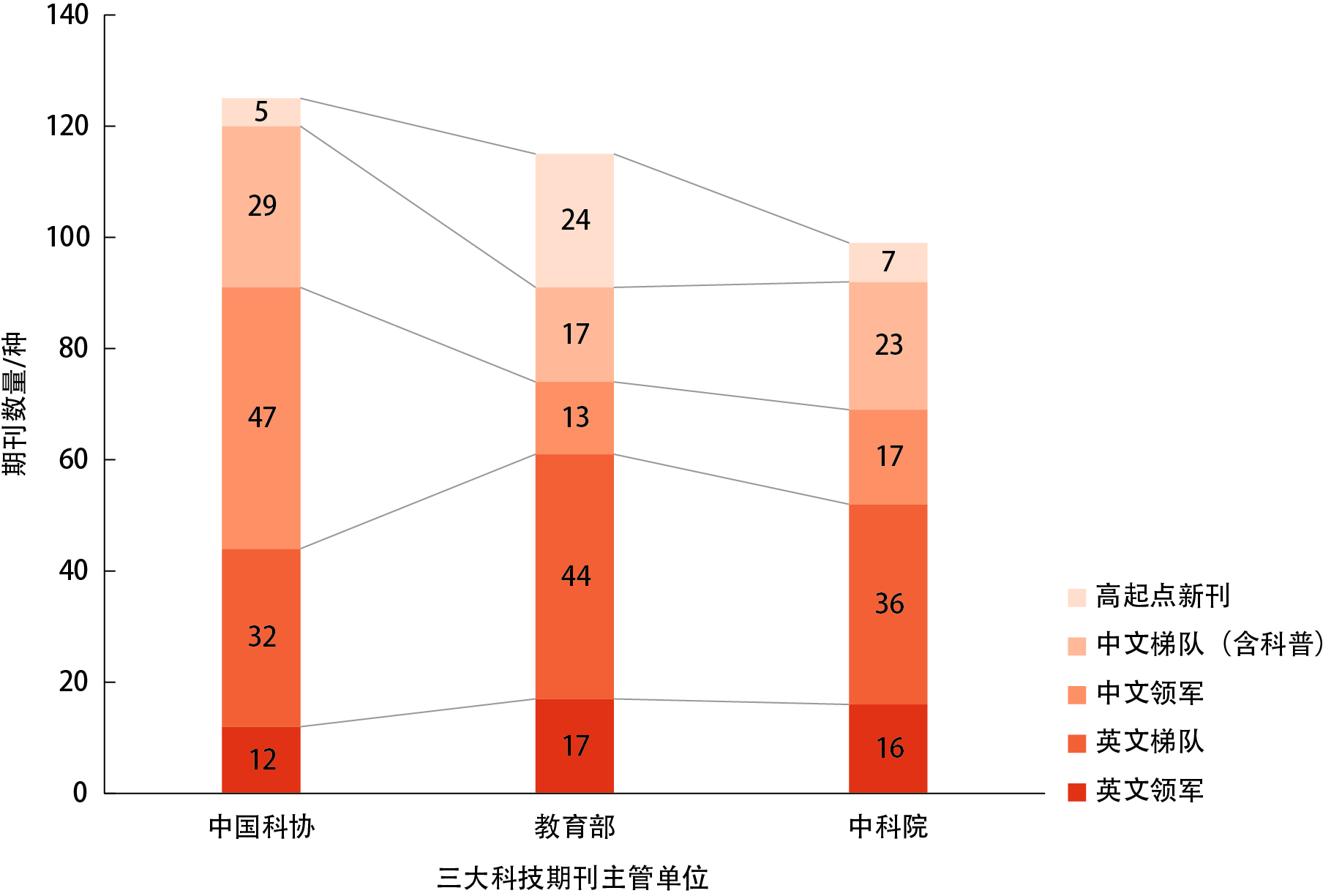
图 3  “中国科技期刊卓越行动计划”二期项目入围期刊的主管单位统计
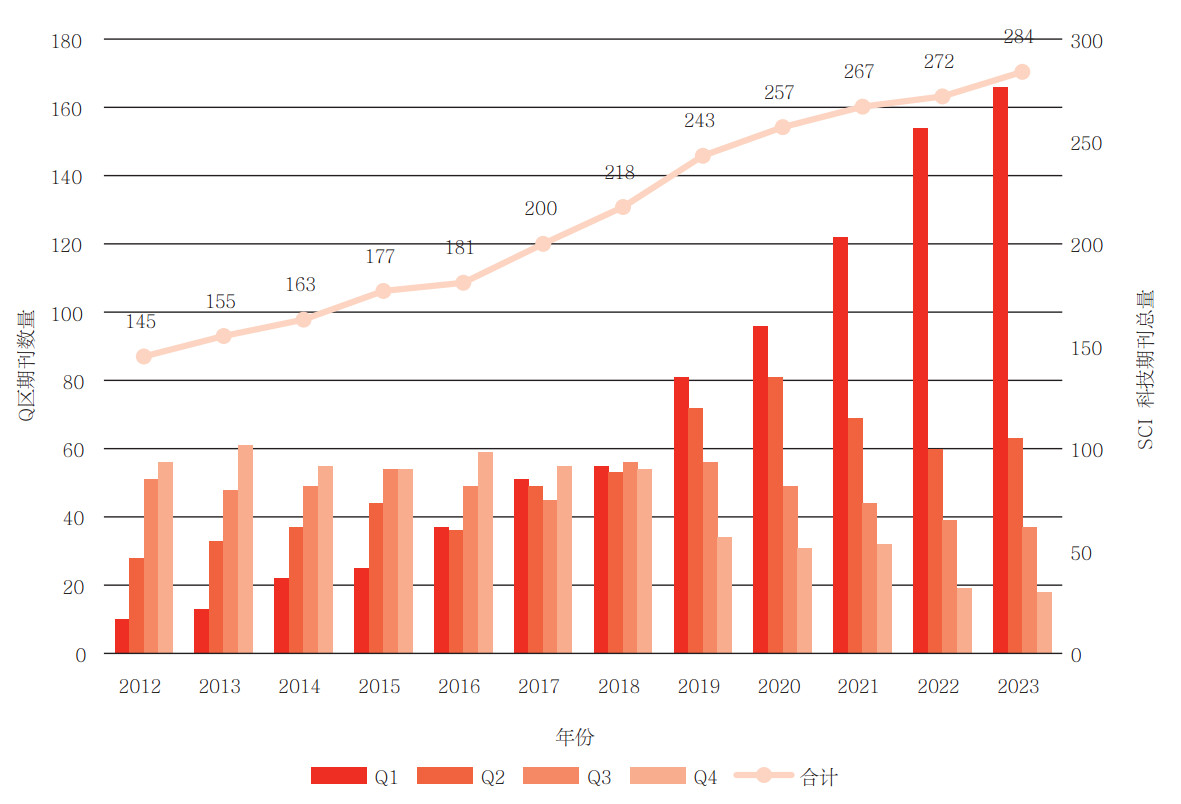
图 4  2018—2023年SCI收录中国期刊数量统计及分区变化
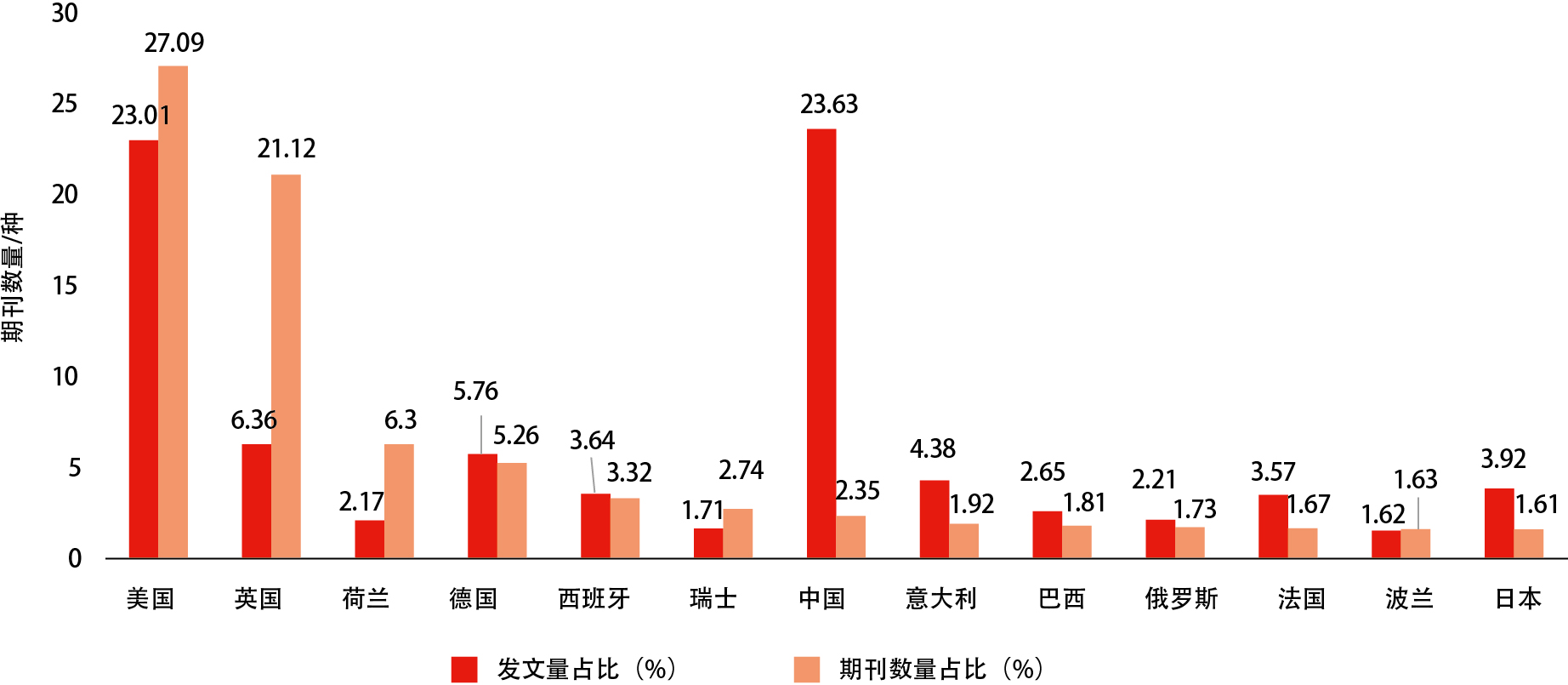
图 5  2023年不同国家SCI期刊数量及发表论文数量全球占比
(注:图中的中国数据,未包含港澳台地区的数据)
1 朱作言, 梅宏, 刘徽, 等. 新时代中国科技期刊出版的机遇与挑战[J]. 科学通报, 2022 (3): 221- 230.
2 喻思南. 加快培育世界一流科技期刊[N]. 人民日报,2024-07-29(19).
3 习近平. 加强基础研究实现高水平科技自立自强[J/OL].(2023-08-01)[2024-11-15]. 求是,2023(15),http://www.qstheory.cn/dukan/qs/2014/2023-08/01/c_1129776378.htm.
4 全国科技大会国家科学技术奖励大会两院院士大会在京召开习近平为国家最高科学技术奖获得者等颁奖并发表重要讲话.(2024-06-24)[2024-11-17]. https://www.gov.cn/yaowen/liebiao/202406/content_6959088.htm.
5 中共中央关于进一步全面深化改革推进中国式现代化的决定[EB/OL].(2024-07-21)[2024-11-20]. https://www.gov.cn/zhengce/202407/content_6963770.htm.
6 科睿唯安发布2024年度《期刊引证报告》(JCRTM)[EB/OL].(2024-06-20)[2024-11-17]. https://jcr.clarivate.com/jcr/home?app=jcr&Init=Yes&authCode=null&SrcApp=IC2LS.
7 乌利希国际连续出版物指南(Ulrich's Periodicals Directory)数据库[EB/OL]. [2024-11-17]. https://www.ulrichsweb.com/.
8 刘素贞, 张冰姿, 高媛, 等. 国际科技期刊发展趋势及启示[J]. 出版与印刷, 2023 (5): 73- 80.
9 中国科学技术信息研究所. 2024年中国科技核心期刊目录(自然科学卷)[M]. 北京: 科学技术文献出版社, 2024.
10 中国科学技术协会. 中国科技期刊发展蓝皮书(2018)[M]. 北京: 科学出版社, 2018.
11 中国科学技术协会. 中国科技期刊发展蓝皮书(2019)[M]. 北京: 科学出版社, 2019.
12 中国科学技术协会. 中国科技期刊发展蓝皮书(2020)[M]. 北京: 科学出版社, 2020.
13 中国科学技术协会. 中国科技期刊发展蓝皮书(2021)[M]. 北京: 科学出版社, 2021.
14 中国科学技术协会. 中国科技期刊发展蓝皮书(2022)[M]. 北京: 科学出版社, 2022.
15 中国科学技术协会. 中国科技期刊发展蓝皮书(2023)[M]. 北京: 科学出版社, 2023.
16 任胜利, 马峥, 严谨, 等. 机遇前所未有,挑战更加严峻:中国科技期刊“十三五”发展简述[J]. 科技与出版, 2020 (9): 26- 33.
17 四部门联合印发《关于深化改革培育世界一流科技期刊的意见》[EB/OL].(2019-08-16)[2024-11-01]. http://https://www.gov.cn/xinwen/2019-08/16/content_5421699.htm.
18 张泉.建设世界一流科技期刊七部门联合实施中国科技期刊卓越行动计划[EB/OL].(2019-09-20)[2024-11-01]. https://www.gov.cn/xinwen/2019-09/20/content_5431656.htm.
19 中宣部、教育部、科技部印发《关于推动学术期刊繁荣发展的意见》[EB/OL].(2019-08-16)[2024-11-01]. https://www.gov.cn/xinwen/2021-06/25/content_5620876.htm.
20 中共中央宣传部印发《关于推动出版深度融合发展的实施意见》[EB/OL].(2022-04-24)[2024-11-01]. https://www.gov.cn/xinwen/2022-04/24/content_5686923.htm.
21 沈湫莎. 三本期刊影响因子学科排名第一,上海科技期刊发展迈向更高质量[EB/OL].(2024-11-13)[2024-12-01]. https://www.whb.cn/commonDetail/957081.
22 中共广东省委宣传部,广东省科学技术厅. 关于发布《2020—2021年度广东省高水平科技期刊建设项目指南》的通知[EB/OL].(2021-09-10)[2024-12-01]. http://gdstc.gd.gov.cn/zwgk_n/tzgg/content/post_3516451.html.
23 雷嘉. 北京征集高水平国际科技期刊建设项目[N]. 北京青年报,2024-06-19(A05).
24 湖北省科学技术协会. 省科协关于开展湖北省科技期刊楚天卓越行动计划项目资助申报工作的通知[EB/OL].(2022-03-23)[2024-12-01]. http://www.hbessp.org.cn/view/231.html.
25 中国发表高水平国际期刊论文和被引用次数保持世界第一[EB/OL].(2024-09-20)[2024-12-01]. https://cn.chinadaily.com.cn/a/202409/20/WS66ed31b5a310a792b3abd2de.html.
26 中国科技期刊卓越行动计划二期入选项目公布[EB/OL].(2024-11-28)[2024-12-05]. https://www.cast.org.cn/xw/tzgg/KJCX/art/2024/art_81a8a2cc3e7846c98a3b668721f68082.html.
27 张维, 冷怀明, 王治, 等. 国内重点科技期刊群集约化管理和运营模式研究[J]. 出版发行研究, 2022 (12): 52- 57.
28 金轩. 健全推动经济高质量发展体制机制加快发展新质生产力[EB/OL].(2024-11-26)[2024-12-05]. https://www.gov.cn/yaowen/liebiao/202411/content_6989351.htm.
[1] 汤雪梅,杨春兰,杨玥涵. “十四五”时期中国出版业的回顾与思考[J]. 科技与出版, 2025, 44(1): 6-16.
[2] 周蔚华,熊小明. 主题出版“十四五”回顾与“十五五”展望[J]. 科技与出版, 2025, 44(1): 27-38.
[3] 李文娟. “十四五”时期我国出版人才队伍建设回顾与“十五五”展望[J]. 科技与出版, 2025, 44(1): 39-47.
[4] 谢文鸿,潘永毅. 基于洋葱模型探究科技期刊编辑科研素养提升路径*[J]. 科技与出版, 2024, 43(7): 126-131.
[5] 王飚,毛文思. 2023年中国数字出版发展态势盘点及2024年发展展望[J]. 科技与出版, 2024, 43(3): 14-25.
[6] 骆筱秋,王晴. 高校科技期刊特色化发展路径探析*[J]. 科技与出版, 2023, 42(7): 120-124.
[7] 刘玉一. 高质量发展目标导向下总编辑做好“十四五”选题规划的思考[J]. 科技与出版, 2023, 42(3): 82-87.
[8] 王飚, 毛文思. 2022年我国数字出版发展态势盘点及2023年发展展望[J]. 科技与出版, 2023, 42(3): 6-19.
[9] 路娜. 编辑支撑出版创新发展:内在逻辑、现实困境与可行路径[J]. 科技与出版, 2023, 42(3): 129-133.
[10] 田莹,王娟,张海玲. “十四五”时期我国体育学术期刊发展路径探析[J]. 科技与出版, 2022, 41(9): 93-99.
[11] 刘普,孙婉婷. 关于“十四五”时期社科学术期刊的展望[J]. 科技与出版, 2022, 41(8): 30-37.
[12] 朱小妮, 赵玉山. 从“出版大国”到“出版强国”:新时代中国出版业的发展战略与路径规划*[J]. 科技与出版, 2022, 41(7): 52-62.
[13] 黄先蓉,陈馨怡. 加强现代出版市场体系建设提升出版物发行能力[J]. 科技与出版, 2022, 41(6): 23-29.
[14] 周蔚华,陈丹丹. 2021年中国出版融合发展报告*[J]. 科技与出版, 2022, 41(5): 60-69.
[15] 陈旭辉. “十四五”时期完善全民阅读地方立法的路径研究[J]. 科技与出版, 2022, 41(5): 125-131.