地方高校学报在迈向高质量发展的过程中,普遍面临定位模糊、内容同质化及与学科联动不足等现实困境。为破解这一难题,文章以特色专栏作为核心驱动,构建了“学报—专栏—学科”协同发展模型,阐述了专栏在推动地方高校学报质量提升中的关键作用,分析了专栏创设的驱动因素,提出了以知识整合、人才聚合、成果转化三大路径为核心的专栏创设路径,以期为地方高校学报突破现实困境、实现高质量发展提供兼具理论性和操作性的对策方案。
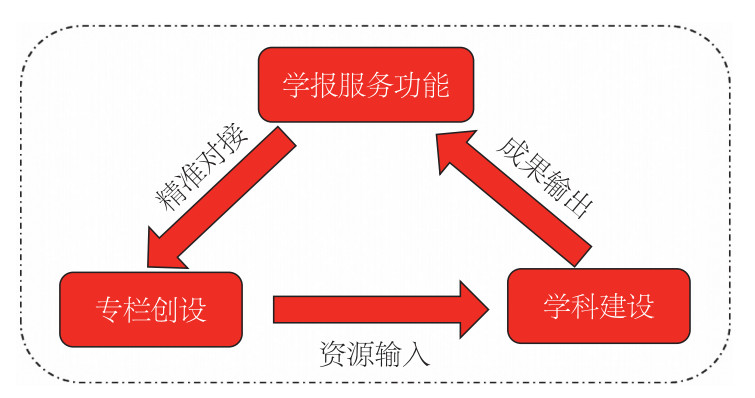
Local university journals in China are undergoing a critical transition toward high-quality development, yet they continue to face structural barriers that limit their capacity to support disciplinary advancement and fulfill institutional missions. This study identifies three major dilemmas currently impeding their development. First, a positioning dilemma persists as insufficient strategic attention from host institutions and vague quality-improvement objectives, resulting in unclear academic identities. Second, a content dilemma arises from serious homogenization across journal columns and an inadequate supply of high-quality submissions, which weakens journals’ distinctiveness and academic competitiveness. Third, a mechanism dilemma emerges due to the absence of effective intermediary platforms, causing misalignment between journal development goals and the evolving needs of their associated disciplines. Employing a mixed-methods research design—integrating comparative analysis of high-performing journals, content analysis of existing column structures, and case studies of successful column-centric practices, this study constructs a "journal-column-discipline" collaborative model. This model elucidates the structural logic of high-quality development: the journal serves as the central hub of knowledge dissemination, the column functions as a platform for thematic concentration, and the discipline provides the driving source of intellectual innovation. Within this framework, the establishment of specialized columns enables journals to integrate cutting-edge disciplinary findings, attract high-level academic communities, and ultimately reinforce a reciprocal feedback cycle between disciplinary growth and journal quality enhancement. The study further identifies three key drivers shaping the direction of column development: policy orientation, which requires aligning column themes with national strategies and institutional missions; demand-driven pressures, which emphasize grounding column planning in the concrete needs of distinctive academic disciplines; and endogenous motivation, which reflects journals’ efforts to build academic brands and strengthen core competitiveness. Building on these foundations, this study proposes three actionable pathways for advancing high-quality development. The knowledge integration pathway stresses the systematic consolidation of disciplinary knowledge and the promotion of interdisciplinary integration through well-designed column themes. The talent aggregation pathway highlights the role of columns in attracting and cultivating academic teams, forming a multilayered network of local scholars, institutional research groups, and domestic and international experts. The research-to-publication pathway underscores the importance of transforming disciplinary research outputs into impactful academic publications that contribute to regional cultural sustainability, industry–academia collaboration, and the enhancement of public cultural service systems. These pathways collectively generate new momentum for journal development and provide critical support for institutions seeking to elevate disciplinary influence. In conclusion, the establishment and sustained operation of specialized columns constitute an effective mechanism for overcoming developmental bottlenecks and achieving high-quality, distinctive advancement in local university journals. By promoting the “journal–column–discipline” collaborative model and implementing the pathways of knowledge integration, talent aggregation, and research-to-publication transformation, local university journals can establish a specialized and innovative trajectory that meaningfully contributes to scientific and cultural development.
李明. 专栏驱动:地方高校学报高质量发展的困境与突破路径[J]. 科技与出版, 2025, 44(11): 103-108. LI Ming. Column-Driven Strategies: Dilemmas and Breakthrough Pathways for High-Quality Development of Local University Journals. Science-Technology & Publication, 2025, 44(11): 103-108.
http://kjycb.tsinghuajournals.com/CN/ 或 http://kjycb.tsinghuajournals.com/CN/Y2025/V44/I11/103
Cited