Please wait a minute...
科技与出版  2026, Vol. 45 Issue (4): 111-118    
编辑实务
医学期刊免除伦理审查论文标注的现状调查与分析
邬加佳1,方引超1,余菁2,*,王景周1
1. 中山大学附属第三医院医学情报中心,510630,广州
2. 《中山大学学报》编辑部,510080,广州
Investigation and Analysis of the Annotation Status of Exempt Ethical Review for Papers in Medical Journals
WU Jiajia1,FANG Yinchao1,YU Jing2,*,WANG Jingzhou1
1. Medical Information Center of the Third Affiliated Hospital of Sun Yat-sen University, 510630, Guangzhou, China
2. Journal Editorial Department of Sun Yat-sen University, 510080, Guangzhou, China
全文: HTML    PDF(8215 KB)  
输出: BibTeX | EndNote (RIS)      
摘要: 

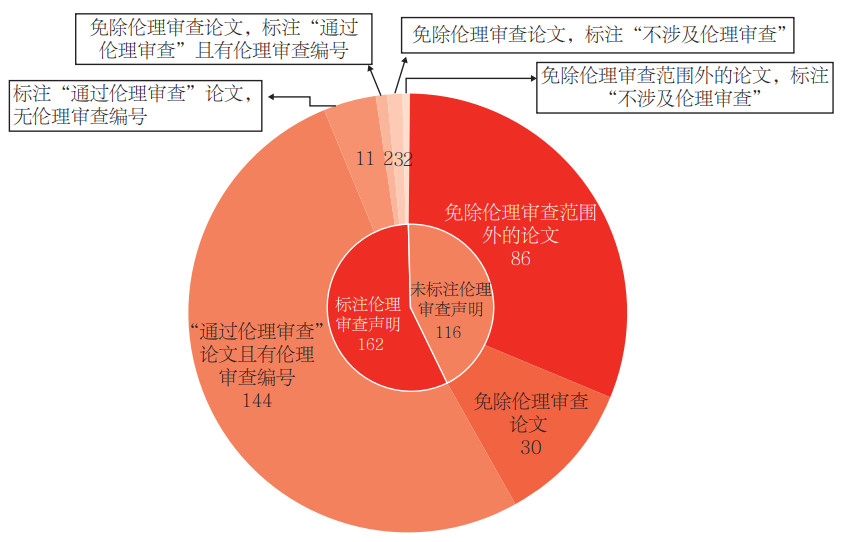
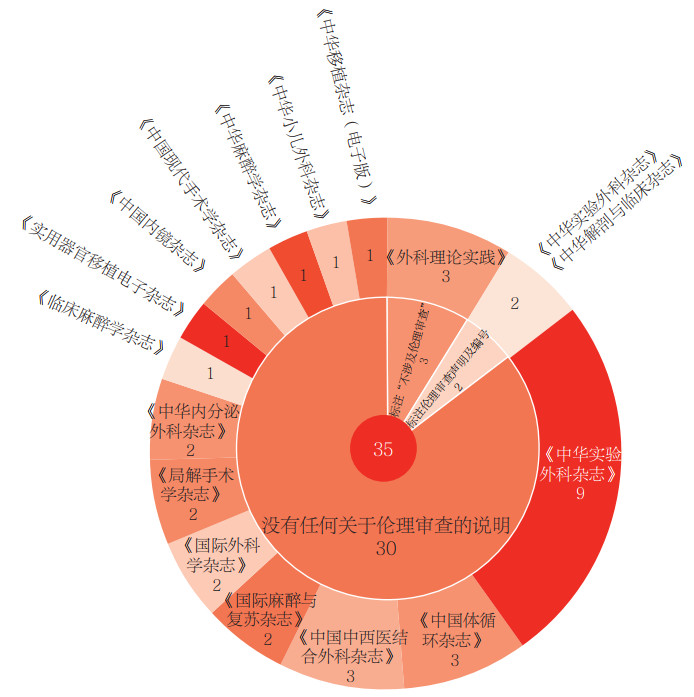
医学期刊实施伦理审查,对于保障研究参与者权益、确保研究科学性、维护学术诚信至关重要。而免除伦理审查的目的是减轻研究者的负担,鼓励信息数据和生物样本的合法利用,加速科技创新和成果转化。文章以《中国科技期刊引证报告(核心版)自然科学卷(2024版)》收录的23种外科学综合类医学期刊为研究对象,收集2025年2月至3月的最新1期期刊,采用回顾性分析涉及人的生命科学和研究(“涉及人的研究”)相关论文,筛选出免除伦理审查论文。采用文献分析法和案例研究法分析免除伦理审查论文的相关信息,包括该文属于免除伦理审查的哪种情形、是否标注伦理审查声明、有无伦理审批号等。结果显示:473篇论文中“涉及人的研究”论文278篇,其中35篇论文属于免除伦理审查范围(30篇没有任何关于伦理审查的说明,3篇标注“不涉及伦理审查”,2篇标注了伦理审查声明且有伦理审查编号)。医学期刊免除伦理审查的决策主体是伦理委员会,而非作者或编辑。医学期刊对“涉及人的研究”免除伦理审查标注总体规范性不足、表述不清、情形分布各异,其原因可能是相关概念不清、引导不足、执行不力,应从加强政策指引、规范流程管理、提升编辑能力等方面入手,提升医学期刊免除伦理审查论文标注规范水平。

关键词 免除伦理审查伦理审查医学伦理医学期刊审查流程    
Abstract

Ethical review by medical journals plays a pivotal role in safeguarding the rights and welfare of research participants, ensuring scientific rigor, and upholding academic integrity. Conversely, exemptions from ethical review are strategically designed to reduce administrative burden on researchers, facilitate the lawful utilization of existing information data and biological samples, and accelerate scientific innovation and translational outcomes. Balancing these dual objectives requires clear guidelines and consistent implementation. This study investigates current practices regarding exemptions from ethical review in Chinese medical journals. We selected 23 medical journals of comprehensive surgery indexed in the China Science and Technology Journal Citation Reports (Core Edition, Natural Sciences Volume, 2024) as our research subjects. The latest issues published between February and March 2025 were systematically collected. Papers involving "human-related life sciences and medical research" (hereafter "human-related research") were retrospectively analyzed to identify studies potentially eligible for exemptions from ethical review according to national regulations. Using literature analysis and case study methodologies, we examined key information, including exemption categories, the presence and wording of ethical review statements, and approval numbers. Among the 473 total papers screened, 278 (58.8%) constituted "human-related research", of which 35 papers (12.6% of "human-related research") fell within recognized exemption from ethical review scopes. Reporting practices among these papers for exemptions from ethical review were highly inconsistent: 30 contained no ethical review statement whatsoever; three stated "not involving ethical review" without further justification; and only two provided both an exemption statement and an official ethics committee reference number. This discrepancy highlights a critical gap between policy intent and practical execution. Crucially, the authority to waive ethical review resides exclusively with institutional ethics committees, rather than authors or journal editors. However, our findings reveal that current labeling practices for exempted "human-related research" remain markedly non-standardized, with expressions lacking clarity or necessary contextual details and diverse categories distribution. Underlying causes include conceptual ambiguity regarding exemption criteria, insufficient explicit guidance from regulatory bodies, and inadequate enforcement mechanisms within editorial processes. To address these deficiencies, multi-faceted interventions are urgently needed. First, strengthened policy guidance from national health and scientific authorities must clarify exemption categories and mandatory reporting standards. Second, standardized process management protocols should be established, and journals are required to implement systematic checks for ethical compliance, even in exempt cases. Third, enhancing editorial capabilities through targeted training programs will empower editors to accurately identify, evaluate, and appropriately label exempted papers. These comprehensive measures can improve the standardization of ethical review annotations in medical journals, thereby reinforcing trust in medical research while supporting efficient scientific progress.

Key wordsexemption from ethical review    ethical review    medical ethics    medical journals    review procedure
出版日期: 2026-05-14
基金资助:广东省科技计划项目(2024B1212070011);广东省科技计划项目(2025A1212150007);广东省科技计划项目(2025A1212150011);中国高校科技期刊研究会-万方数据学术诚信与版权专项基金(CUJS2025-CX-ZZ01);中国高校科技期刊研究会-万方数据学术诚信与版权专项基金(CUJS2025-CX-ZZ16)
通讯作者: 余菁   
Corresponding author: Jing YU   

引用本文:

邬加佳,方引超,余菁,王景周. 医学期刊免除伦理审查论文标注的现状调查与分析[J]. 科技与出版, 2026, 45(4): 111-118.
WU Jiajia,FANG Yinchao,YU Jing,WANG Jingzhou. Investigation and Analysis of the Annotation Status of Exempt Ethical Review for Papers in Medical Journals. Science-Technology & Publication, 2026, 45(4): 111-118.

链接本文:

http://kjycb.tsinghuajournals.com/CN/      或      http://kjycb.tsinghuajournals.com/CN/Y2026/V45/I4/111

图 1  278篇“涉及人的研究”论文的伦理标注情况
图 2  35篇免除伦理审查论文的期刊分布情况
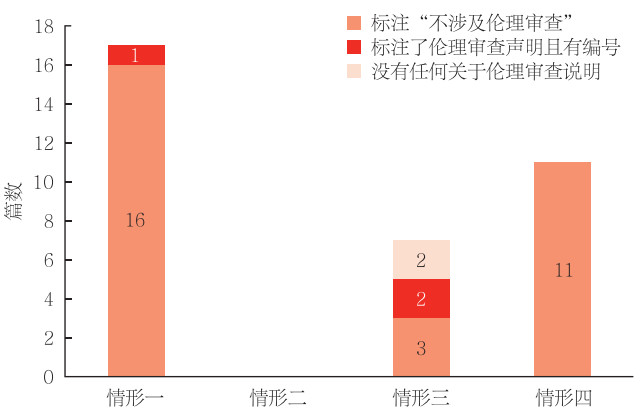
图 3  35篇免除伦理审查情形分布情况
1 刘文华, 张琴, 孙玉花. 医学期刊伦理审查的问题调研与对策探讨[J]. 编辑学报, 2023 (4): 412- 415.
2 国家卫生健康委, 教育部, 科技部, 等. 关于印发涉及人的生命科学和医学研究伦理审查办法的通知[EB/OL]. (2023-02-18)[2025-06-24]. https://www.gov.cn/zhengce/zhengceku/2023-02/28/content_5743658.htm.
3 国家卫生健康委. 《涉及人的生命科学和医学研究伦理审查办法》文件解读[EB/OL]. (2023-02-28)[2024-10-24]. https://www.gov.cn/zhengce/2023-02/28/content_5743660.htm.
4 周吉银, 刘丹. 《涉及人的生命科学和医学研究伦理审查办法》的解读和思考[J]. 中国医学伦理学, 2023, 36 (5): 475- 481.
5 张海洪. 免除伦理审查制度及其应用实践建议[J]. 医学与哲学, 2023, 44 (9): 6- 10.
6 赵励彦, 张玉梅, 刘瑞爽. 免除伦理审查制度适法性与可操作性探讨[J]. 医学与哲学, 2024, 45 (2): 24- 27.
7 杨梦婕, 周吉银. 免除伦理审查的挑战和实施建议[J]. 中国医学伦理学, 2023, 36 (7): 730- 735.
8 黄樱硕, 左旭, 李悦, 等. 免除伦理审查的思考与实践[J]. 中国医学伦理学, 2023, 36 (10): 1116- 1121.
9 邬加佳, 方引超, 余菁, 等. 医学期刊中免除伦理审查的实例分析与操作建议[J]. 编辑学报, 2025, 37 (1): 75- 78.
10 年宏蕾, 蒋辉, 李继红, 等. 从医疗卫生机构视角探讨免除伦理审查的误区、挑战与对策[J]. 中国医学伦理学, 2024, 37 (4): 408- 414.
11 陈仲林, 杨梦婕, 陈晓云, 等. 医疗机构"免除伦理审查"执行的思考与实践[J]. 中国医学伦理学, 2023, 36 (7): 736- 741.
12 医疗机构免除伦理审查实践专家共识编写工作组. 医疗机构免除伦理审查实践专家共识[J]. 医学与哲学, 2024, 45 (2): 19- 23.
13 苗龙芳, 白桦, 周吉银, 等. 免除伦理审查的操作与思考[J]. 中国医学伦理学, 2023, 36 (10): 1127- 1131.
14 陈少莹. 免除涉及人体科学研究伦理审查的条件及相关问题探讨[J]. 医院管理论坛, 2023, 40 (8): 80- 83.
15 舒安琴, 徐佳忆, 唐晓莲, 等. 医学期刊对"涉及人的生命科学和医学研究"伦理审查声明标注的现况调查与分析[J]. 编辑学报, 2024, 35 (6): 635- 642.
16 中华人民共和国个人信息保护法[EB/OL]. (2021-08-20)[2025-06-24]. https://www.gov.cn/xinwen/2021-08/20/content_5632486.htm.
17 中华人民共和国网络安全法[EB/OL]. (2016-11-07)[2024-06-24]. https://www.gov.cn/xinwen/2016-11/07/content_5129723.htm.
18 曾玲, 罗萍, 王维朗, 等. 医学期刊对学术论文伦理审查和处理方式的调查及分析: 以重庆市医学期刊为例[J]. 中国科技期刊研究, 2020, 31 (9): 1004- 1008.
19 江雨莲, 孙激. 规范我国儿科学期刊临床研究论文发表过程的伦理管理[J]. 科技与出版, 2019, 38 (3): 130- 133.
doi: 10.16510/j.cnki.kjycb.2019.03.025
20 黄先蓉, 陈文锦. 加强出版伦理建设提升出版伦理治理能力[J]. 科技与出版, 2022, 41 (5): 40- 46.
doi: 10.16510/j.cnki.kjycb.2022.05.003
[1] 李慧文,李玉乐,李娜,刘洋,杨爽. 基于RIGHT清单的中文医学科技核心期刊发表的专家共识质量评价[J]. 科技与出版, 2026, 45(2): 145-156.
[2] 官鑫,林琳,赵阳,李欣欣,韩宏志,陈思含,李昕蔚,邢翔宇,丁昳玲,张海洋. DeepSeek技术赋能医学期刊中文摘要的编辑加工[J]. 科技与出版, 2025, 44(6): 95-102.
[3] 易耀森. 人工智能生成内容应用出版伦理政策现状分析与完善建议——以我国160种医学期刊为例[J]. 科技与出版, 2025, 44(10): 82-93.
[4] 刘洁,包玲. 人文关怀视角下医学期刊英文包容性表达探析[J]. 科技与出版, 2025, 44(10): 151-160.
[5] 杨洋,江雨莲,刘爽. 专科医学期刊集群化发展探索*[J]. 科技与出版, 2024, 43(8): 44-50.
[6] 郭欣,张焱丽,徐云峰. 医学期刊新媒体传播效果的比较分析与提升策略*[J]. 科技与出版, 2024, 43(8): 92-98.
[7] 张维,冷怀明,汪勤俭,游滨,钱锋,胡英奎,邓军. 医学期刊集群化发展模式和平台建设探究*[J]. 科技与出版, 2022, 41(9): 76-85.
[8] 马雯娜. 医学期刊学术论文科研诚信风险分析及应对策略*[J]. 科技与出版, 2022, 41(7): 156-160.
[9] 董敏,杜亮,雷芳,刘雪梅. 生物医学类中文学术期刊作者贡献声明著录现状分析[J]. 科技与出版, 2022, 41(4): 126-131.
[10] 林春香. 智媒体时代科技期刊传播力提升路径思考[J]. 科技与出版, 2022, 41(3): 115-121.
[11] 许海燕. 医学期刊指南与共识类文章单行本发行实践思考[J]. 科技与出版, 2022, 41(11): 118-122.
[12] 王晴,杨惠,袁鹤,骆筱秋. 医学期刊编辑能力培养模式探索*[J]. 科技与出版, 2021, 40(8): 69-74.
[13] 马雯娜,陈丹,陈丽. 科研机构伦理委员会对医学期刊论文的伦理把关作用研究*[J]. 科技与出版, 2021, 40(8): 137-141.
[14] 刘壮,张悦. 借助思维导图提升医学期刊编辑的统计学素养[J]. 科技与出版, 2021, 40(2): 68-72.
[15] 张敏,陈璐,熊婉. 英文医学期刊应对新冠肺炎疫情的策略探析[J]. 科技与出版, 2020, 39(03): 93-95.