Please wait a minute...
科技与出版  2026, Vol. 45 Issue (10): 89-97    
编辑实务
医学期刊全流程作者服务体系构建研究
徐自超1,2
1. 河南医药大学期刊社,453003,河南新乡
2. 河南医药大学河南省科技期刊研究中心,453003,河南新乡
Developing an End-to-End Author Service System for Medical Journals
XU Zichao1,2
1. Periodicals Publishing House, Henan Medical University, 453003, Xinxiang, China
2. Henan Research Center for Science Journals, Henan Medical University, 453003, Xinxiang, China
全文: HTML    PDF(1859 KB)  
输出: BibTeX | EndNote (RIS)      
摘要: 

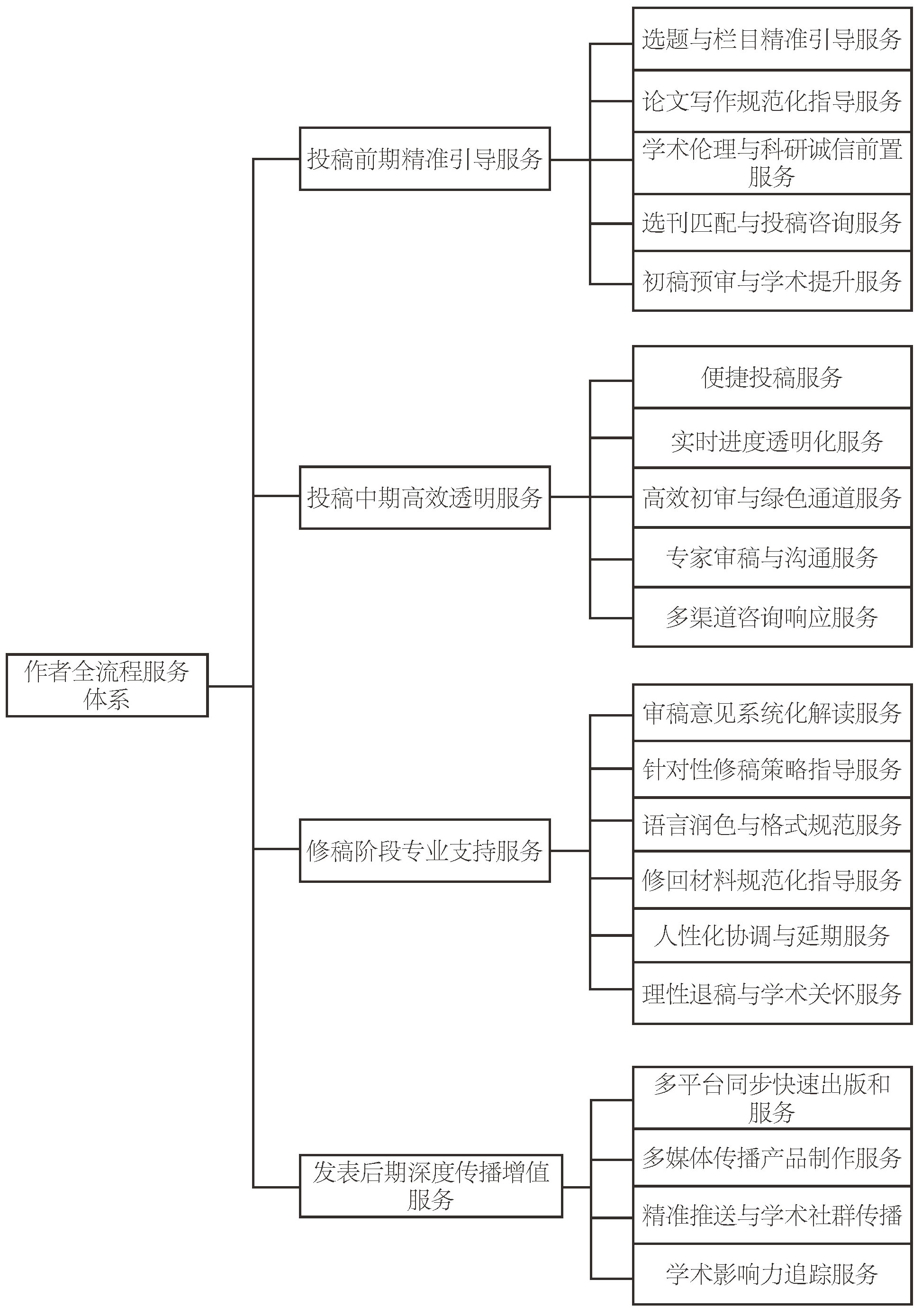
随着我国医学科研产出的不断增长和高质量科技期刊建设的不断深入,作者服务已成为决定医学期刊核心竞争力、高质量稿件聚合能力和学术传播效率的关键因素。本文阐述了医学期刊全流程作者服务的内涵特征,全面梳理了我国医学期刊作者服务存在的问题与深层次原因。在此基础上,构建了完整的全流程作者服务体系,涵盖投稿前期精准引导、投稿中期高效透明、修稿阶段专业支持、发表后期深度传播四大核心模块,明确各阶段的服务内容、实施路径、操作规范、质量控制标准,从理念、制度、人才、技术、反馈与评价等6个维度提出体系实施的系统保障策略。本研究构建的全流程作者服务体系能有效促进医学期刊从稿件管理向作者服务和知识服务的转变,促进高质量医学科研成果的快速、规范、高效传播,为提高我国医学期刊影响力、建设世界一流科技期刊提供保障。

关键词 : 医学期刊,  全流程作者服务,  学术传播,  融合出版,  高质量发展    
Abstract:

With the continuous growth of China's medical research output and the continued development of high-quality science and technology journals, author services have become a key factor determining the core competitiveness, capacity to attract high-quality manuscripts, and academic dissemination efficiency of medical journals. At present, the structure of China's medical research personnel is becoming increasingly diverse, with clinical practitioners, researchers from universities and research institutes, graduate students, and interdisciplinary researchers all exhibiting significantly differentiated needs for publication. However, most medical journals continue to rely on passive, fragmented, routine service models, commonly plagued by broken service chains, weak professional guidance, insufficient personalization, and a lack of post-publication dissemination support, making it difficult to accommodate the full-cycle, professional, and refined publication needs of a diverse author base. This paper defines the scope and characteristics of end-to-end author services for medical journals, and comprehensively reviews the existing problems and underlying causes in this domain. On this basis, a complete end-to-end author service system is constructed, covering four core modules: targeted pre-submission guidance, efficient and transparent manuscript handling, professional support during revision, and extended post-publication dissemination. For each stage, the service content, implementation pathways, operational specifications, and quality control standards are clearly defined. Implementation support is proposed in six dimensions: philosophy, institutions, personnel, technology, feedback, and evaluation. These measures aim to address traditional service challenges, optimize journal operational workflows, enhance author service experiences, and accelerate the dissemination and translation of research findings. The end-to-end author service system developed in this study is intended to facilitate the transformation of medical journals from manuscript management to author services and knowledge services, and promote the rapid, standardized, and efficient dissemination of high-quality medical research outputs, thereby strengthening the influence of Chinese medical journals and supporting the development of world-class scientific and technological journals. In the future, with the deepening integration of digital technologies, artificial intelligence (AI), and academic publishing, medical journal author services may continue to evolve toward intelligence, precision, personalization, internationalization, and collaboration. Innovative service models—such as AI-based writing guidance, manuscript revision suggestions, precision dissemination strategies, author profiling analysis, cross-journal collaborative services, and direct pathways for research translation—may become more widely used. Chinese medical journals need to continuously deepen the construction of end-to-end author service systems, optimize service content, innovate service models, and improve service efficiency. At the same time, efforts should focus on expanding the boundaries of author services around medical research translation, academic integrity building, and international academic exchange, so as to create a more comprehensive, intelligent, and professional academic service ecosystem. This will empower the efficient dissemination of Chinese medical research outputs and contribute to building world-class scientific and technological journals and implementing the Healthy China strategy.

Key words: medical journals    end-to-end author services    academic communication    integrated publishing    high-quality development
出版日期: 2026-11-17
基金资助:河南省哲学社会科学规划项目(2021BZH011)

引用本文:

徐自超. 医学期刊全流程作者服务体系构建研究[J]. 科技与出版, 2026, 45(10): 89-97.
XU Zichao. Developing an End-to-End Author Service System for Medical Journals. Science-Technology & Publication, 2026, 45(10): 89-97.

链接本文:

http://kjycb.tsinghuajournals.com/CN/      或      http://kjycb.tsinghuajournals.com/CN/Y2026/V45/I10/89

图 1  医学期刊全流程作者服务体系
1 黄鑫, 郭伟, 卢姗. 我国医学领域科研发展现状和趋势[J]. 循证医学, 2025, 25 (2): 65- 71.
2 王一鸣. 学术期刊出版服务能力理论框架体系研究[J]. 中国科技期刊研究, 2023, 34 (4): 415- 421.
3 梁明佩, 潘明志. 医学科技期刊作者服务体系的构建及思考[J]. 新闻研究导刊, 2023, 14 (2): 74- 76.
4 国家新闻出版署. 中共中央宣传部教育部科技部印发《关于推动学术期刊繁荣发展的意见》的通知[EB/OL]. (2021-06-23)[2026-06-16]. https://www.nppa.gov.cn/xxfb/tzgs/202106/t20210623_666272.html.
5 许玮, 王鹏涛. 作者服务视角下数据论文出版流程的再优化[J]. 科技与出版, 2021 (10): 71- 78.
6 陈立敏. 数字时代科技期刊"三位一体"式作者服务体系建构[J]. 编辑学报, 2025, 37 (1): 37- 41.
7 胡大伟, 单政, 曹耐. 提升科技期刊作者服务质量的探索[J]. 编辑学报, 2024, 36 (S2): 80- 83.
8 纪彬, 吴楠. 融合出版背景下科技期刊传播模式的优化策略[J]. 中国传媒科技, 2026 (1): 47- 50.
9 张学颖, 郑万会, 靳全瑜. 医学期刊精准推送实践探索: 以非晓学术精准传播平台为例[J]. 新闻研究导刊, 2025, 16 (11): 178- 181.
10 黄庆发, 吴文翠, 杜玉娇, 等. 科技期刊一体化融合数字出版平台的建设与思考[J]. 办公自动化, 2025, 30 (21): 95- 98.
[1] 何承凤,何莉. 农业期刊赋能乡村文化振兴的现实思考[J]. 科技与出版, 2026, 45(8): 89-100.
[2] 胡晓静,王尔亮,丁媛媛,张苹. 我国医学期刊实施国际研究报告规范的现状分析:基于卓越行动计划二期项目入选医学期刊的调查[J]. 科技与出版, 2026, 45(8): 131-145.
[3] 姚玲. 全国青少年学生读书行动实施背景下青少年主题出版高质量发展研究[J]. 科技与出版, 2026, 45(7): 49-56.
[4] 戴王娟,陈汐敏. 国际传播需求下中文医学期刊官网规范性建设研究—基于国内外综合性医学期刊的调查[J]. 科技与出版, 2026, 45(7): 95-109.
[5] 陈辰,余党会,马瀚青,魏莎莎. 被“格式化”的身份:我国英文期刊汉字署名现状与优化路径[J]. 科技与出版, 2026, 45(6): 97-105.
[6] 郁林羲,周雷. 基于ResearchGate的学术社交平台传播机制及其生态影响研究[J]. 科技与出版, 2026, 45(6): 150-160.
[7] 邹贞,金梦瑶. 如何推进新时代科普图书出版高质量发展?——“国家科技进步奖”(2005—2023年度)获奖图书的启示[J]. 科技与出版, 2026, 45(5): 5-15.
[8] 马伊颀. 新时代教育出版质量管理探索[J]. 科技与出版, 2026, 45(5): 57-65.
[9] 邬加佳,方引超,余菁,王景周. 医学期刊免除伦理审查论文标注的现状调查与分析[J]. 科技与出版, 2026, 45(4): 111-118.
[10] 沈锡宾,李鹏,黄丽洋,刘红霞,赵巍,吕相征,魏均民. 中国科技期刊集群加盟期刊协同发展与生态治理机制研究[J]. 科技与出版, 2026, 45(3): 93-104.
[11] 叶娟. 教育数字化背景下高校出版社融合出版模式研究[J]. 科技与出版, 2026, 45(3): 146-151.
[12] 王一帆,王星. 深度融合视域下地方出版业高质量发展路径研究——以辽宁省为例[J]. 科技与出版, 2026, 45(2): 14-21.
[13] 吴徐莉. 综合性社科期刊高质量发展的实践困境与路径重构[J]. 科技与出版, 2026, 45(2): 137-144.
[14] 李慧文,李玉乐,李娜,刘洋,杨爽. 基于RIGHT清单的中文医学科技核心期刊发表的专家共识质量评价[J]. 科技与出版, 2026, 45(2): 145-156.
[15] 倪轶,王露露. 面向“十五五”时期的中国期刊出版业发展思考[J]. 科技与出版, 2026, 45(1): 24-32.