|
|
|
| The Four Realms and Paths to Improve the Level of Writing Editorial Papers for Editors: Reflections on Feng Youlan's Philosophy of Life |
| ZHANG Haiyan,WU Yu* |
| Faculty of Education, Beijing Normal University, 100875, Beijing, China |
|
|
|
|
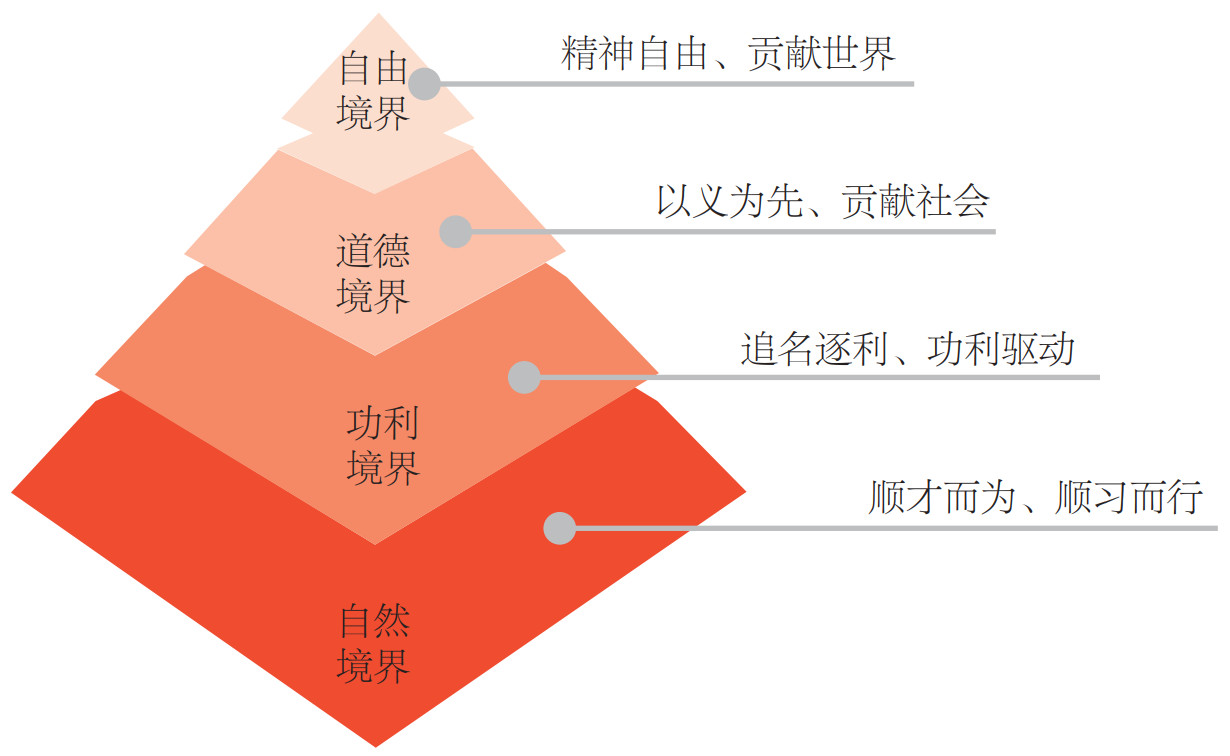
Abstract Understanding the “value of writing” is the prerequisite and key for editors to write editorial papers. Philosophy is the essence of the spirit of the times and the living soul of culture. This paper tries to learn nutrients from the history of Chinese philosophy to help us understand the “value of writing”. Feng Youlan's has devoted his entire life to solving the problem of the value of life, and his entire philosophical system revolves around the theme of "solving current problems and achieving an ideal life".Feng Youlan's philosophy of life plays an important role in exploring the value of writing. Based on his theory of “Four Realms”, this paper proposes four realms of writing editorial papers, and accordingly proposes practical paths for editors to improve their writing levels. Firstly, the four realms of writing editorial papers include natural realm, utilitarian realm, moral realm, and free realm. Editors who are in a natural state have the least understanding of writing editorial papers. They do not understand why they need to write editorial papers, nor do they understand the value of writing. It can be said that they lack self-awareness. Editors who are in a utilitarian state have a clear understanding that they should write editorial papers and understand the value of writing papers for their professional titles and career development. However, external "fame" and "benefits" are the fundamental reasons driving their writing. Editors who are in a moral realm have a higher level of understanding, not only in-depth exploration and analysis of writing purposes and themes, but also actively and consciously "understanding" in their daily editing work. While affirming human sociality, actively connecting with society, placing one's own development in the long river of industry and even social development, with the purpose of "contribution" in writing, and achieving the moralization of writing behavior on the basis of ethical writing behavior. The realm of editing and writing that is opposite to the realm of heaven and earth is called the realm of freedom. Editors in a state of freedom have a stronger sense of "comprehension" in their writing behavior, breaking through traditional "evaluation frameworks" and utilitarian goals, pursuing writing significance with subjectivity, distinct personality traits, and spirituality. Secondly, according to the realm from low to high, they are in the order of natural realm, utilitarian realm, moral realm, and freedom realm. Editors in the natural realm have a relatively large number and require the least knowledge and abilities; Editors in the utilitarian realm are second in quantity and require an increase in knowledge; The fewer people in moral realm, the more knowledge they need; The realm of freedom requires the least number of editors and the most knowledge, which is the realm we pursue. The four levels, from low to high, represent a development. But the state a editor is in is not fixed, and there are differences in the four states for a long time. The mentality of editors are complex, and even if they have reached the state of freedom, they may not be able to remain in this state for a long time.Thirdly, the practical paths for editors to improve their writing levels includes: “talent”, which is taken as the foundation for editors to set their target through enhancing writing awareness and focusing on rational reflection; “era”, taken as the background for editors to choose writing topics based on China's reality and international exchanges; “effort”, the root, which highlights their writing characteristics by conducting continuous research and improving innovation capabilities; “competition” is the auxiliary, which enhances their writing abilities by engaging in cross-disciplinary and cross-sector cooperation and competition.
|
|
Published: 14 March 2025
|
|
Corresponding Authors:
Yu WU
|
|
|
|
| 1 |
吴依涵. 冯友兰《人生哲学》研究[D]. 西安:西安交通大学,2021.
|
| 2 |
孙一帆. 冯友兰人生“四境界”思想及其价值探析[J]. 汉字文化, 2024 (8): 196- 198.
|
| 3 |
冯友兰. 觉解人生:冯友兰散文[M]. 北京: 北京联合出版公司, 2015: 274.
|
| 4 |
冯友兰. 一种人生观[M]. 北京: 台海出版社, 2022.
|
| 5 |
冯友兰. 贞元六书[M]. 上海: 华东师范大学出版社, 1996: 526.
|
| 6 |
王晓峰. 做自动自发的新时期科技期刊编辑[J]. 编辑学报, 2008, 20 (1): 85- 86.
|
| 7 |
于建东. 冯友兰的人生境界说研究[D]. 长沙:湖南师范大学,2007.
|
| 8 |
王丹. 科技前沿新时代下我国科技期刊编辑素养构成及提升对策研究[J]. 中国传媒科技, 2024 (3): 36- 39.
|
| 9 |
中共中央宣传部印发《关于推动出版深度融合发展的实施意见》[EB/OL].(2022-04-24)[2024-03-01]. http://www.news.cn/politics/2022-04/24/c_1128590895.htm.
|
| 10 |
国家新闻出版署关于印发《出版业“十四五”时期发展规划》的通知[EB/OL].(2021-12-30)[2024-03-01]. https://www.nppa.gov.cn/xxfb/tzgs/202112/t20211230_666304.html.
|
| 11 |
中共中央办公厅?国务院办公厅印发《关于推进实施国家文化数字化战略的意见》[EB/OL].(2022-05-22)[2024-03-01]. https://www.gov.cn/zhengce/2022-05/22/content_5691759.htm.
|
| 12 |
中共中央办公厅?国务院办公厅印发《“十四五”文化发展规划》[EB/OL].(2022-08-16)[2024-03-01]. https://www.gov.cn/gongbao/content/2022/content_5707278.htm.
|
| 13 |
许延芳, 郑建辉. 科技期刊编辑职业素养提升途径[J]. 编辑学报, 2023, 35 (S2): 198- 199.
|
| 14 |
张莉, 刘飞阳. 融媒体背景下科技期刊编辑素养研究[J]. 传播与版权, 2023 (13): 31- 33.
|
| 15 |
王维朗, 刘志强, 游滨. 科技期刊编辑提升科研能力的途径及策略[J]. 科技与出版, 2018 (9): 50- 53.
|
| 16 |
黄雅意, 黄锋, 辛亮. 新时代科技期刊青年编辑核心素养的自我修炼[J]. 编辑学报, 2023, 35 (5): 584- 586.
|
| 17 |
陈露. 人工智能背景下科技编辑的素养提升[G]//刘志强,张昕. 学报编辑论丛. 上海:上海大学出版社,2023:370-374.
|
| 18 |
王晓彤. 科技期刊青年编辑职业素养提升探析[J]. 采写编, 2022 (11): 132- 134.
|
| 19 |
刘曙光. 中国自主知识体系建构的方法论自觉[J]. 社会科学文摘, 2024 (1): 8- 10.
|
| 20 |
朱国栋. 学术期刊推进中国自主知识体系建构的功能、问题与路径[J]. 科技与出版, 2024 (10): 16- 26.
|
| 21 |
习近平. 在哲学社会科学工作座谈会上的讲话[M]. 北京: 人民出版社, 2016: 8.
|
| No related articles found! |
|
|
|
|