|
|
|
| Column-Driven Strategies: Dilemmas and Breakthrough Pathways for High-Quality Development of Local University Journals |
| LI Ming1,2 |
1. Suzhou University, 234000, Suzhou, China
2. Purple Academy of Culture & Creativity, Nanjing University of the Arts, 210000, Nanjing, China |
|
|
|
|
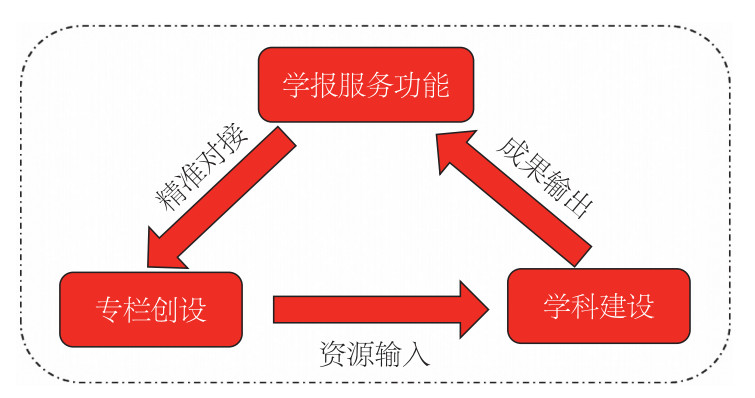
Abstract Local university journals in China are undergoing a critical transition toward high-quality development, yet they continue to face structural barriers that limit their capacity to support disciplinary advancement and fulfill institutional missions. This study identifies three major dilemmas currently impeding their development. First, a positioning dilemma persists as insufficient strategic attention from host institutions and vague quality-improvement objectives, resulting in unclear academic identities. Second, a content dilemma arises from serious homogenization across journal columns and an inadequate supply of high-quality submissions, which weakens journals’ distinctiveness and academic competitiveness. Third, a mechanism dilemma emerges due to the absence of effective intermediary platforms, causing misalignment between journal development goals and the evolving needs of their associated disciplines. Employing a mixed-methods research design—integrating comparative analysis of high-performing journals, content analysis of existing column structures, and case studies of successful column-centric practices, this study constructs a "journal-column-discipline" collaborative model. This model elucidates the structural logic of high-quality development: the journal serves as the central hub of knowledge dissemination, the column functions as a platform for thematic concentration, and the discipline provides the driving source of intellectual innovation. Within this framework, the establishment of specialized columns enables journals to integrate cutting-edge disciplinary findings, attract high-level academic communities, and ultimately reinforce a reciprocal feedback cycle between disciplinary growth and journal quality enhancement. The study further identifies three key drivers shaping the direction of column development: policy orientation, which requires aligning column themes with national strategies and institutional missions; demand-driven pressures, which emphasize grounding column planning in the concrete needs of distinctive academic disciplines; and endogenous motivation, which reflects journals’ efforts to build academic brands and strengthen core competitiveness. Building on these foundations, this study proposes three actionable pathways for advancing high-quality development. The knowledge integration pathway stresses the systematic consolidation of disciplinary knowledge and the promotion of interdisciplinary integration through well-designed column themes. The talent aggregation pathway highlights the role of columns in attracting and cultivating academic teams, forming a multilayered network of local scholars, institutional research groups, and domestic and international experts. The research-to-publication pathway underscores the importance of transforming disciplinary research outputs into impactful academic publications that contribute to regional cultural sustainability, industry–academia collaboration, and the enhancement of public cultural service systems. These pathways collectively generate new momentum for journal development and provide critical support for institutions seeking to elevate disciplinary influence. In conclusion, the establishment and sustained operation of specialized columns constitute an effective mechanism for overcoming developmental bottlenecks and achieving high-quality, distinctive advancement in local university journals. By promoting the “journal–column–discipline” collaborative model and implementing the pathways of knowledge integration, talent aggregation, and research-to-publication transformation, local university journals can establish a specialized and innovative trajectory that meaningfully contributes to scientific and cultural development.
|
|
Published: 11 December 2025
|
|
|
|
| 1 |
侯净雯. 从“学科依附”到“共生赋能”:高校学术期刊与学科协同演化的机制研究[J]. 北京城市学院学报, 2025 (3): 23- 30.
|
| 2 |
王圆圆. 从知识出版到知识服务:高校学报与智库建设融合发展路径探析[J]. 科技与出版, 2020 (4): 68- 72.
|
| 3 |
杨保华, 袁赛前. 高校科技期刊与学科建设相济相成:以《中国有色金属学报》(中、英文版)为例[J]. 科技与出版, 2020 (5): 116- 120.
|
| 4 |
刘碧颖, 杨静, 郝媛媛, 等. 高校期刊服务人才培养的实践与思考:以西北工业大学“主编讲堂”活动为例[J]. 编辑学报, 2025, 37 (3): 350- 353.
|
| 5 |
卢妙清, 邓家鑫, 宋先红, 等. 地方高校科技期刊服务学科建设及区域经济发展的实践探索[J]. 编辑学报, 2025, 37 (2): 214- 218.
|
| 6 |
翟彬偲. 高校学术期刊与学科建设协同发展研究:以浙江省ESI前1%高校自然科学类中文学报为例[J]. 科技与出版, 2021 (9): 32- 40.
|
| 7 |
丁佐奇, 李芙蓉. 中国高校科技期刊对学科贡献研究及思考:基于2016—2018年被SCI收录期刊对ESI学科贡献度分析[J]. 科技与出版, 2020 (4): 120- 125.
|
| 8 |
中共中央办公厅国务院办公厅印发《关于实施中华优秀传统文化传承发展工程的意见》[EB/OL].(2027-01-25)[2025-06-20]. https://www.gov.cn/zhengce/2017-01/25/content_5163472.htm.
|
| 9 |
文化和旅游部关于印发《“十四五”非物质文化遗产保护规划》的通知[EB/OL].(2021-05-25)[2025-06-20]. https://www.gov.cn/zhengce/zhengceku/2021-06/09/content_5616511.htm.
|
| 10 |
2025年,安徽省科技创新将抓好这“十大”工作[EB/OL].(2025-04-16)[2025-09-01]. https://kjt.ah.gov.cn/kjzx/mtjj/122815091.html.
|
| 11 |
唐琦. 安徽省九华民歌对外译介研究[J]. 安徽职业技术学院学报, 2022, 21 (3): 87- 91.
|
| [1] |
LUO Qiyuan,JIAO Lin. Exploring Collaborative Models and Innovation Strategies for Libraries and Publishers in the Era of Digital Intelligence[J]. Science-Technology & Publication, 2025, 44(6): 44-51. |
| [2] |
QI Peinuo. Driving Factors, Challenges, and Development Pathways for High-quality Development of Comprehensive Social Science Journals[J]. Science-Technology & Publication, 2025, 44(6): 122-130. |
| [3] |
JIN Huiping,LUO Bin. Philosophical Reflections on High-Quality Development of STM Journals: Intrinsic Rationale, Developmental Principles, and Strategic Objectives[J]. Science-Technology & Publication, 2025, 44(5): 60-69. |
| [4] |
SHEN Yinshu. Reflections on High-Quality Development of Agricultural Science and Technology Book Publishing in the Context of All-around Rural Revitalization[J]. Science-Technology & Publication, 2025, 44(3): 97-105. |
| [5] |
LIU Zhiqiang,WANG Jing,ZHANG Fangying,WU Lingye,ZHANG Tieming,ZHANG Xin. Policy-Guided and Innovation-Driven Development: Review and Prospect of Chinese-language STM Journals in 2024[J]. Science-Technology & Publication, 2025, 44(3): 66-77. |
| [6] |
ZUO Zhonghai,WANG Shuyue. Research on the Path to High-Quality Development in the Publishing Industry: Driven by New Quality Productive Forces[J]. Science-Technology & Publication, 2025, 44(2): 51-58. |
| [7] |
CAI Chenlu. Exploration into the High Quality Development Path of Academic Publishing by Local Science and Technology Publishing Houses: From the Perspective of National Publication Foundation[J]. Science-Technology & Publication, 2025, 44(2): 99-106. |
| [8] |
LI Wenjuan. Review and Prospects of China's Talent Team Building in the Publishing Industry During the 14th Five-Year Plan Period[J]. Science-Technology & Publication, 2025, 44(1): 39-47. |
|
|
|
|