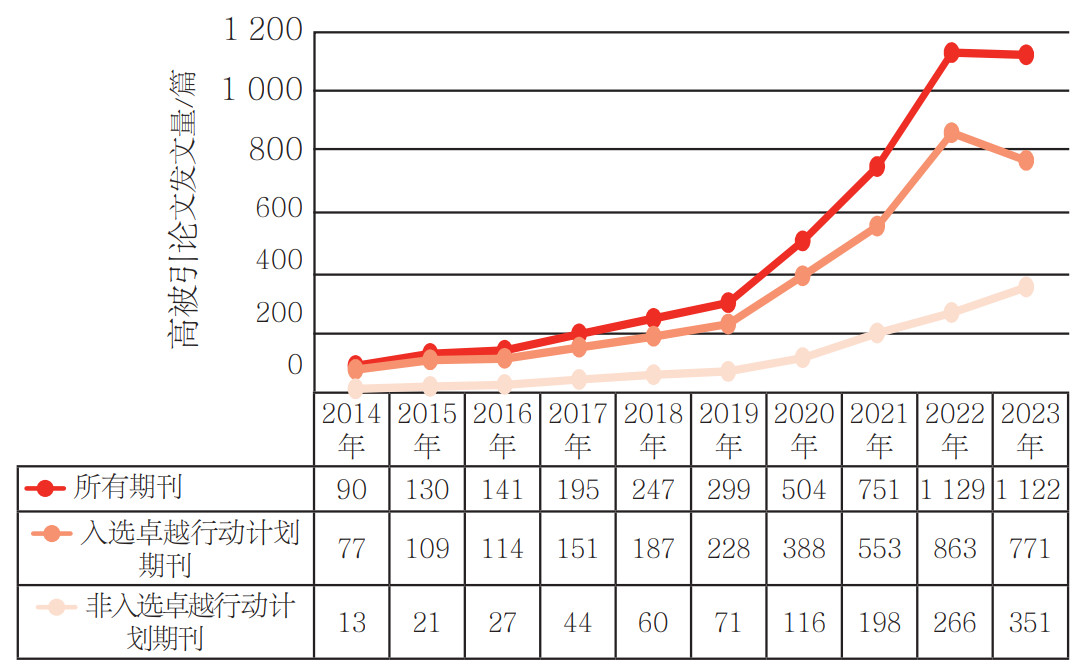
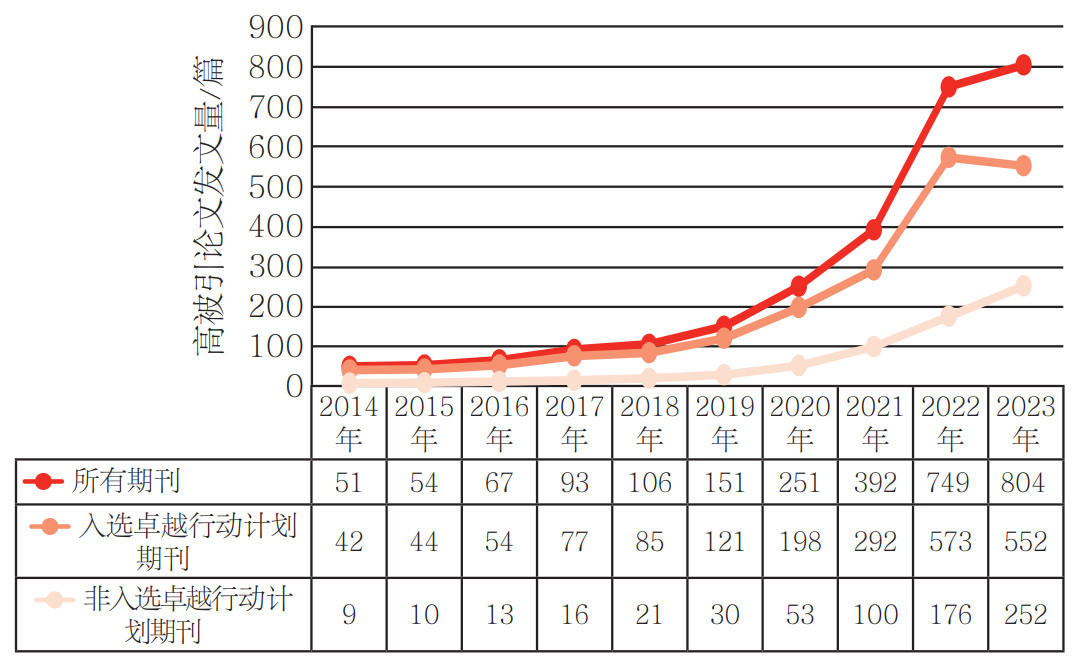
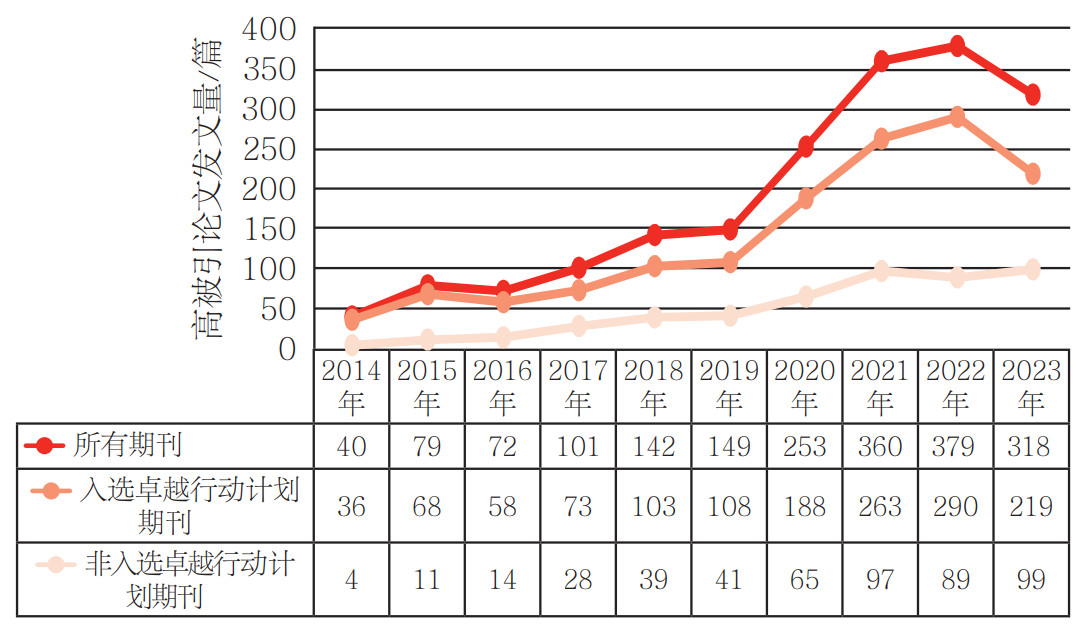
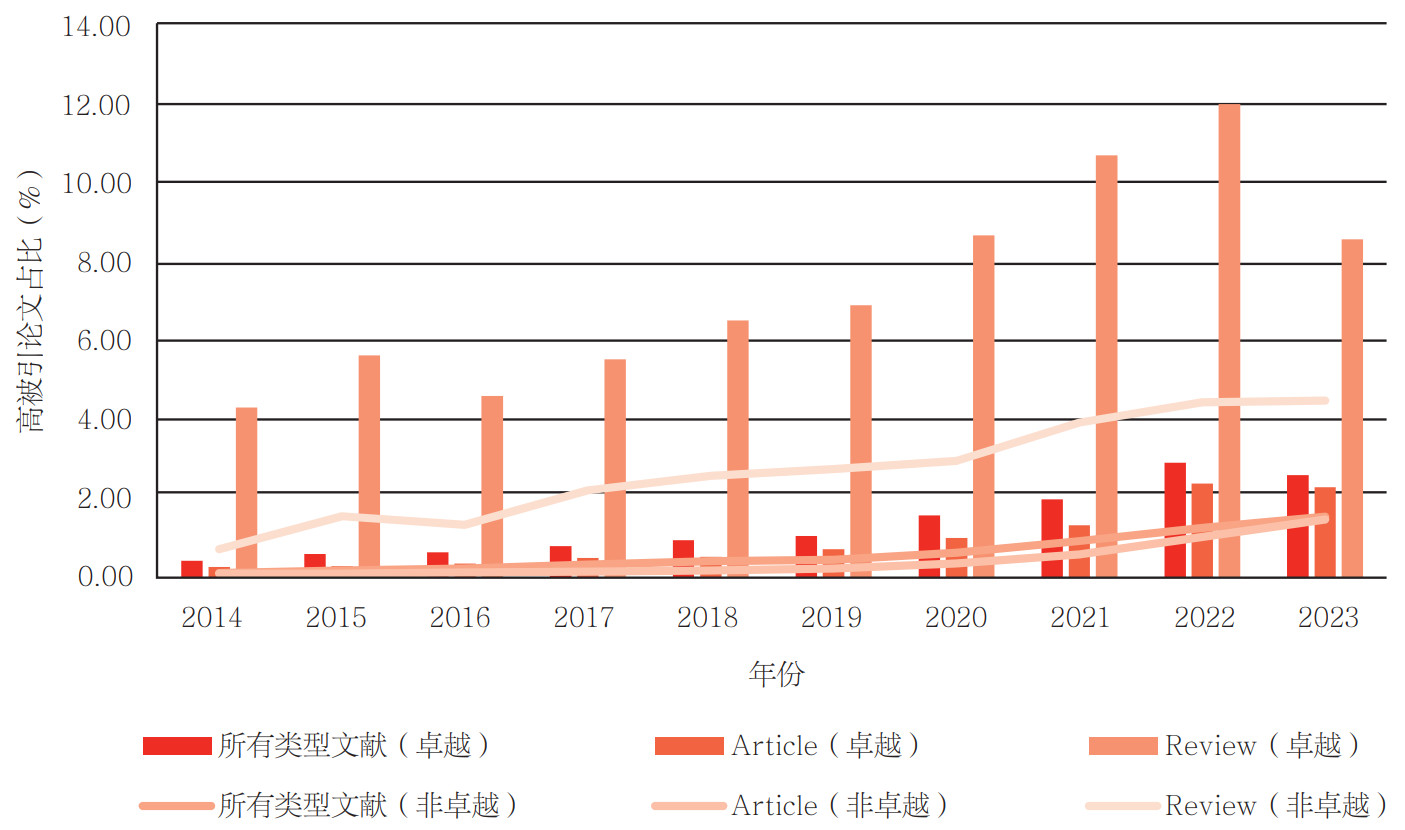
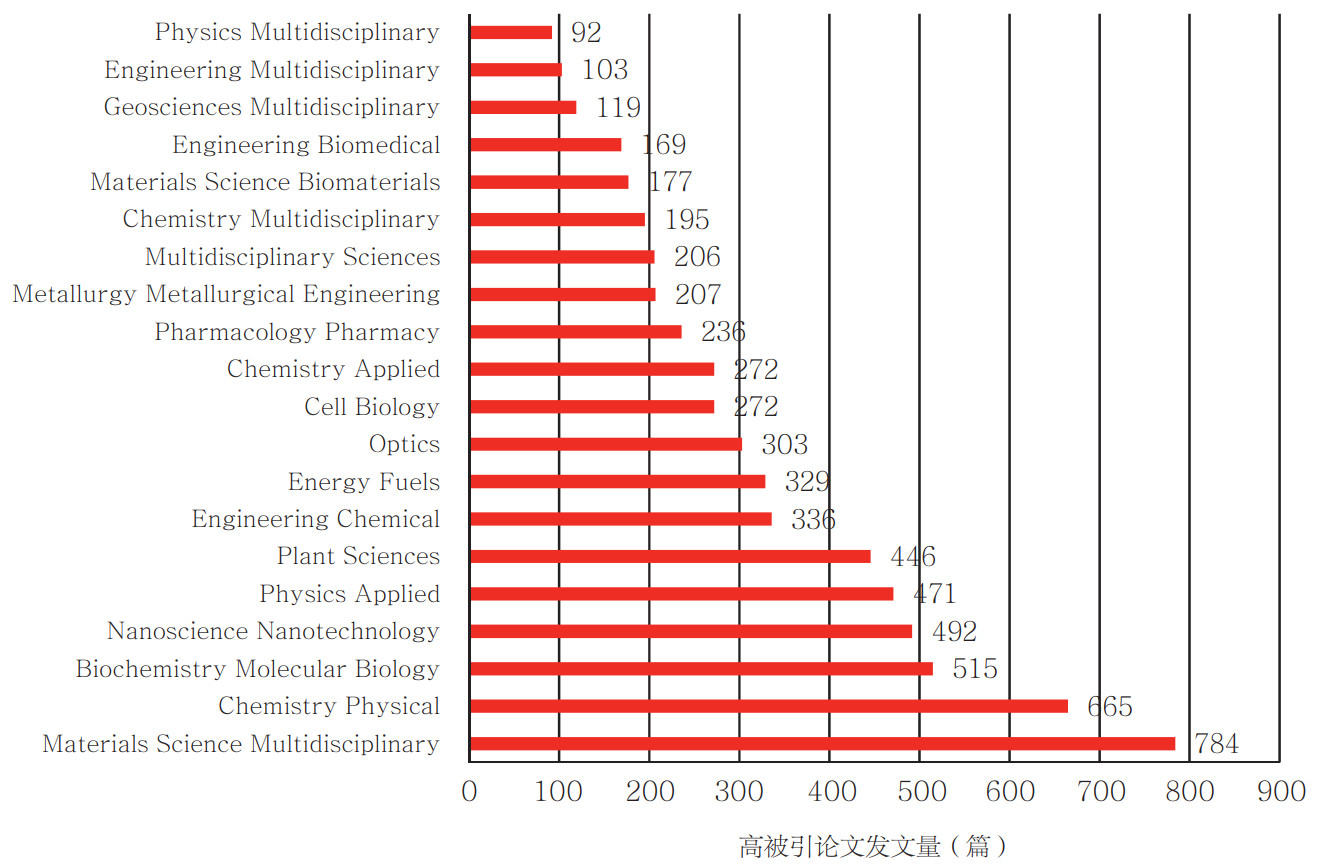
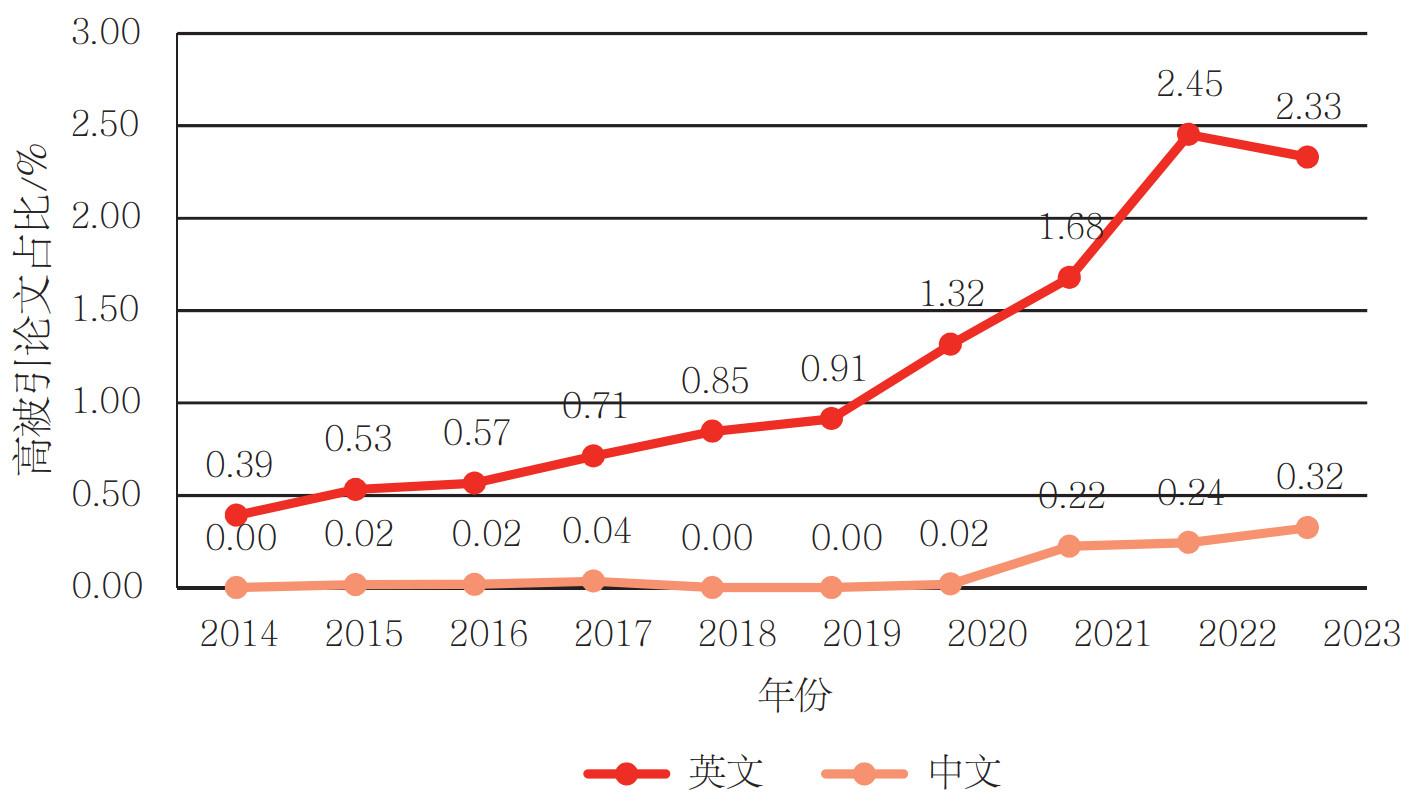
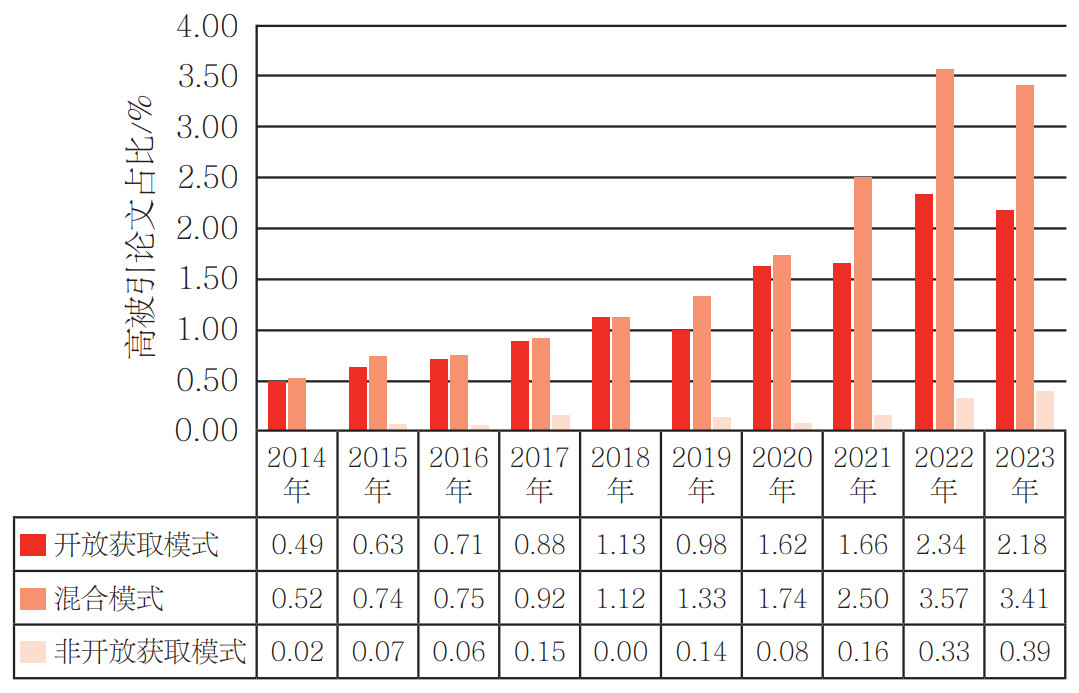
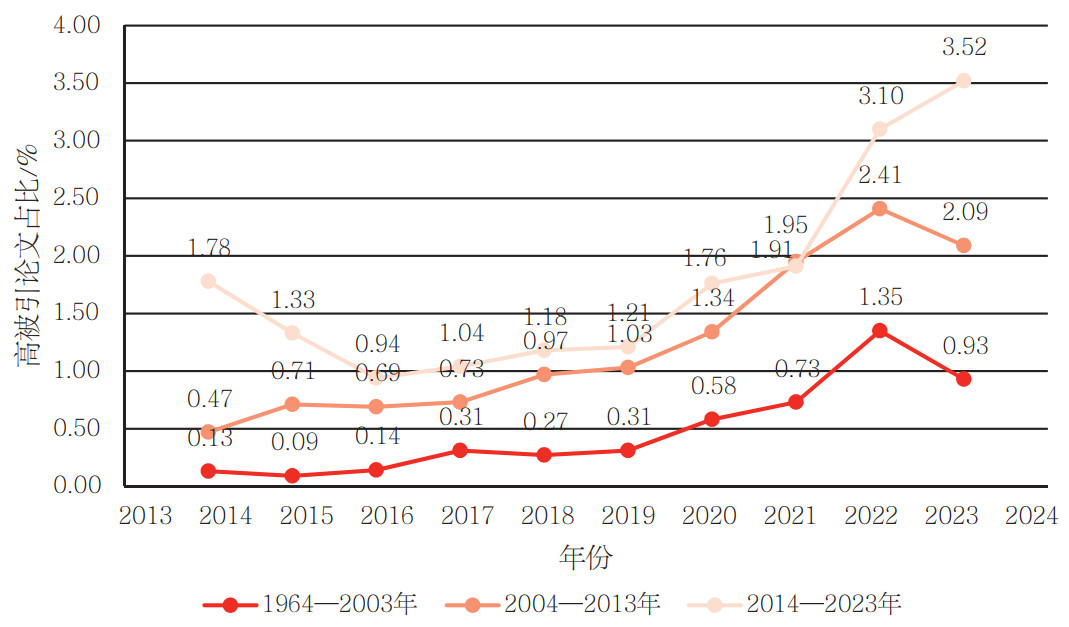
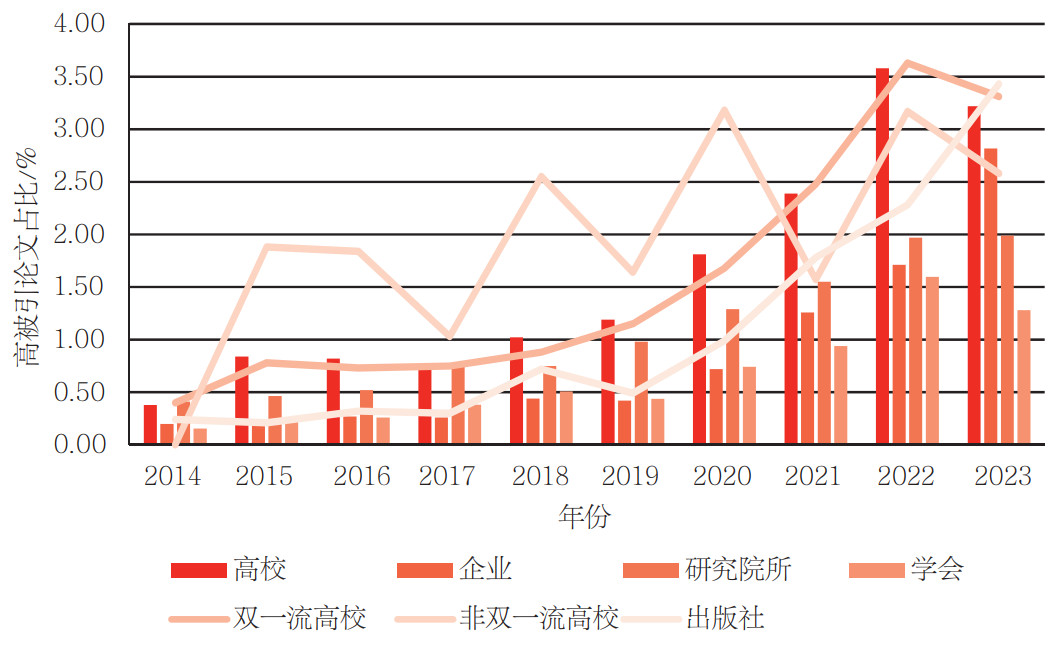
文章围绕中国大陆SCI期刊发表的高被引论文情况展开分析,对2014—2023年高被引论文的发文量、占比以及中国科技期刊卓越行动计划(以下简称“卓越行动计划”)对高被引论文的影响进行了讨论。分析发现,近十年中国大陆SCI期刊的高被引论文发文量和占比均呈逐年递增趋势,“卓越行动计划”入选期刊的高被引论文发文量和占比均高于非入选期刊。英语期刊、高被引论文开放获取期刊、论文在2014—2023年首次被Web of Science数据库收录的期刊,以及高校主办期刊的高被引论文占比较高。入选“卓越行动计划”后,期刊的高被引论文占比均较入选前大幅提升。中国大陆SCI期刊发表的高被引论文呈现良好增长趋势,“卓越行动计划”对高影响力论文数量提升产生了积极影响。
The data of highly cited papers serves as one of the critical reference indicators for evaluating the academic quality and impact of the journals. This paper analyzes the highly cited papers published by science citation index (SCI) journals on the Chinese mainland from 2014 to 2023 to investigate the changes of these journals over the past decade. Additionally, it analyzes the highly cited papers published by the journals selected in the “Excellence Action Plan for China STM Journals” and compares them with non-selected journals to assess this plan’s impact on journal development. The aim of this paper is to provide insights and references for building world-class journals in China from the perspective of highly cited papers and to offer suggestions for the development of Chinese journals. The study includes 279 “Science Citation Index Expanded” (SCIE) journals with the national identifier “China Mainland” from Clarivate’s “Master Journal List”. Since the “Excellence Action Plan for China STM Journals” didn’t target journals from Hong Kong and Macau, this research also excludes journals from these regions. Based on the included 279 SCIE journals, data were retrieved from the Web of Science (WoS) Core Collection database and journal websites for the period of 2014–2023. The following data are collected: annual publication volume of each journal, annual publication volume of two article types (Articles and Reviews), annual volume of highly cited papers, annual volume of highly cited papers of two article types (Articles and Reviews), disciplinary distribution of highly cited papers, open-access status of highly cited papers, language of the publication, primary hosting institution of the journal, and the year in which the journals were first indexed in SCIE. Furthermore, the study identifys the “leading journals”, “key journals”, “echelon journals”, and “high starting point new journals” among the 279 journals based on the 2019–2023 selected journals in the “Excellence Action Plan for China STM Journals”. Descriptive statistical methods are employed to analyze the annual trends in the publication volume of highly cited papers, their disciplinary distribution, and the proportion of highly cited papers in the total publication volume of an individual journal, as well as to analyze the proportion of highly cited papers in journals of different languages, open access statuses, indexing periods, and hosting institutions. This findings reveal that over the past decade, both the number and proportion of highly cited papers published in SCI journals on the Chinese Mainland have shown a year-on-year increasing trend. The journals selected in the “Excellence Action Plan for China STM Journals” exhibit a higher volume and proportion of highly cited papers compared with the non-selected journals. English-language journals, open-access journals, journals first indexed in SCIE between 2014 and 2023, and university-hosted journals exhibit higher proportions of highly cited papers. Furthermore, after being included in the “Excellence Action Plan for China STM Journals”, the journals experienced a significant improvement in the proportion of highly cited papers compared with the period before inclusion. Overall, highly cited papers published by SCI journals on the Chinese mainland show a positive growth trend, and the “Excellence Action Plan for China STM Journals” has played a constructive role in enhancing high-impact papers and improving the academic impact of these journals.
张敏,张洋. 中国大陆SCI期刊发表的高被引论文情况分析[J]. 科技与出版, 2025, 44(2): 88-98. ZHANG Min,ZHANG Yang. Analysis of Highly Cited Papers Published by SCI Journals on the Chinese Mainland. Science-Technology & Publication, 2025, 44(2): 88-98.
http://kjycb.tsinghuajournals.com/CN/ 或 http://kjycb.tsinghuajournals.com/CN/Y2025/V44/I2/88
Cited