Please wait a minute...
科技与出版  2025, Vol. 44 Issue (5): 141-148    
学术探索
总体国家安全观视角下科技期刊的作用与风险管理策略
姜红贵1,秦娟娟2,*
1. 华东交通大学学报编辑部,330013,南昌
2. 新余学院外国语学院,338004,江西新余
Role and Risk Management Strategies for STM Journals from the Perspective of Overall National Security Concept
JIANG Honggui1,QIN Juanjuan2,*
1. Editorial Office of Journal of East China Jiaotong University, 330013, Nanchang, China
2. School of Foreign Languages, Xinyu University, 338004, Xinyu, China
全文: HTML    PDF(1808 KB)  
输出: BibTeX | EndNote (RIS)      
摘要: 

基于总体国家安全观的政策理论框架,通过理论分析、案例研究,和归纳演绎等方法,探讨科技期刊在总体国家安全中的作用和风险治理。文章认为,科技期刊在提升国家科技安全水平、增强国家软实力、维护国家经济安全、巩固国家战略安全等方面发挥着重要作用。然而,在总体国家安全观视角下,科技期刊也可能产生意识形态安全风险、科技信息安全风险、科技创新安全风险、科技伦理安全风险,以及社会舆情安全风险。研究提出,科技期刊需要坚持正确出版导向,确保意识形态安全;防范敏感技术外泄,强化科技信息安全;加强科研诚信建设,巩固科技创新安全;完善学术审查制度,保障科技伦理安全;建立应急管理机制,维护社会舆情安全。

关键词 科技期刊总体国家安全观作用风险管理策略    
Abstract

This paper explores the role and risk management strategies for scientific technological, and medical (STM) journals within the framework of the Overall National Security Concept (ONSC) in China. Through a comprehensive policy-theoretical framework grounded in the ONSC, this study employs multiple research methods, including theoretical analysis, case studies, and inductive-deductive reasoning to systematically investigate how STM journals contribute to and interact with the broader landscape of national security. This study highlights the multifaceted functions of STM journals in enhancing national technological security, strengthening national soft power, safeguarding economic security, and consolidating strategic security. Additionally, it identifies a series of security risks inherent to STM journals that could potentially undermine overall national security. This study establishes the conceptual linkage between STM journals and overall national security by referencing National Security Law and other related regulations. It further examines five major categories of security risks associated with STM journals under the ONSC perspective. First, the risk of sensitive technology leakage is addressed, emphasizing that while STM journals facilitate open academic exchange, they simultaneously pose threats of critical information exposure that may affect military and economic security. Multiple documented cases of inadvertent disclosure of sensitive technologies highlight the urgency of stringent review protocols. Second, ideological security risks arising from political errors in publication content are analyzed, stressing the necessity of rigorous political review to avoid misinformation that could damage national cohesion and international relations. Third, the study discusses the impact of academic fraud on innovation security, noting increasing incidents of scientific misconduct that undermine trust and waste resources, thereby threatening the integrity of national scientific advancement. Fourth, ethical risks related to incomplete or flawed academic review procedures are considered. Fifth, social public opinion risks triggered by inappropriate content publication are identified, which may escalate into broader social disputes through rapid dissemination on digital platforms. To address these intertwined risks, this paper proposes a comprehensive risk management framework tailored to the realities of STM journals under the ONSC. Recommendations include: First, establishing dedicated review committees for sensitive technology to prevent information leakage; Second, implementing stringent political review processes to safeguard ideological security; Third, enhancing academic integrity mechanisms by combining technological tools and expert peer review to identify and prevent misconduct; Fourth, improving academic review systems to ensure ethical compliance and scientific rigor; Fifth, developing emergency response mechanisms to effectively manage social opinion crises. In conclusion, this study provides a theoretical and practical foundation for further scholarly inquiry and policy development to enhance the security governance of STM journals in the context of China’s overall national security strategy.

Key wordsscientific, technological and medical (STM) journals    overall national security concept    risk    management strategy     
出版日期: 2025-06-05
基金资助:江西省高校人文社会科学研究项目“总体国家安全观下科技期刊安全风险及防范治理研究”(XW23105)
通讯作者: 秦娟娟   
Corresponding author: Juanjuan QIN   

引用本文:

姜红贵,秦娟娟. 总体国家安全观视角下科技期刊的作用与风险管理策略[J]. 科技与出版, 2025, 44(5): 141-148.
JIANG Honggui,QIN Juanjuan. Role and Risk Management Strategies for STM Journals from the Perspective of Overall National Security Concept. Science-Technology & Publication, 2025, 44(5): 141-148.

链接本文:

http://kjycb.tsinghuajournals.com/CN/      或      http://kjycb.tsinghuajournals.com/CN/Y2025/V44/I5/141

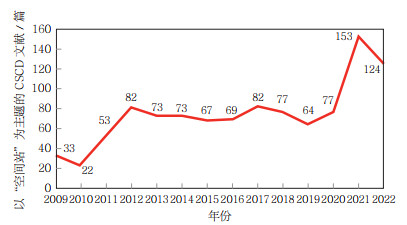
图 1  以“空间站”为主题的CSCD文献搜索结果
1 印波, 刘畅, 范林. 非公有资本对科技期刊渗透的乱象及其法律规制[J]. 编辑学报, 2021, 33 (6): 605- 609.
2 邱蕾. 情报视角下科技论文出版数据信息安全风险与管控[J]. 科技与出版, 2024 (10): 113- 118.
doi: 10.16510/j.cnki.kjycb.20241014.006
3 代妮. 科技期刊应加强保密工作[J]. 编辑学报, 2022, 34 (3): 244- 248.
4 王珏, 任娇菡, 杨恒, 等. 开放科学环境下我国科技论文发表中的信息安全问题与管控[J]. 中国科技期刊研究, 2022, 33 (12): 1599- 1608.
5 徐玲玲, 陶立方, 张耀斌. 科技期刊常见政治性差错例析及编校策略[J]. 浙江师范大学学报(自然科学版), 2023, 46 (2): 235- 240.
6 李国昌. 论科技出版与意识形态安全[J]. 出版参考, 2019 (10): 9- 11.
doi: 10.3969/j.issn.1006-5784.2019.10.003
7 李建伟. 总体国家安全观的理论要义阐释[J]. 政治与法律, 2021 (10): 65- 78.
8 马海群, 李钟隽, 张涛. 中国特色总体国家安全观逻辑建构解读[J]. 情报探索, 2020 (11): 1- 7.
doi: 10.3969/j.issn.1005-8095.2020.11.001
9 中国科学技术信息研究所. 2024年中国科技论文统计报告[R]. 北京:中国科学技术信息研究所,2024.
10 陶文娜, 欧阳峣. 20世纪中叶中国生物技术重大突破的经济学阐释[J]. 湖南师范大学社会科学学报, 2023, 52 (5): 94- 101.
11 李剑刚. 沃尔夫条款与中美航天合作[J]. 中国航天, 2014 (2): 42- 44.
12 张家年, 赵妍. “结构—流程—输出”视阈下科技安全情报体系研究[J]. 情报理论与实践, 2022, 45 (9): 6- 14.
13 王育英, 王群燕. 情报视角下科技论文数据泄露风险的研判、规避与阻断[J]. 编辑学报, 2024, 36 (2): 129- 134.
14 李亚辉, 徐书令, 房威, 等. 学术期刊撤稿引出的出版伦理问题与对策[J]. 编辑学报, 2021, 34 (2): 176- 178.
15 澎湃首席评论员西坡. 马上评丨导师崇高了,师娘优美了,学术尊严怎么办?[EB/OL].(2020-01-12)[2025-01-12]. https://www.thepaper.cn/newsDetail_forward_5501136.
16 潘祥辉, 刘国庆. 媒体对高校舆论监督的“瞭望效应”及传播失灵: 基于2014年以来澎湃新闻对高校学术不端报道的分析[J]. 郑州大学学报(哲学社会科学版), 2019, 52 (6): 119- 124.
17 BRIAN JACKSON . The changing research data landscape and the experiences of ethics review board chairs[J]. The Journal of Academic Librarianship, 2018, 44 (5): 603- 612.
[1] 林润华,祝叶华,刘志远,李娜. 综合性科技期刊影响力要素研究及启示[J]. 科技与出版, 2025, 44(5): 51-59.
[2] 金会平,罗斌. 科技期刊高质量发展的哲学思考:矛盾、规律与目标[J]. 科技与出版, 2025, 44(5): 60-69.
[3] 贺嫁姿,孙涛,徐志武,唐虞. 科技期刊编辑职业竞争力的差异性分析及提升策略[J]. 科技与出版, 2025, 44(5): 78-88.
[4] 刘广东,陈丹. 科技期刊编辑人才流动的制度性困境及其治理[J]. 科技与出版, 2025, 44(4): 5-12.
[5] 秦明阳,李艳红,刘森,余海钊. 高校自主制定科技期刊清单的特点、意义与建议[J]. 科技与出版, 2025, 44(4): 103-111.
[6] 任胜利,刘筱敏,宁笔,陈哲,颜帅. 2024年我国英文科技期刊发展回顾[J]. 科技与出版, 2025, 44(3): 55-65.
[7] 刘志强,王婧,张芳英,吴领叶,张铁明,张昕. 政策引领 拓新致远——2024年我国中文科技期刊盘点与展望[J]. 科技与出版, 2025, 44(3): 66-77.
[8] 丁佐奇,李亚萍,李楚威. “中国科技期刊卓越行动计划”二期项目英文单刊特征分析及发展建议[J]. 科技与出版, 2025, 44(3): 87-96.
[9] 杨燕. 我国科技期刊的投审稿系统功能优化需求分析——基于作者、编辑、审稿专家和编委的调查[J]. 科技与出版, 2025, 44(3): 106-114.
[10] 蒋霞,黄崇亚. 不同语种发表重复内容的出版伦理问题探讨[J]. 科技与出版, 2025, 44(3): 157-166.
[11] 张敏,张洋. 中国大陆SCI期刊发表的高被引论文情况分析[J]. 科技与出版, 2025, 44(2): 88-98.
[12] 王新娟. 科技期刊编辑从事出版学研究对职业发展影响探究——基于扎根理论视角[J]. 科技与出版, 2025, 44(2): 118-124.
[13] 徐小明,董燕萍. 2019—2023年编辑出版类期刊论文基金资助情况调查[J]. 科技与出版, 2025, 44(2): 125-136.
[14] 林润华,张昕,李娜,卫夏雯. 中国科技期刊“十四五”提升路径与“十五五”战略创新思考[J]. 科技与出版, 2025, 44(1): 48-60.
[15] 程海燕,张胜杰. 我国英文科技期刊国外社交媒体传播效果及优化路径研究[J]. 科技与出版, 2025, 44(1): 101-110.