Please wait a minute...
科技与出版  2025, Vol. 44 Issue (8): 136-144    
学术探索
从阅读到撕、贴、涂:安静书的传播实践与时空修复分析
郭栋,杨诗宇
陕西师范大学新闻与传播学院,710119,西安
From Reading to Tearing, Sticking and Coloring: An Analysis of the Communication Practices and Spatiotemporal Restoration of Quiet Books
GUO Dong,YANG Shiyu
School of News and Communication, Shaanxi Normal University, 710119, Xi’an, China
全文: HTML    PDF(9051 KB)  
输出: BibTeX | EndNote (RIS)      
摘要: 

安静书(quiet book)是以互动为核心的书籍,通常由固定的背景和可活动的插图零件等组成,主要包括布艺书与纸质书两种类型,目标读者涵盖学前阶段儿童、中小学阶段青少年,以及部分成人读者。传播渠道方面,安静书基本脱离了传统的图书传播空间,在手工和潮玩等新赛道进行传播。安静书对身体参与的强调激发了多重空间的叠加,将读者带入阅读场景和叙事场景,允许读者随时进入,契合了碎片化阅读特点。安静书的设计不能盲目追求阅读轻量化,应综合考量任务难度与游玩者能力的匹配程度;应适当拓宽选题范围,丰富设计元素。

关键词 阅游融合具身传播时空修复抵抗异化    
Abstract

The quiet book centers on embodied interaction, typically comprising fixed backgrounds and movable illustrated components available in fabric-based and paper-based formats. Its readership encompasses preschool children, school-age adolescents, and adult readers. Regarding communication channels, it differs from traditional book communication spaces and extends into brand-new fields, such as handicrafts and art toys. This research employed two methodologies: interviews and textual analysis. Twelve readers of diverse ages and backgrounds are invited to participate in in-depth interviews. The investigation examined multiple dimensions, including reading motivation and duration, to probe deeply into their reading journeys and emotional responses to quiet books. Based on e-commerce platform data, this research conducted textual analysis of product names, store information, user reviews, and other dimensions to explore the online market landscape and consumer preferences. To examine reading motivation comprehensively, the research adopted David Harvey's space-time restoration framework to analyze the temporal and spatial construction of quiet books. Regarding the temporal dimension, this research reveals that readers resist temporal alienation in the digital era through continuous temporal experiences while reading quiet books. However, not all reading behaviors are for the sake of resistance; some may represent compliance with temporal demands in the digital era. With the help of nonlinear narrative structures and low cognitive demands, readers prefer to select quiet books as a way to relax, accommodating the fragmented reading habits shaped by contemporary lifestyles. Furthermore, many readers engage in concurrent tasks during reading, driven by an urge to attain quick achievement within urgent and fragmented time. Regarding the spatial restoration, the quiet book inspires multi-layered spatial experiences. The readers can actively construct reading scenarios and immerse themselves in the narrative. The process centers the physical body within the reading experience, enabling readers to verify the material existence of the book's world. Unlike the digital world, the tangible experience allows readers to gain a sense of accomplishment in creating a microcosm. However, the space-time restoration of quiet books cannot fundamentally resolve readers' challenges in the digital era. The medium shaped by the space-time restoration has, to some extent, become a new avenue for profit generation. This research presents suggestions for the quiet book evolution. Designers should avoid uncritically pursuing the trend toward light reading. Instead, they should holistically balance task complexity with readers’ capabilities. Excessive task difficulty may induce anxiety and frustration, while overly simple tasks may quickly lead to boredom and loss of interest. Moreover, this research suggests diversifying and innovating quiet book themes by extracting elements from daily life, integrating historical or cultural narratives, and incorporating urban landscapes. Numerous questions remain worthy of exploration in the future. For instance, could the overly light reading trend of quiet books cater to the demands of an accelerated society at the expense of slow-paced aesthetics? Should publishers develop different designs tailored to diverse audiences? These issues are likely to become valuable points for future research in this field.

Key wordsintegration of reading and game    embodied communication    spatiotemporal restoration    resistance to alienation
出版日期: 2025-09-09
基金资助:陕西省社科基金项目“元宇宙视听传播中的文化症候与陕西的政策应对研究”阶段性成果(2022M092)

引用本文:

郭栋,杨诗宇. 从阅读到撕、贴、涂:安静书的传播实践与时空修复分析[J]. 科技与出版, 2025, 44(8): 136-144.
GUO Dong,YANG Shiyu. From Reading to Tearing, Sticking and Coloring: An Analysis of the Communication Practices and Spatiotemporal Restoration of Quiet Books. Science-Technology & Publication, 2025, 44(8): 136-144.

链接本文:

http://kjycb.tsinghuajournals.com/CN/      或      http://kjycb.tsinghuajournals.com/CN/Y2025/V44/I8/136

表 1  12位深度访谈对象的基本信息
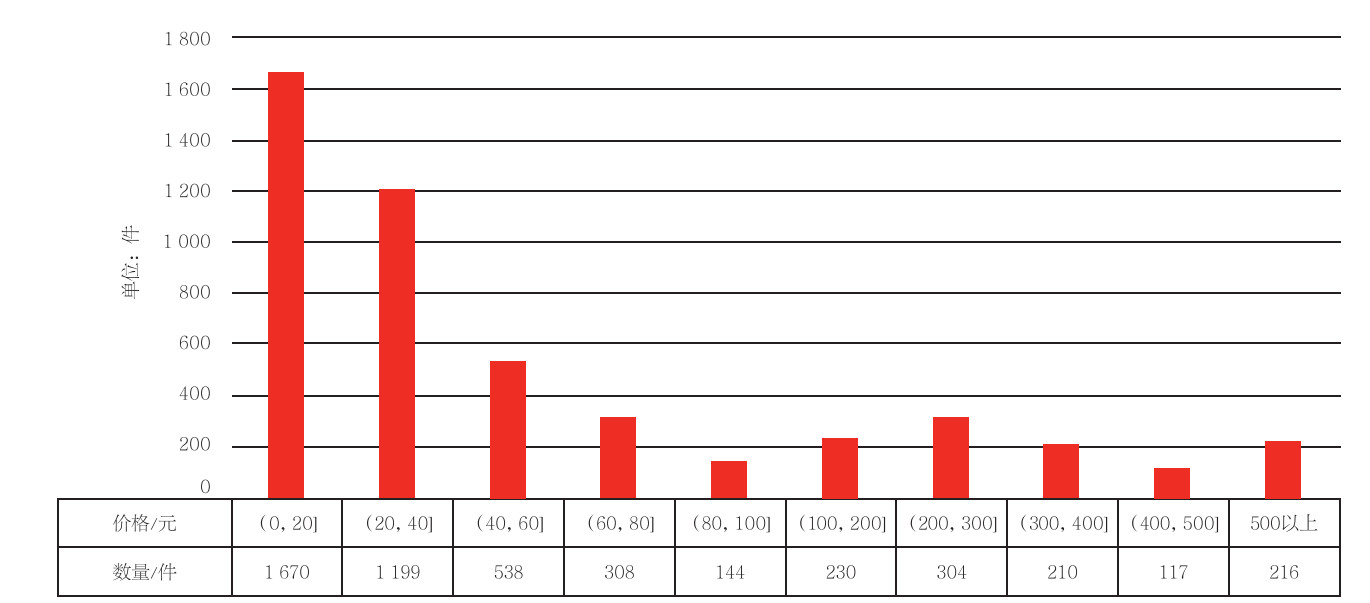
图 1  安静书商品价格分布
表 2  安静书商品数量排名前10的店铺信息
表 3  博主T发布的安静书视频笔记的数据
表 4  小红书平台部分点赞量过万的安静书主题笔记
1 卞晓妍. 去年你读书达标了吗?第二十二次全国国民阅读调查结果发布[EB/OL].(2025-04-24)[2025-04-30]. https://news.cctv.cn/2025/04/24/ARTIpSbJavAT2D2kwVW3gQjs250424.shtml.
2 王聪荣, 高璇. 拼贴艺术在绘本读物中的应用研究[J]. 丝网印刷, 2022 (7): 13- 16.
doi: 10.3969/j.issn.1002-4867.2022.07.004
3 霍力岩. 试论蒙台梭利的儿童观[J]. 比较教育研究, 2000 (6): 51- 56.
4 智研瞻产业研究院.中国互动式儿童书行业市场调研及投资前景分析报告[EB/OL].(2025-03-05)[2025-05-09]. https://baijiahao.baidu.com/s?id=1825716369086011971.
5 大卫·哈维. 新帝国主义[M]. 初力衷, 沈晓雷, 译. 北京: 社会科学文献出版社, 2009:72-73;89.
6 周宪. 视觉文化的转向[J]. 学术研究, 2004 (2): 110- 115.
doi: 10.3969/j.issn.1000-7326.2004.02.024
7 孙亮. 资本逻辑视域中的“速度”概念:对罗萨“社会加速批判理论”的考察[J]. 哲学动态, 2016 (12): 16- 22.
8 董晓烨. 文学空间与空间叙事理论[J]. 外国文学, 2012 (2): 117-123,159-160.
9 王永固, 张婷, 李玮, 等. 基于心流理论的教育游戏设计框架要素研究:以特殊儿童言语学习游戏为案例[J]. 远程教育杂志, 2014 (3): 97- 104.
10 侯莉敏. 童年的“消逝”与大众媒介对儿童生活的影响[J]. 广西师范大学学报(哲学社会科学版), 2007 (1): 101- 104.
No related articles found!