Please wait a minute...
科技与出版  2025, Vol. 44 Issue (9): 79-86    
融媒之光
中文科技期刊视频摘要传播效果及提升策略——以卓越计划二期项目中文单刊为例
郭璐琪,骆瑾,王昕
《华中科技大学学报(自然科学版)》编辑部, 430074, 武汉
Communication of Chinese-Language STM journals on VIDEO ABSTRACTS and Strategies for Improvement: Taking Chinese-Language Journals Included in the Phase Ⅱ of Excellence Action Plan for China’s STM Journals as examples
GUO Luqi,LUO Jin,WANG Xin
Editorial Office of Journal of Huazhong University of Science and Technology (Natural Science Edition), 430074,Wuhan, China
全文: HTML    PDF(8147 KB)  
输出: BibTeX | EndNote (RIS)      
摘要: 

以入选“中国科技期刊卓越行动计划”二期项目的中文单刊为研究对象,梳理期刊视频摘要的传播现状,分析其传播效果及影响因素,指出存在的问题,探索中文科技期刊视频摘要传播的发展策略。研究结果显示:仅18%的中文单刊在社交媒体平台发布过视频摘要,2020—2024年各平台发布视频摘要的账号数量整体呈上升趋势,其中以微信视频号的账号数量最多;不同期刊的视频摘要发布数量、内容质量和传播效果差异较大,与同账号中非视频摘要类视频相比,具有一定的传播优势,但总体来看仍存在发布数量偏低、运营缺乏可持续性、内容策划和表现形式欠佳、传播范围有限等问题。中文科技期刊应重视视频摘要的应用和推广,在实践过程中合理选择运营模式,丰富视频摘要的表现形式,强化平台联动宣传,针对不同平台的用户定位,差异化推广视频摘要。

关键词 中文科技期刊视频摘要卓越行动计划传播效果传播策略    
Abstract

The Chinese-language journals included in the Phase Ⅱ of the Excellence Action Plan for China’s Scientific, Technical and Medical (STM) Journals (EAP) are investigated by analyzing their video abstract presence on social media platforms, particularly WeChat video accounts. This paper evaluates the communication effectiveness of video abstracts using the WeChat Video Accounts Clout Index (WVCI) and quantifiable data, investigates how content features influence communication impact through regression analysis, and proposes optimization strategies for Chinese STM journals’ video abstracts. The results show that merely 18% of Chinese-language STM journals have published video abstracts on social media, with platform usage showing an upward trend from 2020 to 2024, WeChat video accounts being the most prevalent. Journals publishing on multiple platforms demonstrate minimal variation in release timing and content consistency. In 2024, only 5 accounts published more than 50 video abstracts, while 41% (9 accounts) published fewer than 10, indicating generally low production volumes. Regarding performance metrics, only 9.09% of journal video accounts achieved WVCI scores exceeding 500, with the highest value (540.26) approximately six times greater than the lowest (88.17). While video abstracts demonstrate communication advantages compared to non-video content, their presentation remains relatively basic. Communication effectiveness is primarily influenced by production mode, narration style, and video duration. Interview-format videos show superior communication impact, while author narration negatively affects engagement. Videos lasting 3~5 minutes demonstrate a better communication effect. Whether the video has background music or whether the video title is only the title of the paper has no significant impact on the communication effect. As a multimodal form of academic communication, video abstracts help improve the communication efficiency of academic achievements and enhance the influence of STM journals and their papers. Chinese-language STM journals should prioritize video abstract implementation, carefully selecting operational approaches, diversifying presentation formats, strengthening cross-platform promotion, tailoring content for different social media audiences, and leveraging emerging AI technologies for efficient video creation. This paper analyzes the current practices, dissemination effectiveness, and influencing factors of video abstracts in Chinese standalone journals selected for the "Excellence Phase Ⅱ" program. It identifies existing issues and proposes targeted strategies to enhance the impact of video abstracts, including:prioritizing video abstract quality,;selecting appropriate operational models, enriching video abstract formats, strengthening cross-platform romotional synergy, implementing platform-specific targeted promotion based on user demographics.These recommendations aim to provide insights for the application and promotion of video abstracts in Chinese scientific journals.

Key wordsChinese-language scientific, technical, and medical (STM) journals    video abstract    Excellence Action Plan for China's STM Journals    communication effect    communication strategies
出版日期: 2025-10-15
基金资助:中国科技期刊卓越行动计划二期中文梯队期刊项目(卓越-B2-017)

引用本文:

郭璐琪,骆瑾,王昕. 中文科技期刊视频摘要传播效果及提升策略——以卓越计划二期项目中文单刊为例[J]. 科技与出版, 2025, 44(9): 79-86.
GUO Luqi,LUO Jin,WANG Xin. Communication of Chinese-Language STM journals on VIDEO ABSTRACTS and Strategies for Improvement: Taking Chinese-Language Journals Included in the Phase Ⅱ of Excellence Action Plan for China’s STM Journals as examples. Science-Technology & Publication, 2025, 44(9): 79-86.

链接本文:

http://kjycb.tsinghuajournals.com/CN/      或      http://kjycb.tsinghuajournals.com/CN/Y2025/V44/I9/79

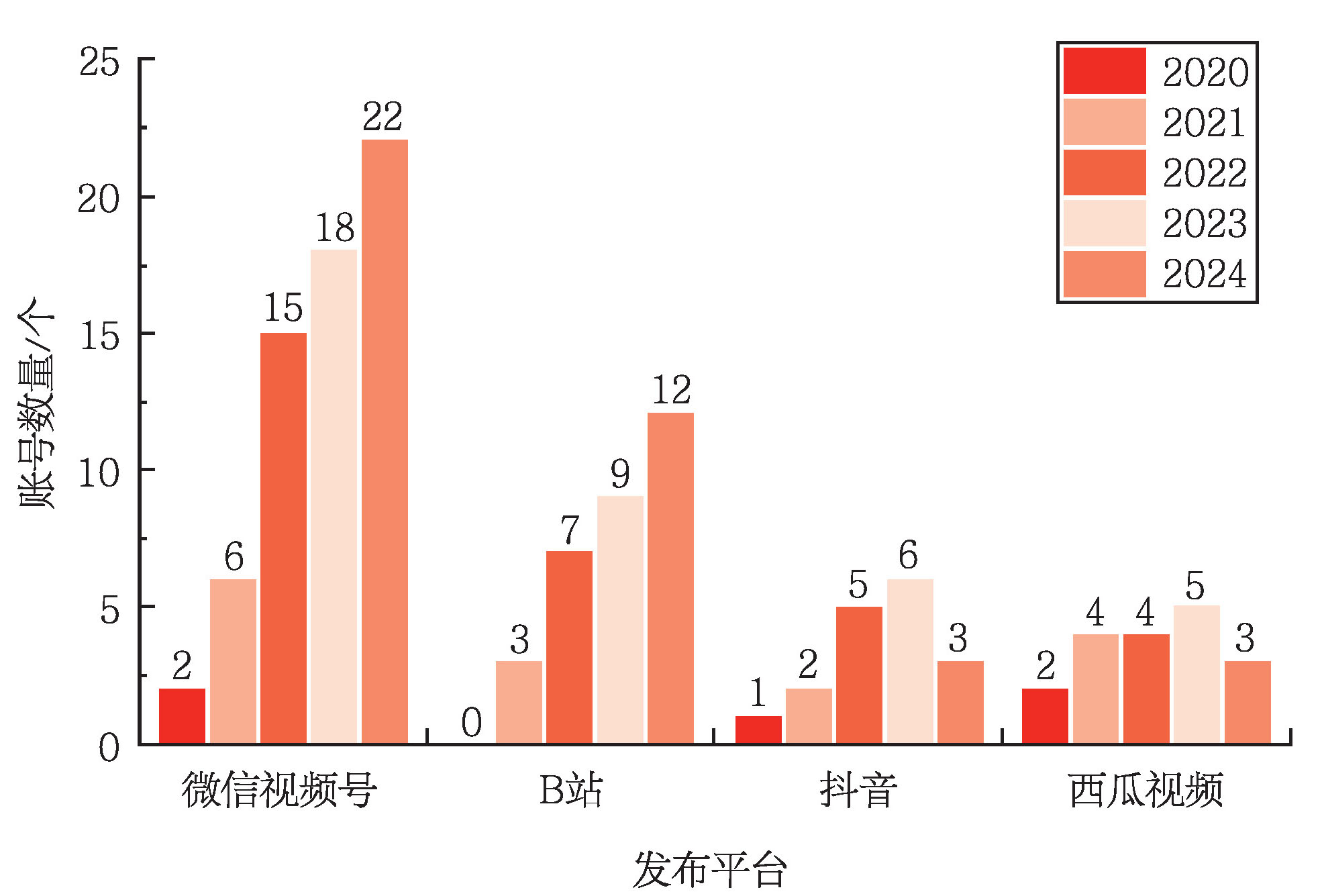
图 1  2020—2024年各平台视频摘要发布变化趋势
表 1  样本账号视频摘要传播力指数
图 2  总传播力排名前7位的账号传播效果对比
表 2  样本描述性统计结果
表 3  视频摘要传播效果影响因素回归结果(N=475)
1 全国信息与文献标准化技术委员会. 文献摘要编写规则:GB/T 6447—2025[S]. 北京:中国标准出版社,2025.
2 黄沈燚, 翁彦琴, 杨绮文. 国外科技期刊视频传播研究与实践述评[J]. 中国科技期刊研究, 2023, 34 (5): 624- 631.
3 张新玲, 谢永生, 章权. 对比视角下我国科技期刊文章视频摘要制作和推广对策分析[J]. 科技与出版, 2022 (9): 64- 68.
doi: 10.16510/j.cnki.kjycb.20220918.010
4 刘旸, 王维杰. "知沟"语境下科技期刊短视频平台传播效果分析与优化策略:以《中国科学》杂志社视频号为例[J]. 科技与出版, 2024 (12): 60- 68.
doi: 10.16510/j.cnki.kjycb.20241216.001
5 刘文睿, 黄沈燚, 翁彦琴, 等. 基于受众视角的视频摘要质量及传播效果评估与思考:以"中国高分子"视频摘要为例[J]. 中国科技期刊研究, 2023, 34 (10): 1293- 1300.
6 吴祝华, 洪淳薇, 刘若瑾, 等. 我国科技期刊论文短视频评价体系构建与应用研究[J]. 中国科技期刊研究, 2023, 34 (11): 1502- 1510.
7 清博指数. 微信视频号传播力指数WVCI(V1.0)[EB/OL]. [2025-05-07]. https://www.gsdata.cn/site/usage-19.
8 黄沈燚, 翁彦琴, 杨绮文. 中国科学院科技期刊微信视频号传播现状及发展策略探[J]. 中国科技期刊研究, 2023, 34 (11): 1392- 1398.
9 张怀东. 科技期刊短视频传播效果影响因素实证研究:以"中国科技期刊卓越行动计划"入选期刊的微信视频号为例[J]. 科技与出版, 2024 (8): 60- 66.
doi: 10.16510/j.cnki.kjycb.2024.08.004
10 武文颖, 森巴提·叶冉, 潘瑜琦, 等. 我国科技期刊短视频平台知识传播效果的影响因素研究:基于B站的实证分析[J]. 中国科技期刊研究, 2024, 35 (7): 924- 931.
11 The Charlesworth Group.An introduction to video abstracts[EB/OL]. [2025-05-07]. https://www.cwauthors.com/video-abstracts.
12 谭春林, 王维朗, 徐志武, 等. 生成式人工智能赋能科技论文视频摘要的实践与挑战[J]. 中国科技期刊研究, 2024, 35 (12): 1767- 1774.
13 《地学前缘》编辑部. 松辽盆地国际大陆科学钻探:白垩纪恐龙时代陆相地质记录[EB/OL]. [2025-05-07]. https://nnfckpf.drag.scyxcm.com/v3/userInfo?infoId=105345&key=cmRkYZad&tid=3127.
[1] 张欢,孙红,戚德祥. 中国网络游戏国际传播效果评估:原则、方法与指标体系[J]. 科技与出版, 2025, 44(6): 52-63.
[2] 任胜利,刘筱敏,宁笔,陈哲,颜帅. 2024年我国英文科技期刊发展回顾[J]. 科技与出版, 2025, 44(3): 55-65.
[3] 刘志强,王婧,张芳英,吴领叶,张铁明,张昕. 政策引领 拓新致远——2024年我国中文科技期刊盘点与展望[J]. 科技与出版, 2025, 44(3): 66-77.
[4] 丁佐奇,李亚萍,李楚威. “中国科技期刊卓越行动计划”二期项目英文单刊特征分析及发展建议[J]. 科技与出版, 2025, 44(3): 87-96.
[5] 程海燕,张胜杰. 我国英文科技期刊国外社交媒体传播效果及优化路径研究[J]. 科技与出版, 2025, 44(1): 101-110.
[6] 郭欣,张焱丽,徐云峰. 医学期刊新媒体传播效果的比较分析与提升策略*[J]. 科技与出版, 2024, 43(8): 92-98.
[7] 张怀东. 科技期刊短视频传播效果影响因素实证研究[J]. 科技与出版, 2024, 43(8): 60-66.
[8] 何莉,刘家树. 卓越行动计划背景下我国高校科技期刊国际影响力的测度分析*[J]. 科技与出版, 2024, 43(6): 48-59.
[9] 尚晶,韩文革. 中文科技期刊发表综述论文的特征及建议[J]. 科技与出版, 2024, 43(6): 130-136.
[10] 任胜利,丁佐奇,宁笔,陈哲. 2023年我国英文科技期刊发展回顾[J]. 科技与出版, 2024, 43(3): 46-54.
[11] 张芳英,王婧,吴领叶,刘志强,张铁明,张昕. 我国中文科技期刊持续高质量发展路径思考[J]. 科技与出版, 2024, 43(3): 55-66.
[12] 骆筱秋,王晴. 高校科技期刊特色化发展路径探析*[J]. 科技与出版, 2023, 42(7): 120-124.
[13] 李瑞华,付晓静. 情感传播视野下主题出版传播优化研究*[J]. 科技与出版, 2023, 42(4): 84-90.
[14] 任胜利, 杨洁, 宁笔, 陈哲, 马峥. 2022年我国英文科技期刊发展回顾[J]. 科技与出版, 2023, 42(3): 50-57.
[15] 刘志强, 王婧, 张芳英, 郭伟, 张铁明, 张昕. 新时代我国中文科技期刊高质量发展之路探析[J]. 科技与出版, 2023, 42(3): 58-66.