Please wait a minute...
科技与出版  2026, Vol. 45 Issue (1): 43-52    
产业观察
AI时代国际中文教育出版知识产权价值链构建:特性分析、逻辑解构与瓶颈突破
卢明嘉1,陆贵曦2,郝运3,*
1. 南京大学信息管理学院,210046,南京
2. 山东大学纪检监察学院,264209,山东威海
3. 北京语言大学出版社,100083,北京
The Construction of the Intellectual Property Value Chain in International Chinese Language Education Publishing in the Era of AI:Characteristic Analysis, Logical Deconstruction, and Bottleneck Breakthrough
LU Mingjia1,LU Guixi2,HAO Yun3,*
1. School of Information Management, Nanjing University, 210046, Nanjing, China
2. School of Discipline Inspection and Supervision, Shandong University, 264209, Weihai, China
3. Beijing Language and Culture University Press, 100083, Beijing, China
全文: HTML    PDF(11066 KB)  
输出: BibTeX | EndNote (RIS)      
摘要: 

国际中文教育出版在推动中华文化“走出去”方面作出巨大贡献。在生成式人工智能与大模型技术驱动出版产业发生深刻变革的时代背景下,从知识产权视角看,我国国际中文教育出版正面临产权结构、价值转化、市场适配、基础支撑和版权保护五大瓶颈问题。本研究在对国际中文教育出版知识产权价值链进行概念界定与特性分析的基础上,利用内容层、技术层和渠道层三层框架探索了知识产权价值链运行的底层逻辑(静态逻辑);从“创造—拓展—推广—服务—保护”的链状环节探究价值链各环节的动态协同与增值逻辑(动态逻辑)。基于此,针对瓶颈问题提出系统性解决方案,以助力我国国际中文教育出版在“十五五”期间为提升中国出版国际传播效能作出更大贡献。

关键词 AI技术国际中文教育出版知识产权价值链出版“走出去”    
Abstract

International Chinese language education publishing has made significant contributions to promoting the global dissemination of Chinese culture. Against the backdrop of profound transformations in the publishing industry driven by generative artificial intelligence and large-scale model technologies, this study systematically analyzes the development bottlenecks faced in this field from an intellectual property perspective and explores potential solutions. First, the research provides a detailed overview of the five core bottlenecks currently existing in international Chinese language education publishing: ambiguous intellectual property structures, a disconnect in value transformation, insufficient market adaptation, lagging foundational services, and weak copyright protection.These bottlenecks collectively constrain the value realization and sustainable development of this field in the AI era. Second, this study adopts a problem-oriented approach, integrating methods such as value chain theory and case analysis. After defining the concept and analyzing the characteristics of the intellectual property value chain, it constructs and examines the operational logic of the intellectual property value chain in the era of AI from both static and dynamic perspectives. 1) At the static level, the operation of the value chain relies on the triadic foundational framework of "content, technology, and channels, " where the content layer constitutes the value core, the technology layer serves as the primary driver, and the channels layer acts as the bridge for value realization. 2) At the dynamic level, the value chain follows a full lifecycle of "creation—expansion—promotion—service—protection, " forming an organic value-added. Driven by AI, the creation phase shifts from human-led originality to human-AI collaboration; the expansion phase transitions from static derivation to intelligent dynamic generation; the promotion phase evolves from channel-based distribution to precise outreach and intelligent localization adaptation; the service phase progresses from manual support to scalable personalized services; and the protection phase transforms from passive rights protection to proactive comprehensive defense. Finally, based on the above analysis, this study proposes systematic solutions to address the five bottlenecks: 1) To tackle the intellectual property structure bottleneck, it recommends establishing a management mechanism for human-AI collaborative intellectual property, developing a creation management platform, and maintaining digital archives; 2) To overcome the value transformation bottleneck, it suggests adopting a tiered development approach for textbook IP value and establishing a blockchain-based intelligent micro-licensing platform; 3) To resolve the market adaptation bottleneck, it calls for deploying a global precision marketing and feedback network and consolidating market data into a core strategic asset; 4) To address the foundational services bottleneck, it advocates building an intelligent teaching service support system and a global collaboration network, as well as developing ecosystem-based teaching service product packages; 5) To break through the copyright protection bottleneck, it emphasizes the need to construct a full-process infringement monitoring system, establish domestic and international collaborative mechanisms, and apply digital technologies for round-the-clock infringement monitoring. This study provides an innovative theoretical framework and practical guidance for maximizing the value of intellectual property and enhancing the effectiveness of international dissemination in the field of international Chinese language education publishing in the AI era.

Key wordsAI technology    international Chinese language education publishing    intellectual property value chain    publishing "going global"
出版日期: 2026-03-19
基金资助:国家新闻出版署科技与标准重点实验室项目“‘一带一路’国家数字出版技术创新与国际传播”课题(CSLS 20230011);韬奋基金会2025年度规划课题“标准与技术融合视域下的国际中文教育分级阅读推广研究”(TF2025103);北京语言大学2024年重点项目孵化课题“新时代中国出版国际传播效能提升研究”(24ZD106)
通讯作者: 郝运   
Corresponding author: Yun HAO   

引用本文:

卢明嘉,陆贵曦,郝运. AI时代国际中文教育出版知识产权价值链构建:特性分析、逻辑解构与瓶颈突破[J]. 科技与出版, 2026, 45(1): 43-52.
LU Mingjia,LU Guixi,HAO Yun. The Construction of the Intellectual Property Value Chain in International Chinese Language Education Publishing in the Era of AI:Characteristic Analysis, Logical Deconstruction, and Bottleneck Breakthrough. Science-Technology & Publication, 2026, 45(1): 43-52.

链接本文:

http://kjycb.tsinghuajournals.com/CN/      或      http://kjycb.tsinghuajournals.com/CN/Y2026/V45/I1/43

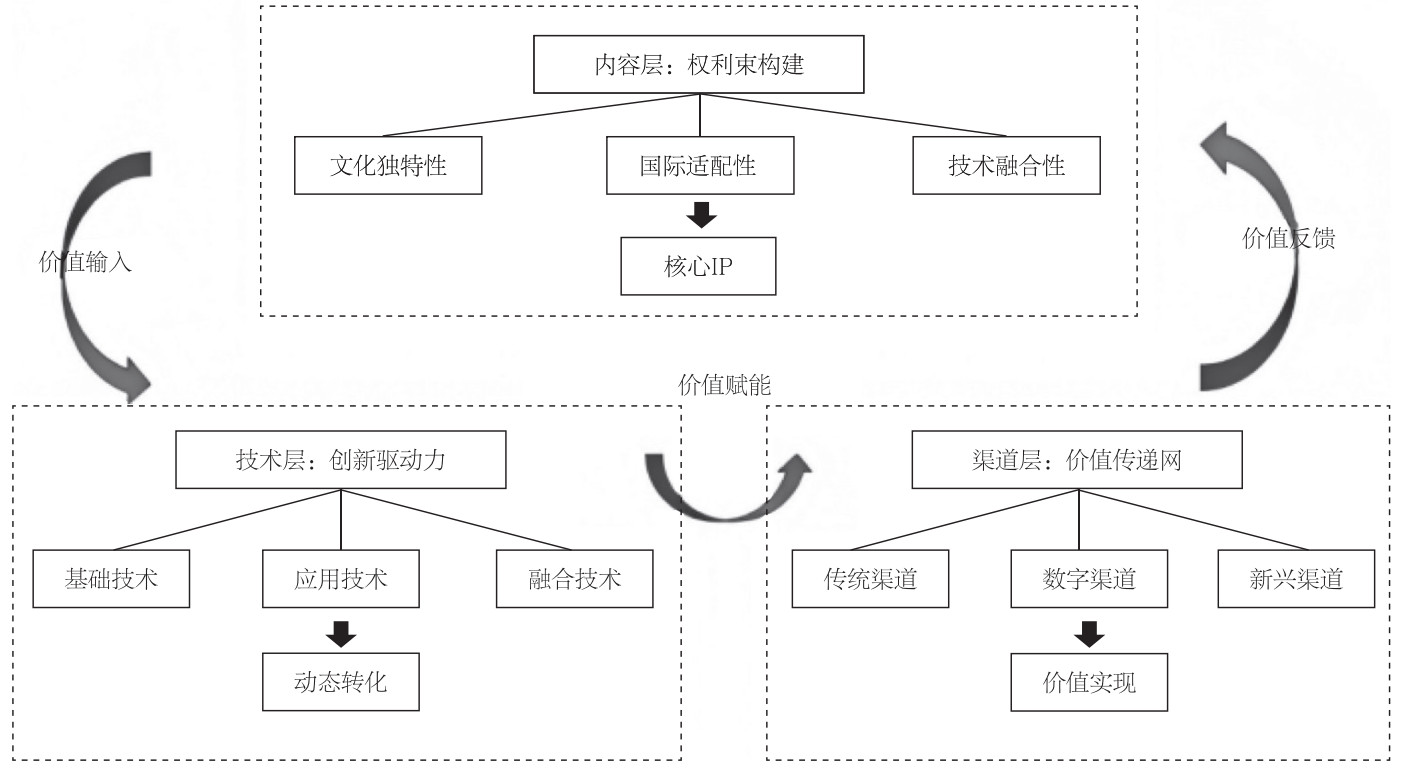
图 1  AI时代国际中文教育出版知识产权价值链的要素解构
1 习近平向2024世界中文大会致贺信[EB/OL].(2024-11-16)[2025-12-05]. https://cpc.people.com.cn/BIG5/n1/2024/1116/c64094-40362464.html.
2 中共中央关于进一步全面深化改革、推进中国式现代化的决定[N]. 人民日报,2024-07-22(4).
3 李强治, 刘志鹏. 后DeepSeek时代的人工智能发展与治理新趋势[J]. 科学观察, 2025, 20 (3): 1- 7.
4 王壮, 陆贵曦, 卢明嘉, 等. 全面迈向智慧出版:AI时代AR/VR类童书的发展困境、技术赋能及价值重构[J]. 科技与出版, 2024 (8): 51- 59.
doi: 10.16510/j.cnki.kjycb.2024.08.010
5 宋飞, 张明瑶. 在线虚拟现实技术在中文教学中的应用[J]. 国际中文教育(中英文), 2021, 6 (1): 91- 100.
6 沪上高校用“元宇宙”打开了国际中文教育的另一扇门[EB/OL].(2022-12-12)[2025-12-03]. https://www.ecnu.edu.cn/info/1426/64147.htm.
7 杨明. 知识产权制度与知识财产创造者的行为选择[J]. 中外法学, 2012, 24 (4): 742- 760.
8 赵羚, 王辉. 人工智能背景下国际中文教育的可能、可虞与可为[J]. 浙江师范大学学报(社会科学版), 2025, 50 (6): 1- 9.
9 LingoAce携手北京大学出版社发布《卓越中文》系列教材[EB/OL].(2025-11-25)[2025-12-18]. https://www.imsilkroad.com/news/p/800843.html.
10 复旦大学孔子学院办公室. 2025年卢森堡大学孔子学院“汉语桥”夏令营圆满落幕[EB/OL].(2025-08-02)[2025-09-18]. https://www.ci.fudan.edu.cn/57/10/c554a743184/page.htm.
11 米加宁, 李大宇, 董昌其. 大语言模型引致知识生产方式变革与决策范式的重构[J]. 管理世界, 2025, 41 (7): 40-58,72,59.
12 刘琛. IP热背景下版权价值全媒体开发策略[J]. 中国出版, 2015 (18): 55- 58.
13 郝运. 秉承高质量国别化发展理念服务国际中文教学[J]. 新阅读, 2021 (11): 15- 16.
14 黄凯健, 杨海平. AIGC主导下的智慧出版知识生产革新[J]. 编辑之友, 2023 (12): 28- 33.
15 管荣齐. 新时代中国知识产权保护国际化对策[J]. 学术论坛, 2019, 42 (4): 36- 44.
16 戚德祥, 马瑞洁. 数字内容资源开发与管理:出版知识服务转型的关键[J]. 科技与出版, 2023 (9): 20- 28.
doi: 10.16510/j.cnki.kjycb.2023.09.012
[1] 王鹏飞,毛志慧. 2024年出版学研究的十大热点话题[J]. 科技与出版, 2025, 44(6): 5-17.
[2] 金强,魏志鹏. 历史进程、实践总结与理论适配:新国际格局下的“跨文化出版”审思[J]. 科技与出版, 2025, 44(6): 103-112.
[3] 施歌,吴依蔓,王世友. 国际中文教育出版的多维分析[J]. 科技与出版, 2025, 44(4): 23-30.
[4] 周霞. 海外青少年文学出版实践研究及对中国当代文学“走出去”的启示——基于亚马逊“最佳青少年图书”(2020—2024)的考察[J]. 科技与出版, 2025, 44(11): 15-25.
[5] 王壮,陆贵曦,卢明嘉,刘晓晔. 全面迈向智慧出版:AI时代AR/VR类童书的发展困境、技术赋能及价值重构*[J]. 科技与出版, 2024, 43(8): 51-59.
[6] 敖然, 李弘, 冯思然. 我国网络文学出海现状、困境、对策[J]. 科技与出版, 2023, 42(4): 26-30.
[7] 谢清风. 2022年我国出版“走出去”的趋势性特征分析*[J]. 科技与出版, 2023, 42(3): 20-26.
[8] 王丽颖. 中国文化“走出去”的视觉设计类图书出版策略[J]. 科技与出版, 2023, 42(2): 92-95.
[9] 王壮,郭雪,卢明嘉,赵军武. 创新推动我国学术出版高质量“走出去”*[J]. 科技与出版, 2022, 41(8): 22-29.
[10] 王彦祥, 刘子涵, 张丽. 为党做好出版工作的一年[J]. 科技与出版, 2022, 41(3): 43-51.
[11] 侯欣洁,戚德祥. 数字技术驱动下的出版“走出去”数字平台建设*[J]. 科技与出版, 2021, 40(5): 60-65.
[12] 张丽, 王彦祥, 刘子涵, 李祎峣, 陈丽君. 抗疫奋发的一年[J]. 科技与出版, 2021, 40(3): 35-44.
[13] 戚德祥, 孙红. 中国出版国际传播能力建设研究*[J]. 科技与出版, 2021, 40(11): 6-12.
[14] 俞玮奇, 韩进拓. 国际中文教育图书的海外出版传播对策研究*[J]. 科技与出版, 2021, 40(11): 34-39.
[15] 戚德祥. 打造融通中外的精品出版物,促进文明交流互鉴[J]. 科技与出版, 2020, 39(5): 23-28.