Please wait a minute...
科技与出版  2026, Vol. 45 Issue (1): 70-84    
营销方略
可解构的“畅销经验”:AIGC赋能出版营销的价值趋向与实践落点
宋俊锋1,2,刘万3
1. 华东师范大学传播学院(出版学院),200241,上海
2. 华东师范大学上海出版研究院,200241,上海
3. 武汉大学信息管理学院,430072,武汉
Deconstructable Best-Selling Experience: Value Trend and Practical Applications of AIGC-Empowered Publishing Marketing
SONG Junfeng1,2,LIU Wan3
1. School of Communication (School of Publishing), East China Normal University, 200241, Shanghai, China
2. Shanghai Publishing and Research Institute of East China Normal University, 200241, Shanghai, China
3. School of Information Management, Wuhan University, 430072, Wuhan, China
全文: HTML    PDF(16215 KB)  
输出: BibTeX | EndNote (RIS)      
摘要: 

在生成式人工智能快速渗透出版产业的当下,出版营销作为连接生产与消费的关键环节,正面临由经验驱动向机制驱动的关键性转向。文章从“畅销经验”这一高度实践化的出版命题出发,以问卷调查与深度访谈相结合的实证路径,提出AIGC赋能出版营销在信息、流程、感知与品牌四个方面的价值趋向,并据此进一步归纳其在“编辑个体—出版主体—行业制度”三个维度的实践落点,强调从工具使用到基础设施协同的转变路径。研究不仅回应了AIGC背景下出版业的转型需求,更意在厘清AIGC技术介入后“出版”在内容逻辑、价值协商与制度建构上的再定义,为构建数据驱动的出版新范式提供理论支撑与实务参照。

关键词 出版营销人工智能畅销经验出版融合畅销书    
Abstract

With the rapid penetration of generative artificial intelligence (AI) into the publishing industry, publishing marketing, as a key link between production and consumption, is facing a key shift from experience-driven to mechanism-driven. Starting from the highly practical publishing proposition of best-selling experience, this study adopted a questionnaire survey (questionnaires were distributed in the publishing industry community and related WeChat official account online from late July to August 6, 2025, and finally, 1049 valid questionnaires were collected), in-depth interviews with experts (respondents covered state-owned publishing groups, professional publishing houses, private publishing enterprises and technical services and platforms, respondents have worked in their respective fields for a long time, and first-line practical and management experience), case comparison and literature analyses, in-depth analyses of the application status of AI-generated content (AIGC) technology in China’s publishing industry, and made clear the specific links and application scenarios of AIGC-enabled publishing marketing. It is found that AI technology not only releases productivity at the efficiency end but also reshapes value generation at the levels of narrative organization, audience matching, immersion translation and organizational collaboration. In this study, best-selling experience is divided into three levels of knowledge practice: one is individual experience with editing as the core, which covers subjective cognitive resources such as topic selection judgment, text value judgment and border control; the second is the organizational experience focusing on the organization and brand level, which is reflected in the reusable template accumulated by the publishing category, brand style and audience stickiness; and the third is the industry experience embedded in the industry system logic, which emphasizes that published products have dual values of cultural attributes and commodity attributes and their public expectations should differ from those of ordinary consumer products, but they cannot be separated from the platform economy model and internet development logic constructed by data algorithms. This study emphasizes that the triple paths of individual experience, brand experience and industry experience are linked with each other, forming a continuous pedigree from individual skills and organizational ability to institutional environment, which gradually transforms occasional explosion experience into replicable long-term ability. In technological change, best selling is no longer the natural occurrence of results but rather a generation process composed of strategic design, technical ability and institutional arrangement. Experience is no longer an unspeakable intuitive judgment but a professional system that can be verified, transformed and passed on. Finally, copying experience involves copying the working methods and verification devices facing uncertainty so that experience can continuously generate new explanatory power and action forces on the premise of respecting category differences, channel heterogeneity and timing constraints. This study not only responds to the transformation needs of the publishing industry against the background of AIGC but also aims to clarify the redefinition of content logic, value negotiation and system construction after AI technology is involved in publishing marketing and provides theoretical support and practical reference for building a new data-driven publishing paradigm.

Key wordspublishing marketing    artificial intelligence    best selling experience    publishing integration    best seller
出版日期: 2026-03-19
基金资助:中央高校基本科研业务费项目华东师范大学文理交叉跨学科培育项目“人工智能技术赋能新时代出版业高质量发展路径研究”(2025ECNU-WLJC010);2025年优秀博士学术创新能力提升计划(YBNLTS 2025-028)

引用本文:

宋俊锋,刘万. 可解构的“畅销经验”:AIGC赋能出版营销的价值趋向与实践落点[J]. 科技与出版, 2026, 45(1): 70-84.
SONG Junfeng,LIU Wan. Deconstructable Best-Selling Experience: Value Trend and Practical Applications of AIGC-Empowered Publishing Marketing. Science-Technology & Publication, 2026, 45(1): 70-84.

链接本文:

http://kjycb.tsinghuajournals.com/CN/      或      http://kjycb.tsinghuajournals.com/CN/Y2026/V45/I1/70

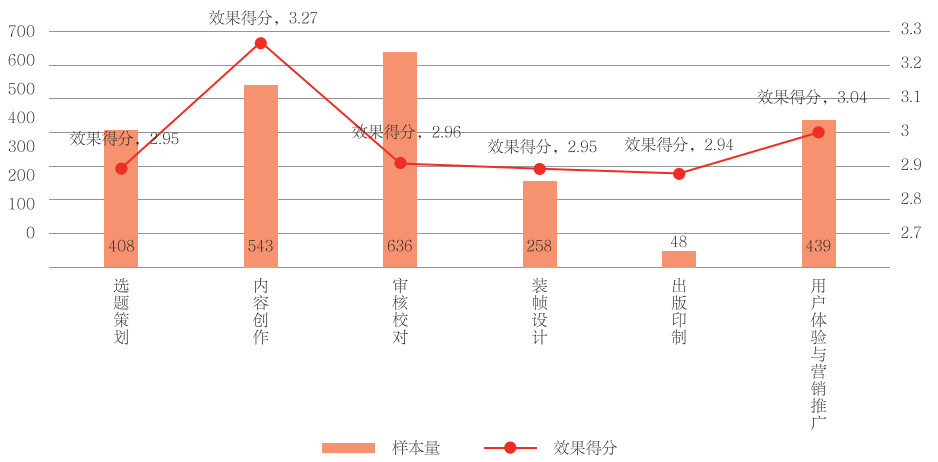
图 1  受访者在不同业务环节中的AIGC工具应用情况及应用效果得分均值
表 1  行业专家深度访谈情况表
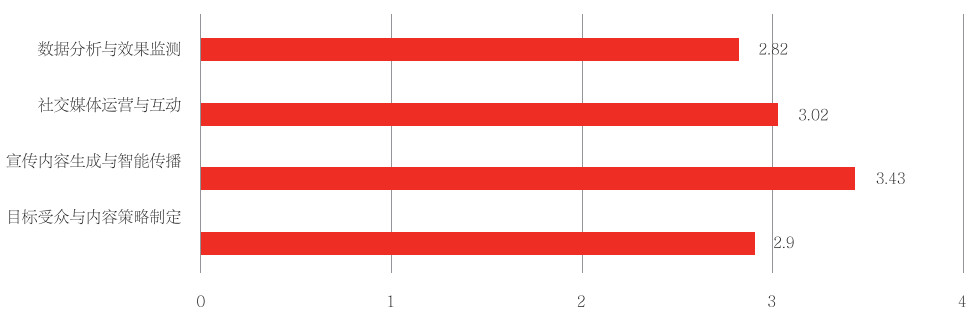
图 2  受访者在用户体验与营销推广环节使用AIGC工具的效果得分
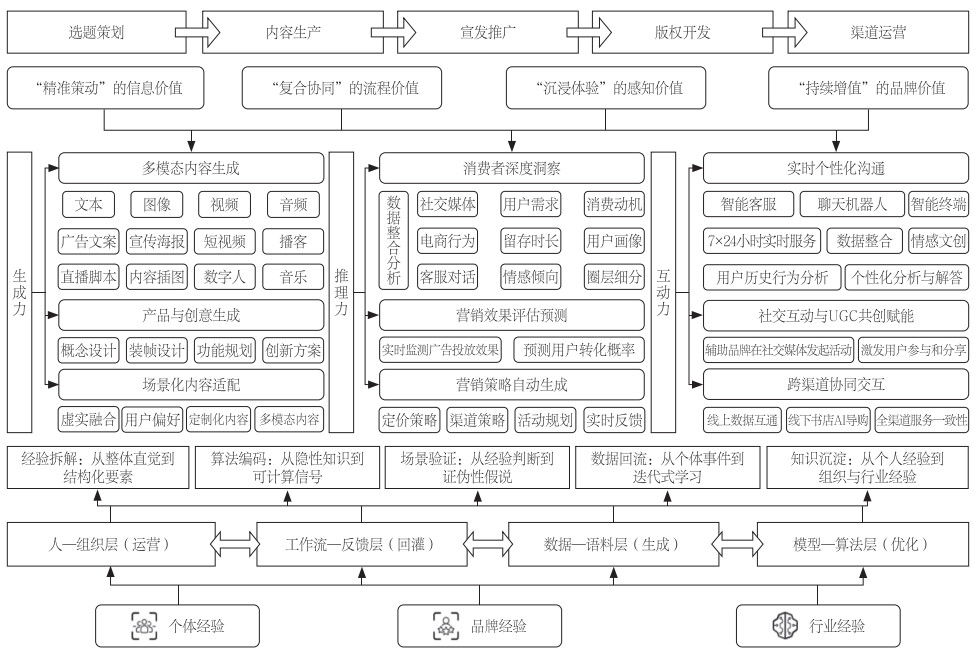
图 3  AIGC赋能出版营销的“经验—数据”更新链式
1 陈矩弘, 封采龄. 生成式人工智能赋能出版营销的技术逻辑与实践进路[J]. 科技与出版, 2025 (4): 76- 84.
2 陈矩弘, 王卢, 冯兆莹. 生成式人工智能赋能出版营销的应用场景、风险及应对[J]. 出版发行研究, 2024 (10): 43- 50.
3 彭昱剑, 范军. 生成式人工智能视角下的出版品牌资源建设[J]. 科技与出版, 2023 (9): 29- 35.
doi: 10.16510/j.cnki.kjycb.2023.09.013
4 张艳, 程梦恒. 人工智能营销传播算法偏见与元规制路径研究[J]. 中国出版, 2021 (8): 27- 30.
5 张艳. 智能技术时代的广告内容营销传播[J]. 中国出版, 2017 (19): 43- 46.
6 王佳炜, 陈红. 人工智能营销传播的核心逻辑与发展挑战[J]. 当代传播, 2020 (1): 73- 76.
7 戚德祥, 马泽慧. 出版平台化视角下智能聊天机器人的情感营销路径探析[J]. 中国出版, 2024 (9): 28- 33.
8 约翰·B. 汤普森. 文化商人:21世纪的出版业[M]. 张志强,何平,姚小菲,译. 南京:译林出版社,2016:14.
9 李旭, 宣晓凤. 新中国成立70周年畅销书发展演进的16个基本判断[J]. 中国出版, 2019 (17): 5- 11.
10 籍元婕. 新媒体时代心理自助类图书畅销的深度心理分析[J]. 编辑之友, 2018 (12): 16- 19.
11 杨庆峰. 论作为人类经验新形式的“数据:经验”[J]. 南京大学学报(哲学·人文科学·社会科学), 2020 (1): 78-87,159-160.
12 谭光辉. 从消费端解释畅销书和流行小说的四个理论[J]. 当代文坛, 2019 (5): 181- 187.
13 韩晗. 消费语境下的文艺生产、期刊出版与畅销经验:以1937年前后上海地区期刊出版模式为支点的史料研究[J]. 现代出版, 2011 (6): 16- 20.
14 戴维·温伯格. 知识的边界[M]. 胡泳,高美,译. 太原:山西人民出版社,2014:97.
15 姜华著. 制造知识:作为媒介的书籍与出版[M]. 北京: 商务印书馆, 2024: 70.
16 谭光辉. 从生产端解释畅销书和流行小说的四个理论[J]. 中外文化与文论, 2019 (2): 218- 227.
17 吴军, 王桐, 丹尼尔·亚伦·西尔, 等. 场景文化力:新芝加哥学派解读城市发展[M]. 北京: 社会科学文献出版社, 2024: 231.
18 杜梁著. 影游融合:从联动到共生[M]. 上海: 上海社会科学院出版社, 2022: 222.
19 亨利·詹金斯. 融合文化:新媒体与旧媒体的冲突地带[M]. 杜永明,译. 北京:商务印书馆,2012:23-27.
20 杨虎. 从大众文化的视角看畅销书出版活动中的创新与跟风[J]. 出版广角, 2018 (2): 6- 9.
21 杨扬. 生态理论视角下我国出版品牌族群建构优化研究[J]. 科技与出版, 2025 (2): 107- 117.
22 行知未来. 冷湖火箭排行榜启动仪式在上海书城举行[EB/OL].(2024-04-14)[2025-11-19]. https://mp.weixin.qq.com/s/1vIKwoUSOJ0800H_QXWfWg.
23 列夫·马诺维奇. 文化分析[M]. 李鹤伊,译. 上海:生活·读书·新知三联书店,2025:186.
24 宋俊锋, 安仲禹. 智能媒体时代下出版从业人员数字化能力评价指标体系建构研究[J]. 编辑学刊, 2025 (6): 13- 20.
25 万丽慧. 大数据背景下的畅销书选题技术操作[J]. 出版发行研究, 2020 (8): 51- 57.
26 杨海军. 中国当代广告话语传播研究[M]. 上海: 上海大学出版社, 2023: 173.
27 塔娜. 基于亚马逊畅销书发行的网络发行渠道走向研究[J]. 编辑之友, 2018 (4): 50- 53.
28 王卉, 蒋小花. 从用户行为到品牌共鸣:社交媒体时代出版品牌塑造多维策略[J]. 中国出版, 2025 (6): 15- 21.
29 周蔚华, 梁雪云. 新中国70年图书出版:历史进程、主要成就和经验[J]. 现代出版, 2019 (5): 5- 18.
30 单定平, 张文红. 我国少儿类畅销书的规律分析:基于近两年开卷少儿类畅销书排行榜数据[J]. 出版广角, 2018 (14): 32- 34.
31 王勇安, 葛丹. 基于DeepSeek开发AIGC集成工具赋能出版[J]. 出版广角, 2025 (3): 33- 38.
32 闫伟华. 大数据分析与畅销书选题的精准策划[J]. 编辑之友, 2015 (6): 5- 9.
33 黄莹. 可供性视角下出版人工智能:多重角色与平台架构[J]. 编辑之友, 2022 (6): 21- 25.
[1] 刘超. 人工智能时代的教育出版:挑战、机遇与转型路径探索[J]. 科技与出版, 2025, 44(9): 21-28.
[2] 刘普,孙婉婷. 社科学术期刊的AI使用政策图谱与治理进阶——基于50家社科学术期刊生成式人工智能使用政策文本的分析[J]. 科技与出版, 2025, 44(9): 52-62.
[3] 李鸿飞,熊祎斐. 人工智能生成内容的版权风险治理比较研究[J]. 科技与出版, 2025, 44(8): 102-112.
[4] 董慧娟,余非. AIGC可版权的必要非充分要件:“有限控制论”的证成与适用展开*[J]. 科技与出版, 2025, 44(8): 113-127.
[5] 张敬柱,吴素平. 构建教育出版服务新生态的探索与思考[J]. 科技与出版, 2025, 44(7): 62-67.
[6] 刘玲武,胡海,刘菡. 我国出版融合政策体系研究——基于102项政策文本的“主体—路径—工具”三维框架分析[J]. 科技与出版, 2025, 44(7): 68-80.
[7] 王鹏飞,毛志慧. 2024年出版学研究的十大热点话题[J]. 科技与出版, 2025, 44(6): 5-17.
[8] 王钧,王飚,李苏航. 出版行业构建高质量数据集的优势分析与方法研究[J]. 科技与出版, 2025, 44(6): 64-72.
[9] 罗启元,焦霖. 数智化时代馆社共建与创新路径思考[J]. 科技与出版, 2025, 44(6): 44-51.
[10] 官鑫,林琳,赵阳,李欣欣,韩宏志,陈思含,李昕蔚,邢翔宇,丁昳玲,张海洋. DeepSeek技术赋能医学期刊中文摘要的编辑加工[J]. 科技与出版, 2025, 44(6): 95-102.
[11] 王亮. 检索增强生成(RAG)驱动的知识服务:原理、范式及评估[J]. 科技与出版, 2025, 44(4): 37-46.
[12] 陈矩弘,封采龄. 生成式人工智能赋能出版营销的技术逻辑与实践进路[J]. 科技与出版, 2025, 44(4): 76-84.
[13] 王鹏飞,褚晓雨. 新局面下的多方求索:2024年的出版营销与运营[J]. 科技与出版, 2025, 44(3): 27-34.
[14] 顾立平,陆彩女. 国际主要学术出版集团出版生态变迁及启示[J]. 科技与出版, 2025, 44(11): 37-49.
[15] 何军民,陈丹. 产学协同视角下出版融合高质量发展的多维思考[J]. 科技与出版, 2025, 44(11): 109-115.