Please wait a minute...
科技与出版  2026, Vol. 45 Issue (10): 138-148    
学术探索
全文本引文分析视角下中文撤稿论文施引文献引用特征研究
袁子晗1,2,崔理华3,杨孟辉1,*
1. 中国人民大学信息资源管理学院, 100872, 北京
2. 首都师范大学图书馆, 100048, 北京
3. 工业和信息化部机关服务中心, 100804, 北京
Citation Characteristics of Documents Citing Retracted Chinese-Language Papers: A Full-Text Citation Analysis
YUAN Zihan1,2,CUI Lihua3,YANG Menghui1,*
1. School of Information Resource Management, Renmin University of China, 100872, Beijing, China
2. Library, Capital Normal University, 100048, Beijing, China
3. Service Center, Ministry of Industry and Information Technology, 100804, Beijing, China
全文: HTML    PDF(2094 KB)  
输出: BibTeX | EndNote (RIS)      
摘要: 

本文以中国知网、万方和维普数据库中559篇撤稿论文及其1 768条施引文献为研究对象,采用全文本引文分析方法,从引用频次、引用情感、引用动机、引用位置和引用文献类型5个维度,系统分析了中文撤稿论文施引文献的引用特征及撤稿前后的变化趋势。研究发现,中文撤稿论文在撤稿后仍存在持续被引现象,引用者多出于中立情感和叙述性动机将其作为普通文献使用,撤稿行为的纠错与警示效能未得到充分实现,部分撤稿论文缺乏撤稿标识,是持续被引的重要外部条件。基于此,本文从期刊规范撤稿信息发布、数据库强化撤稿标识、作者加强引用前文献状态核查等方面提出治理建议。

关键词 : 撤稿论文,  撤稿声明,  全文本引文分析,  引用情感,  引用动机    
Abstract:

Retraction is a fundamental mechanism for correcting the scholarly record and safeguarding research integrity. However, a growing body of evidence shows that retracted papers continue to be cited long after retraction, potentially allowing unreliable information to circulate through citation networks. Most existing studies focus on English-language retracted papers, whereas empirical evidence on retracted Chinese-language papers remains scarce. This gap is particularly problematic because Chinese databases lack unified standards for collecting retraction notices, marking retraction status, and linking papers with notices, impeding systematic assessment of the effects of these practices. Against this background, this study employs full-text citation analysis to examine the citation characteristics of retracted Chinese-language papers and their pre- and post-retraction changes. The research sample comprises 559 retracted papers identified from retraction notices in three major Chinese databases—China National Knowledge Infrastructure (CNKI), Wanfang Data, and VIP—and 1,768 citing documents retrieved from the CNKI citation database (December 2025). The notices were collected through keyword searches, deduplicated, and linked to the corresponding papers. Citing sentences were then located in the full texts of citing documents and independently coded by two authors, with discrepancies resolved through cross-validation. Citation characteristics were analyzed along five dimensions: citation frequency, citation sentiment (positive, neutral, and negative), citation motivation (constructive, narrative, critical, methodological, and retraction-related), citation location, and citing document type. The results show that retracted Chinese-language papers continue to be cited after retraction and are largely treated as ordinary documents. Of the 559 retracted papers, 222 have citation records, totaling 1,768 citations (927 pre-retraction and 841 post-retraction), with a mean of 7.96 citations per cited retracted paper. Neutral citation sentiment (86.31%) and narrative citation motivation (85.75%) dominate, whereas negative sentiment (3.17%) and critical motivation (3.51%) remain rare. Citations are concentrated in the literature review (29.24%), introduction (25.28%), research design (22.79%), and discussion (19.74%) sections, and journal articles (53.05%) and master's theses (41.29%) account for most citations. Pre- and post-retraction comparison reveals only minor changes: negative sentiment rose slightly from 2.02% to 4.21% and critical motivation from 2.26% to 4.64%, while the overall distribution remained broadly similar across all five dimensions. Case analyses of two highly cited retracted papers further show that they remain retrievable and downloadable without visible retraction labels, and that vague notice titles and missing bidirectional links impede recognition of retraction status; notably, 111 papers (19.86%) lack retraction labels in the databases. These findings indicate that the corrective and warning functions of retraction have not been fully realized in the Chinese context, and that gaps in the dissemination and labeling of retraction information may constitute external conditions for continued citation. Accordingly, governance recommendations are proposed at three levels: journals should standardize the publication of retraction notices and establish bidirectional links between retracted papers and their notices; databases should strengthen retraction labeling and status search fields, and preserve retracted papers with visible marks rather than delete them; and authors should verify document status before citing, especially in evidence-sensitive research such as systematic reviews.

Key words: retracted papers    retraction notices    full-text citation analysis    citation sentiment    citation motivation
出版日期: 2026-11-17
基金资助:教育部人文社会科学重点研究基地重大项目“面向国家创新发展战略的智能科技情报理论构建”(22JJD870001)
通讯作者: 杨孟辉   
Corresponding author: Menghui YANG   

引用本文:

袁子晗,崔理华,杨孟辉. 全文本引文分析视角下中文撤稿论文施引文献引用特征研究[J]. 科技与出版, 2026, 45(10): 138-148.
YUAN Zihan,CUI Lihua,YANG Menghui. Citation Characteristics of Documents Citing Retracted Chinese-Language Papers: A Full-Text Citation Analysis. Science-Technology & Publication, 2026, 45(10): 138-148.

链接本文:

http://kjycb.tsinghuajournals.com/CN/      或      http://kjycb.tsinghuajournals.com/CN/Y2026/V45/I10/138

表 1  引用情感和引用动机示例
表 2  撤稿论文施引文献引用情感分布
表 3  撤稿论文施引文献引用动机分布
表 4  撤稿论文施引文献引用位置分布
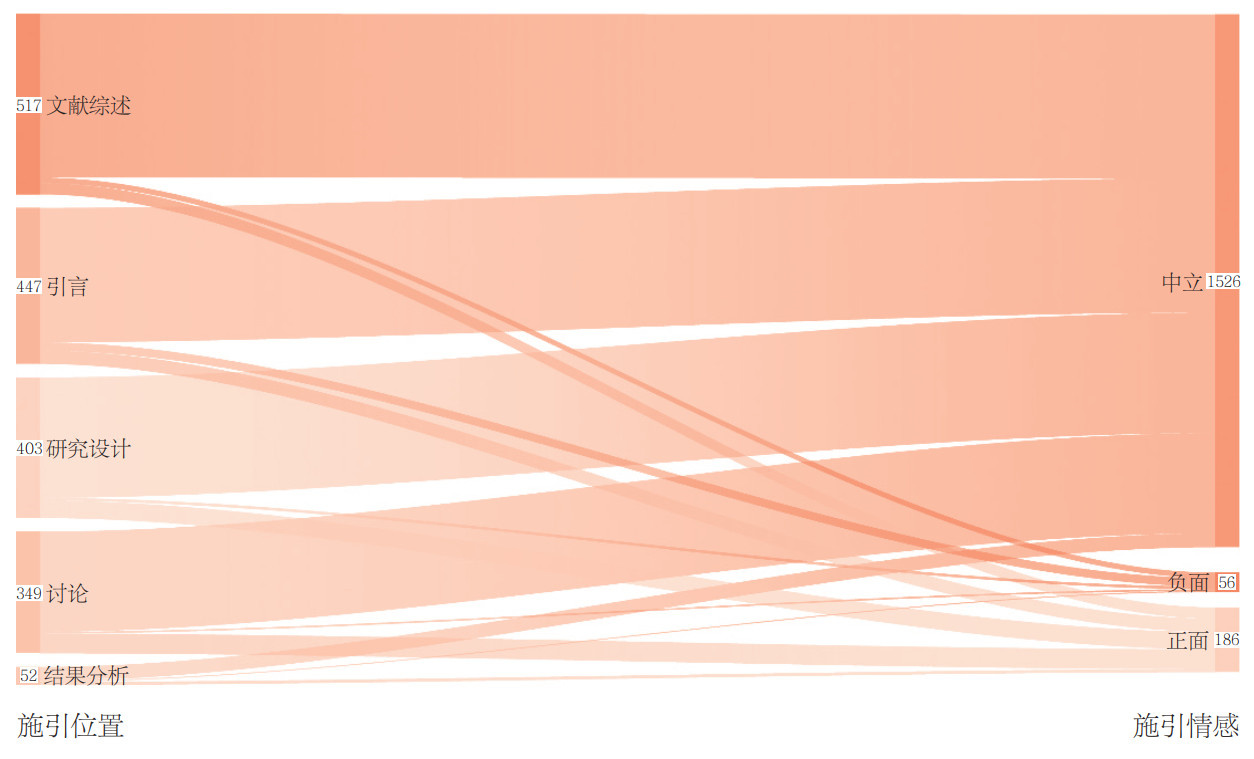
图 1  引用位置映射引用情感
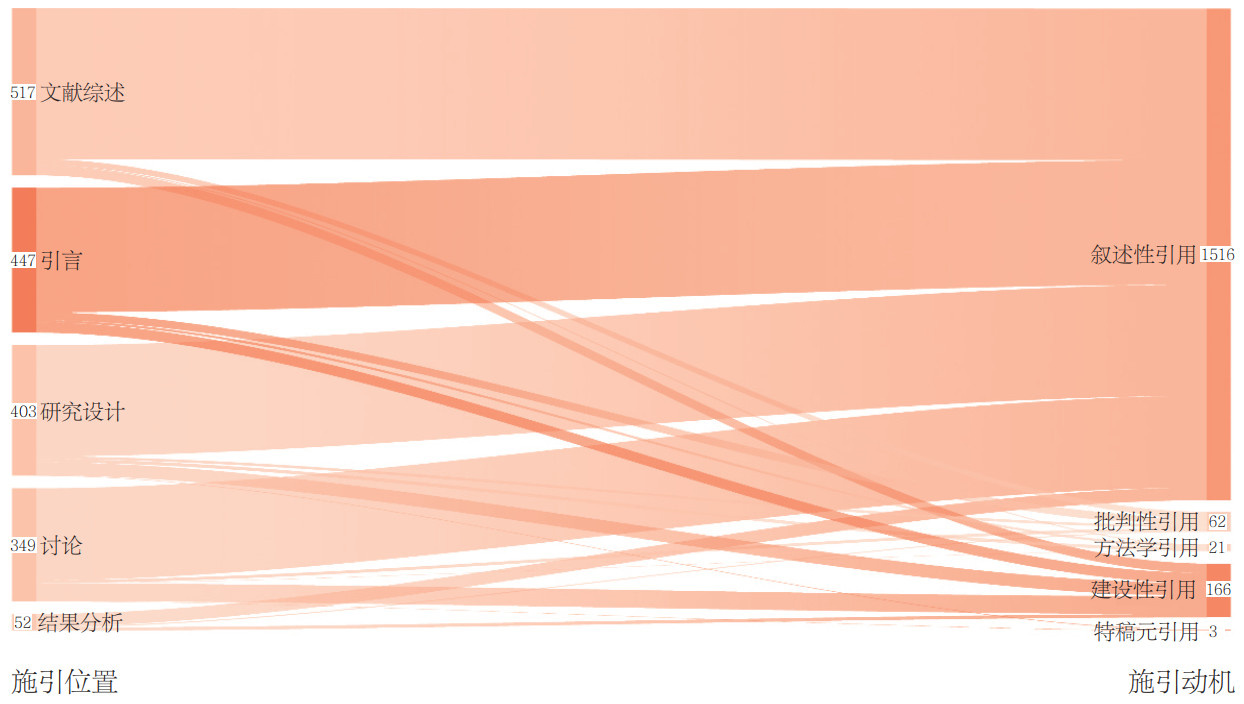
图 2  引用位置映射引用动机
表 5  撤稿论文施引文献引用文献类型分布
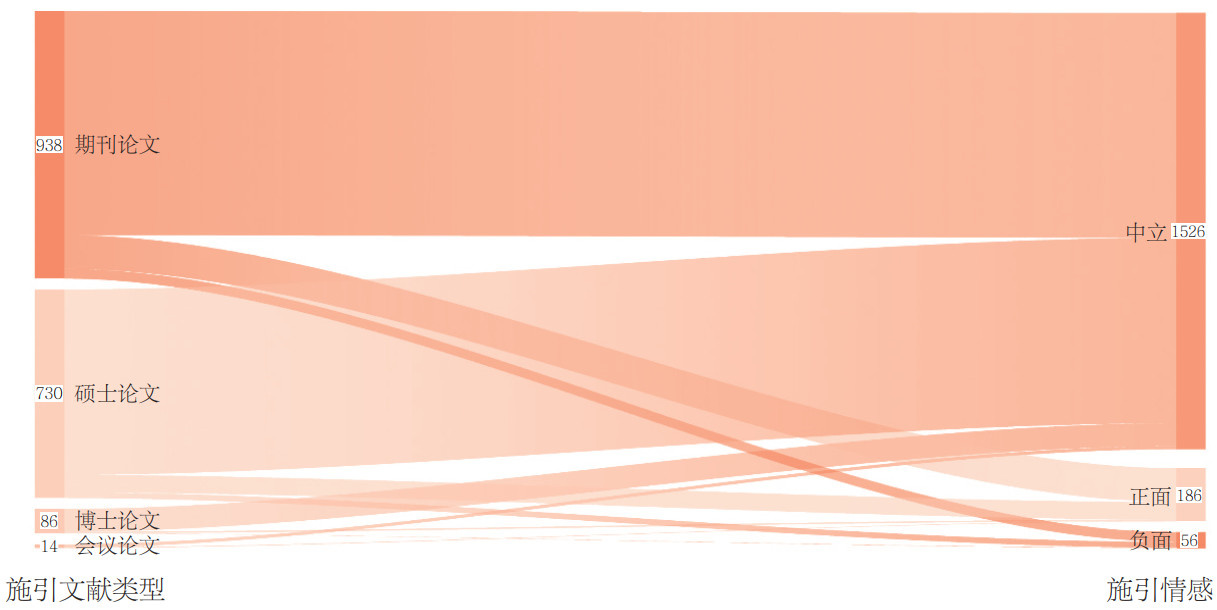
图 3  引用文献类型映射引用情感
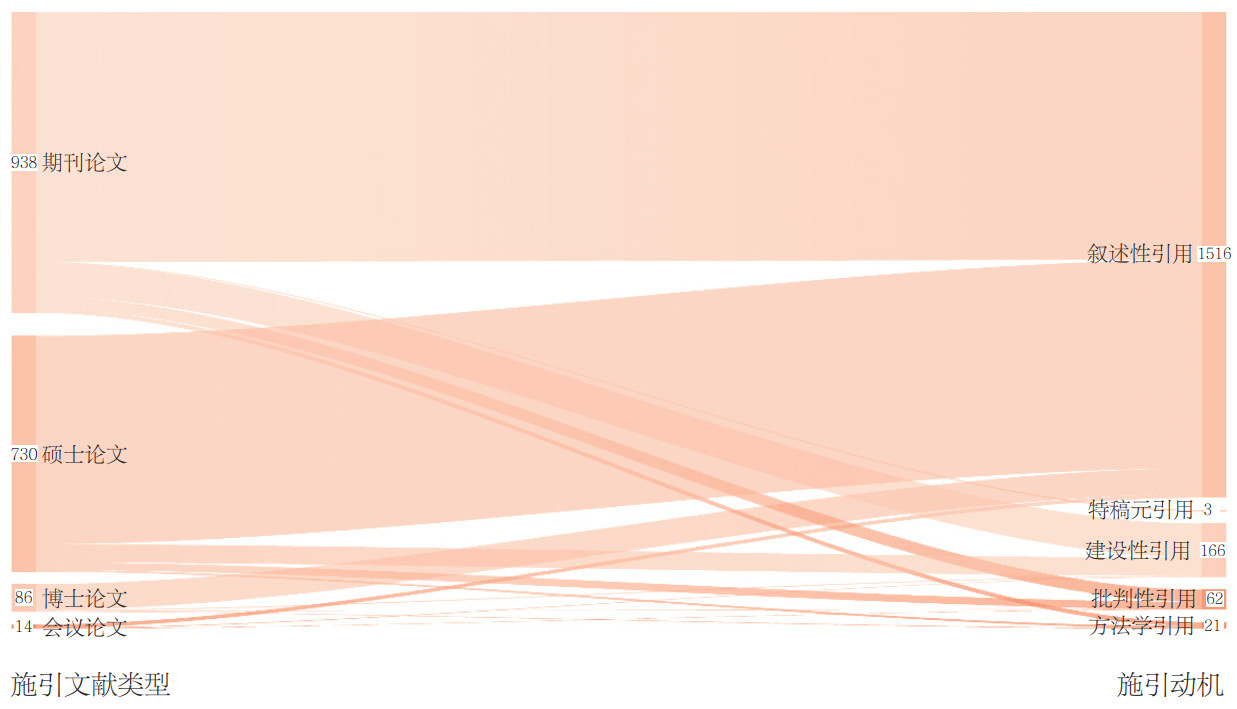
图 4  引用文献类型映射引用动机
1 范少萍, 张志强. 科学文献数据库中撤销论文分布规律研究: 以Web of Science数据库为例[J]. 情报学报, 2014, 33 (4): 375- 387.
2 Heibi I , Peroni S . A quantitative and qualitative open citation analysis of retracted articles in the humanities[J]. Quantitative Science Studies, 2022, 3 (4): 953- 975.
doi: 10.1162/qss_a_00222
3 Tang G , Cai H . Citation contamination by paper mill articles in systematic reviews of the life sciences[J]. JAMA Network Open, 2025, 8 (6): e2515160.
doi: 10.1001/jamanetworkopen.2025.15160
4 王晨阳, 褚建勋, 管铮懿. 撤稿论文中科研伦理失范现状与对策研究[J]. 科学学研究, 2025, 43 (9): 1861- 1871.
5 Snodgrass G L , Pfeifer M P . The characteristics of medical retraction notices[J]. Bulletin of the Medical Library Association, 1992, 80 (4): 328- 334.
6 刘燊, 徐飞. NSC杂志撤销论文引用异常增加现象辨析与治理建议[J]. 中国科技期刊研究, 2022, 33 (5): 545- 553.
7 Schmidt M . Why do some retracted articles continue to get cited[J]. Scientometrics, 2024, 129 (12): 7535- 7563.
doi: 10.1007/s11192-024-05147-4
8 王丽丽. 撤销论文被引用的原因探析及防范措施[J]. 出版发行研究, 2018 (8): 74-76, 64.
9 袁子晗, 张红伟. 学术不端撤销论文施引文献引用态度分析: 以哈佛大学心脏干细胞撤稿事件为例[J]. 中国科技期刊研究, 2021, 32 (4): 465- 473.
10 Liu X , Wang C , Chen D Z , et al. Exploring perception of retraction based on mentioned status in post-retraction citations[J]. Journal of Informetrics, 2022, 16 (3): 101304.
doi: 10.1016/j.joi.2022.101304
11 冷怀明. 撤稿引出的出版伦理问题与处理[J]. 编辑学报, 2018, 30 (6): 558- 560.
12 唐晓莲, 邹小勇, 张元媛, 等. 中文期刊撤稿声明撤回论文情况分析及思考[J]. 科技与出版, 2022 (12): 74- 78.
13 赵蓉英, 曾宪琴, 陈必坤. 全文本引文分析: 引文分析的新发展[J]. 图书情报工作, 2014, 58 (9): 129- 135.
14 张春博, 丁堃, 王贤文, 等. 全文引文分析视角下的造假论文学术影响研究[J]. 科学学研究, 2021, 39 (4): 577- 586.
15 蒋鸿标. 三大中文期刊全文数据库质量述评[J]. 现代情报, 2015, 35 (9): 84-88, 170.
16 唐晓莲, 邹小勇, 张元媛, 等. 中国学术期刊撤稿论文被引的原因分析及应对策略[J]. 编辑学报, 2023, 35 (5): 473- 477.
17 Bar-Ilan J , Halevi G . Post retraction citations in context: A case study[J]. Scientometrics, 2017, 113 (1): 547- 565.
doi: 10.1007/s11192-017-2242-0
18 董克, 吴佳纯. 引文情感分析方法研究综述[J]. 图书情报知识, 2021, 38 (6): 60- 72.
19 Lyu D , Ruan X , Xie J , et al. The classification of citing motivations: A meta-synthesis[J]. Scientometrics, 2021, 126 (4): 3243- 3264.
doi: 10.1007/s11192-021-03908-z
20 Erikson M G , Erlandson P . A taxonomy of motives to cite[J]. Social Studies of Science, 2014, 44 (4): 625- 637.
doi: 10.1177/0306312714522871
21 Case D O , Miller J B . Do bibliometricians cite differently from other scholars[J]. Journal of the American Society for Information Science and Technology, 2011, 62 (3): 421- 432.
doi: 10.1002/asi.21466
22 齐小英, 李昕尉, 杨海平. 基于意图和情感的南海学术论文引用特征研究[J]. 数据分析与知识发现, 2022, 6 (12): 53- 69.
23 杨正理, 黄其新. 小波变换在行驶车辆检测器中的应用[J]. 公路交通科技, 2013, 30 (2): 104- 108.
24 张永丽, 沈志宇. 贫困与反贫困问题研究述论[J]. 西北民族大学学报(哲学社会科学版), 2020 (4): 129- 140.
25 韩驰, 熊伟. 基于数据驱动的天基信息系统效能评估[C]//第四届体系工程学术会议论文集. 长沙: 国防科技大学系统工程学院. 2022: 174-180.
26 邓杰, 朱兵, 程林, 等. 血清CRP水平测定在急性胰腺炎诊断中的临床价值[J]. 新疆医学, 2016, 46 (8): 957- 959.
27 牛世全, 文娜, 韩建山, 等. 一株抗植病放线菌的发酵条件优化及活性产物研究[J]. 西北师范大学学报(自然科学版), 2020, 56 (1): 69- 77.
28 马焕超. 企业环境责任履行对资本成本的影响研究[D]. 天津: 河北工业大学, 2018.
29 胡金祥. 白茶理化成分的分析与花色苷的结构鉴定[D]. 杭州: 浙江大学, 2020.
30 王景周. 学术论文出版后信息变更的可回溯管理[J]. 中国科技期刊研究, 2019, 30 (8): 845- 852.
31 关于"散乱点云去噪算法的研究与实现"一文的撤稿声明[J]. 东南大学学报(自然科学版), 2008, 38(6): 974.
32 撤稿通告[J]. 金融法苑, 2026(1): 291.
33 袁子晗, 崔理华, 刘懿, 等. 撤稿声明对比结果分析及撤稿原因表述真实性探究: 以国家卫生健康委员会通报案例为例[J]. 编辑学报, 2024, 36 (4): 369-374, 381.
34 任艳青. 国际出版伦理委员会《撤稿指南》(2025年版)核心要点[J]. 中国科技期刊研究, 2026, 37 (1): 171- 172.
No related articles found!