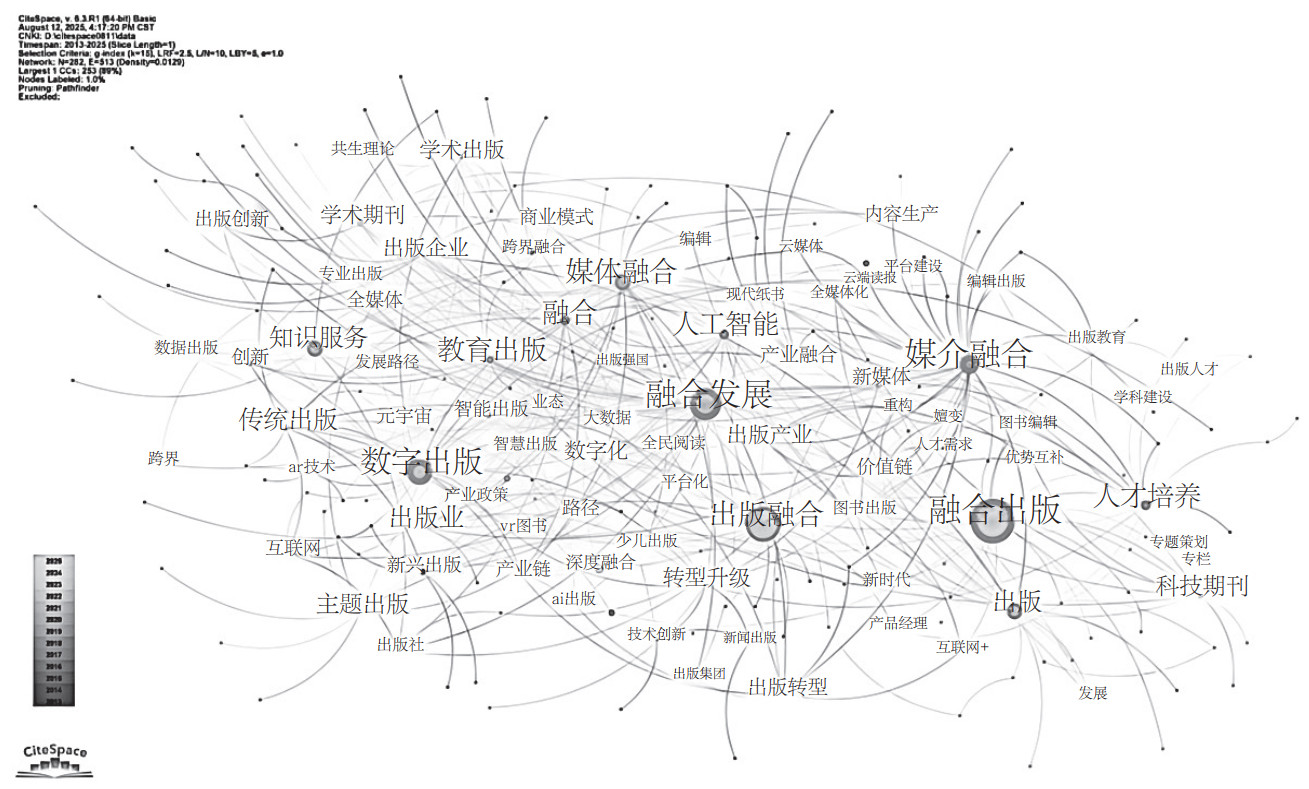
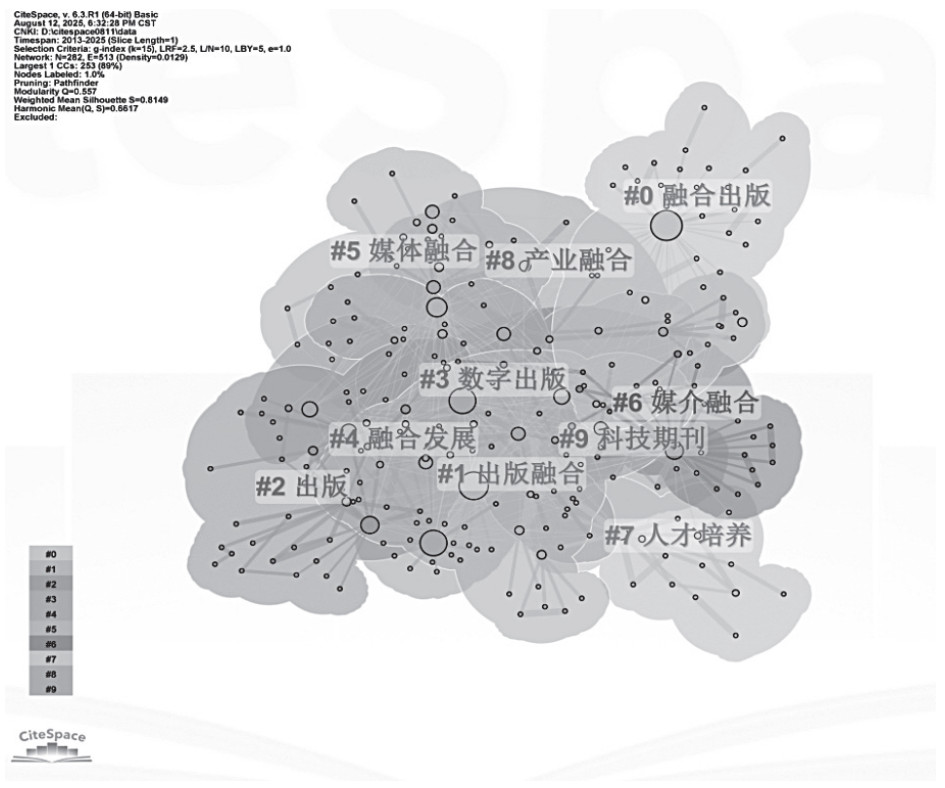
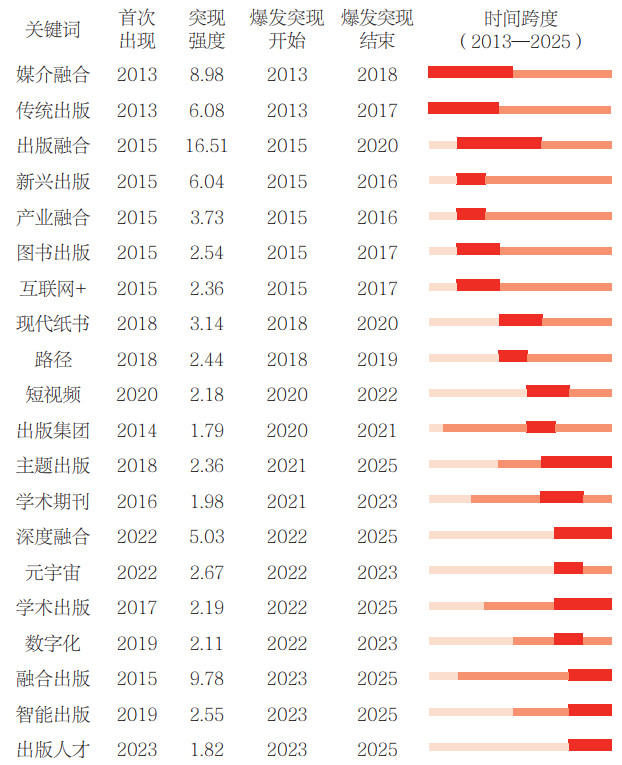
融合发展是出版业高质量发展的必由之路,当前的出版融合实践呈现多维创新与多点突破格局,出版融合研究则是备受出版学界和业界关注的重点议题,但出版融合研究中存在的诸多问题与争议亟待厘清,探索出版融合研究的创新发展路径势在必行。本研究对我国提出“媒体融合”“出版融合”战略部署以来的出版融合研究总体格局进行量化分析,基于该领域核心概念对出版融合研究的“元问题”展开深入辨析,并探讨出版融合理论研究如何充分促进出版融合实践发展、出版融合研究如何应对新兴技术与业态发展带来的多维重构问题、出版融合研究的范式与方法如何形成合理体系并与时俱进。在此基础上指出未来的出版融合研究应以“实践性”为立足点、秉持“大出版观”视角、以“整体性”思维开展出版融合研究。
Integrated development research represents an inevitable pathway toward high-quality growth within the publishing industry. Research on "publication integration" is not only an intrinsic requirement for the development of publishing studies and the publishing industry itself but also a proactive response to the media convergence strategy and national reading promotion policies. Current practices in "publication integration" demonstrate multidimensional innovation and achieve substantial breakthroughs across various sectors. Although "publishing integration" has become a focal point in both academic and professional discourse, numerous unresolved issues and theoretical controversies within this field demand urgent scholarly clarification. Consequently, exploring innovative developmental pathways for "publication integration" research has become imperative. This study aims to review the progress, challenges, and innovative pathways in "publication integration" research in recent years. The goal is to enrich the disciplinary connotation of publishing studies, promote the construction of a theoretical framework suited to the current academic context, foster the development of a theoretical paradigm for publishing integration that evolves with the times, and even provide a "Chinese perspective" for global research on "publishing integration". Using the bibliometric software CiteSpace 6.3.R1, this study conducts visual and quantitative analyses to map content thematic structures, overall landscape, and hotspot distribution of "publication integration" studies, following China's strategic national deployments in "media convergence" and "publishing integration". Current research on "publishing integration" in China primarily manifests three characteristics. First, most studies take "publishing integration" as their background or perspective, focusing primarily on its application scenarios and specific practical issues. Second, research types focus on applied studies, and research topics are diverse, with significant attention given to the overall ecosystem of "publication integration". Third, research exhibits characteristics of being both "hotspot-driven" and "policy-driven," with the emergence pathways of different core keywords varying significantly. Analyzing the overall landscape of "publishing integration" studies requires both macro-level perspective, which presents its specific characteristics through quantitative analysis, and micro-level approach, which involves conducting a thorough analysis of the field's "meta-questions" based on the core concepts within "publication integration" studies. Specifically, the investigation focuses on how theoretical inquiry can comprehensively inform and promote practical development? how research can constructively address the multidimensional "reconfigurations" brought about by emerging technologies and evolving industrial forms? and how research paradigms and methodologies can be integrated into a rational system that evolves in tandem with time? Building on this analysis, the study proposes a forward-looking tripartite framework for "publication integration" research. First, research should prioritize "practicality," and research on publishing integration theory should be grounded in practice while shouldering the mission of Chinese localization. Second, scholars should adopt a "holistic publishing perspective," and researchers should explore publishing ontology, publishing epistemology, and ethical norms and value systems within publishing ecosystems. Finally, the research community should employ "comprehensive thinking". Researchers should conduct their work in a "generative," "collaborative," and "contextualized" manner, leveraging multidisciplinary perspectives to facilitate the transformation and innovation of disciplinary paradigms in the new environment. Overall, this analysis aims to clarify the current status, core concepts, and research logic of "publication integration" research for the academic community, and to provide theoretical insights for the high-quality development of the publishing industry.
吴赟,牛蓉. 我国出版融合研究的现有格局、深层挑战与创新路径[J]. 科技与出版, 2026, 45(2): 22-32. WU Yun,NIU Rong. Current Landscape, Deep Challenges, and Innovative Pathways of "Publication Integration" Research in China. Science-Technology & Publication, 2026, 45(2): 22-32.
http://kjycb.tsinghuajournals.com/CN/ 或 http://kjycb.tsinghuajournals.com/CN/Y2026/V45/I2/22
Cited