Please wait a minute...
科技与出版  2025, Vol. 44 Issue (1): 111-122    
融媒之光
微信公众号在卓越期刊学术影响力建设中的效用分析
吴振松1,黄崇亚2,*
1. 《西安航空学院学报》编辑部,710077,西安
2. 西安交通大学期刊中心,710049,西安
Effect Analysis of WeChat Official Accounts on Enhancing Academic Impact of Journals in the Two Excellence Action Plans
WU Zhensong1,HUANG Chongya2,*
1. Editorial Office of Xi’an Aeronautical Institute, 710077, Xi’an,China
2. Periodicals Publishing House of Xi’an Jiaotong University, 710049, Xi’an, China
全文: HTML    PDF(1781 KB)  
输出: BibTeX | EndNote (RIS)      
摘要: 

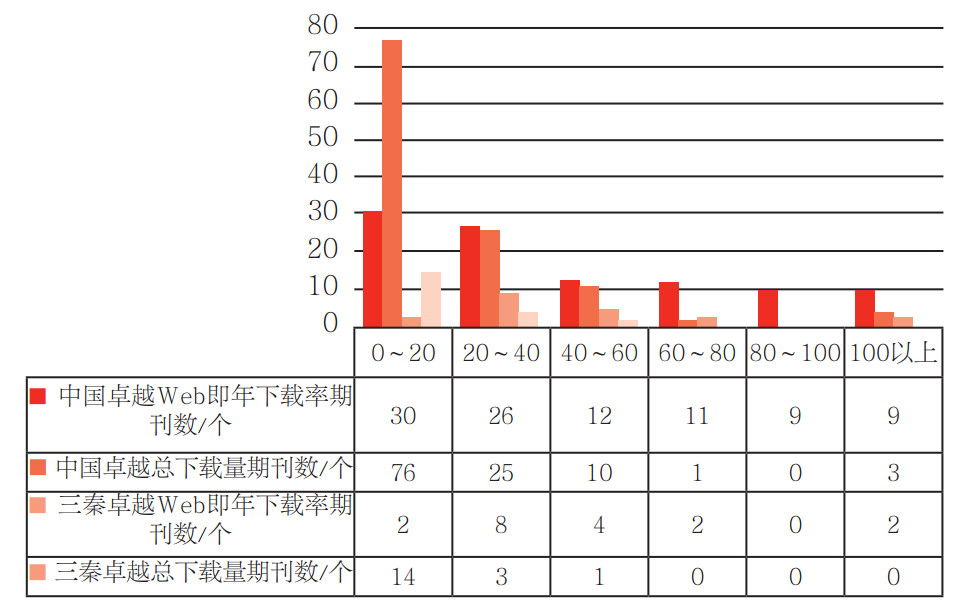
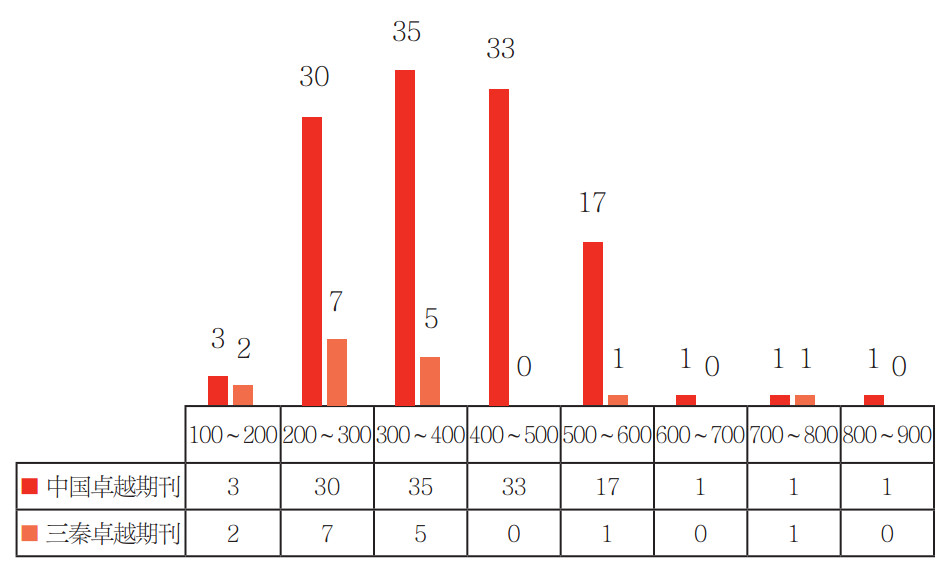
文章以卓越期刊为研究对象,定量研究创建微信公众号、微信传播指数WCI对提高影响因子指标、网络传播指标的效用,以及微信公众号平台传播学术论文效用。91.43%的“中国卓越期刊”和全部的“三秦卓越期刊”已创建微信公众号,创建高峰分别是2015年、2016年;创建微信公众号能提升影响因子指标、网络传播指标,卓越期刊影响因子指标增值比集中在0~60和100以上,网络传播指标增值比集中在0~60;中国卓越期刊和三秦卓越期刊按学科分布WCI平均值分别集中在370.21~437.84和261.33~278.55,400以下WCI数值占比分别是56.20%、87.5%,不同学科WCI平均值差异较大;卓越期刊微信公众号传播能够提升影响因子指标、网络传播指标且WCI数值较大时,效果显著;用户倾向于通过手机端快速浏览学术论文,通过PC端精读;通过公众号浏览、下载与电脑端相同内容学术论文并不能明显促进学术论文被引频次。基于此,文章提出两种不同运营策略:增强微信公众号的内容创新性和服务性,构建公众号矩阵的增强运营策略;不盲目创建公众号,不盲目增加公众号运营投入,资源分流的收缩运营策略。研究结果有助于科技期刊制定微信公众号运营目标,使其在提高科技期刊学术影响力中发挥更大作用。

关键词 微信公众号卓越期刊微信传播指数WCI    
Abstract

This study investigates the effect of WeChat official accounts on constructing the academic impact of scientific journals. It focuses on the journals selected by the Excellence Action Plan for China’s STM Journals (hereafter referred to as the Excellence Action Plan of China) and those selected by the Excellence Action Plan for STM Journals in Shaanxi province, China (hereafter referred to as Sanqin Plan). This paper employs Pearson’s coefficient to quantitatively assess the effectiveness of creating WeChat official accounts and the WeChat Communication Index (WCI) in enhancing impact indicators and online communication metrics, as well as the effectiveness of the WeChat platform in disseminating academic articles. Statistical analysis reveals that 91.43% of the journals in the Excellence Action Plan of China, along with all journals in Sanqin Plan, have established WeChat official accounts, with the peak years of establishment occurring in 2015 and 2016. The establishment of WeChat official accounts can improve impact indicators and online communication metrics. For the journals in the Excellence Action Plan of China, growth ratios for impact metrics are primarily concentrated in the ranges of 0–60 and above 100, while their growth ratios for online communication metrics are predominantly in the 0–60 range. The monthly average WCI (V14.2) values for the journals in the Excellence Action Plan of China and in the Sanqin Plan are in the ranges from 370.21—437.84 and 261.33—278.55, respectively, with 56.20% and 87.5% of values falling below 400, indicating that the impact of most WeChat official accounts of these journals is relatively small, and adjustments in construction and operation are needed. Significant difference in average WCIs is observed across different disciplines. For journals in the Excellence Action Plan of China, those in the transportation and aerospace disciplines have higher WCI values, while for journals in the Sanqin Plan, those in the transportation discipline show the highest WCI value. For the journals in the Excellence Action Plan of China, the WCI values of 400 or above have a moderate positive correlation with impact indicators, while those below 400 exhibit only a weak positive correlation. For the journals in Sanqin Plan, the WCI values below 400 have a weak positive correlation with impact indicators. The communication of academic articles through journal WeChat official accounts can enhance both impact indicators and online communication metrics, and the larger the WCI value, the better the communication effect. Successfully planning and operating the WeChat official account can attract more audiences. A comparison of “reading times” and “download times” for the same academic content on mobile and PC platforms reveals that users prefer to quickly browse academic articles on mobile devices and read them in depth on PCs. Mobile browsing volume is in weak positive correlation with downloads and citation counts, while PC browsing volume is in weak positive correlated with citation counts, and PC download volume has a moderate positive correlation with citation counts. This indicates that simply transferring the same content of academic articles published in databases to WeChat official accounts does not significantly increase citation counts. Based on these findings, two different operational strategies are proposed. The first is an enhancement strategy, aiming to increase the innovation and service orientation of WeChat official accounts by diversifying content. The second strategy involves constructing a matrix of official accounts, combining content across different professional fields of journals, positioning the content and push methods of different official accounts, establishing a more systematic structure of communication content for these accounts. The results of this study provide valuable insights for the scientific journals in setting operational goals for WeChat official accounts, thus enhancing the academic impact of these scientific journals.

Key wordsWeChat official account    journal(s) selected by the Excellence Action Plans for STM Journals    WeChat communication index (WCI)
出版日期: 2025-03-12
基金资助:中国高校科技期刊研究会青年基金资助项目(CUJS-QN-2023-042);陕西省出版科学基金项目(23BSC22);2024年度“小编·仁和基金资助”(XBRH2024-005-037)
通讯作者: 黄崇亚   
Corresponding author: Chongya HUANG   

引用本文:

吴振松,黄崇亚. 微信公众号在卓越期刊学术影响力建设中的效用分析[J]. 科技与出版, 2025, 44(1): 111-122.
WU Zhensong,HUANG Chongya. Effect Analysis of WeChat Official Accounts on Enhancing Academic Impact of Journals in the Two Excellence Action Plans. Science-Technology & Publication, 2025, 44(1): 111-122.

链接本文:

http://kjycb.tsinghuajournals.com/CN/      或      http://kjycb.tsinghuajournals.com/CN/Y2025/V44/I1/111

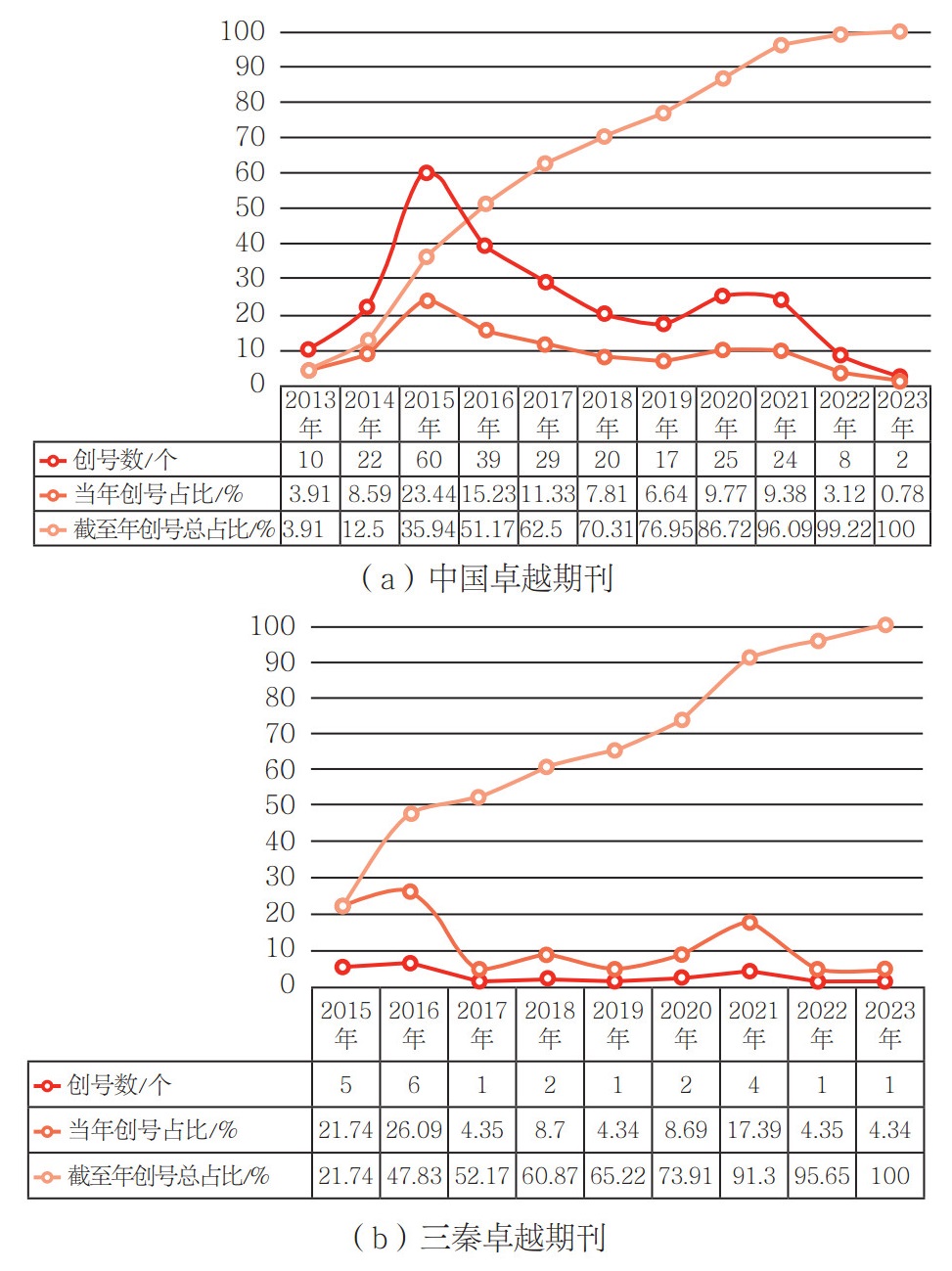
图 1  创建微信公众号年度分布
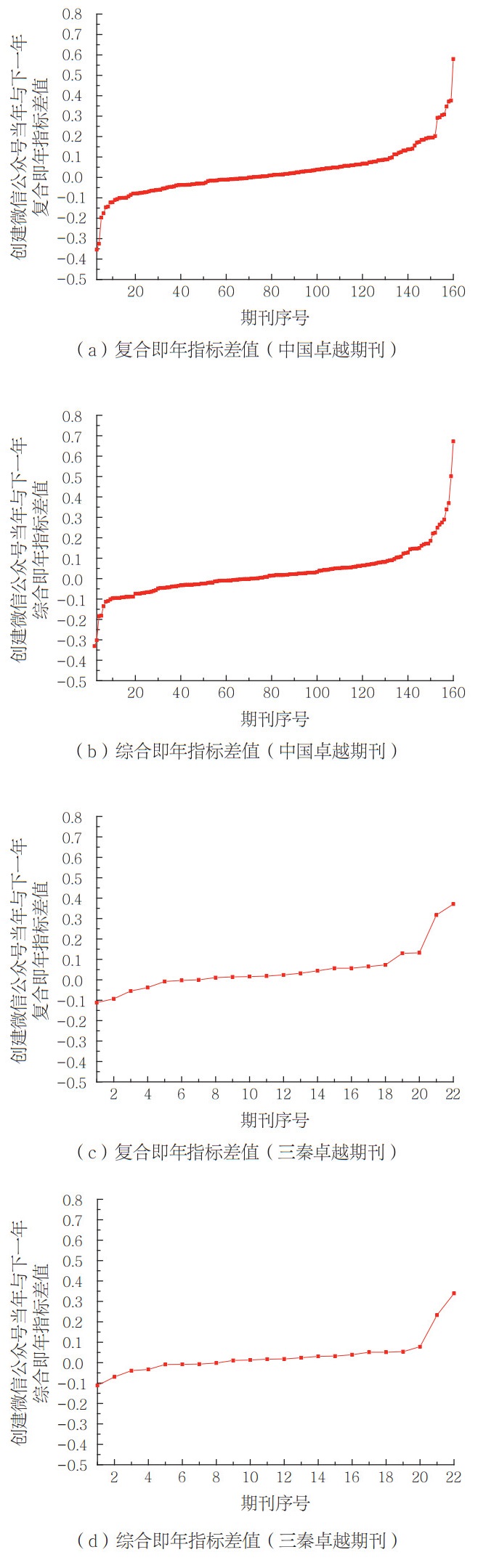
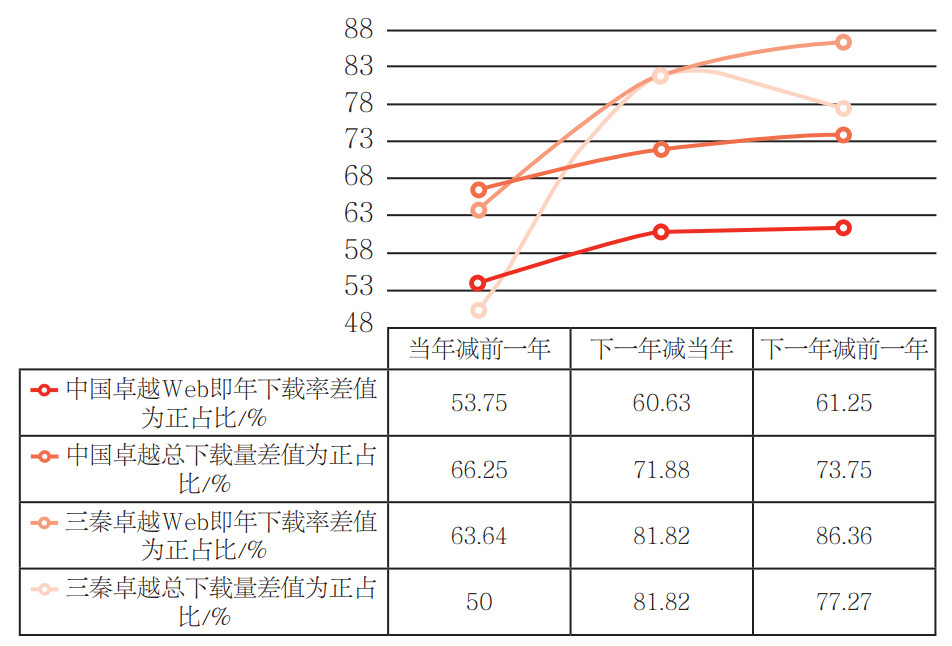
图 2  影响因子指标差值统计
图 3  影响因子指标差值(创建微信公众号后一年数值减创建微信公众号当年数值)
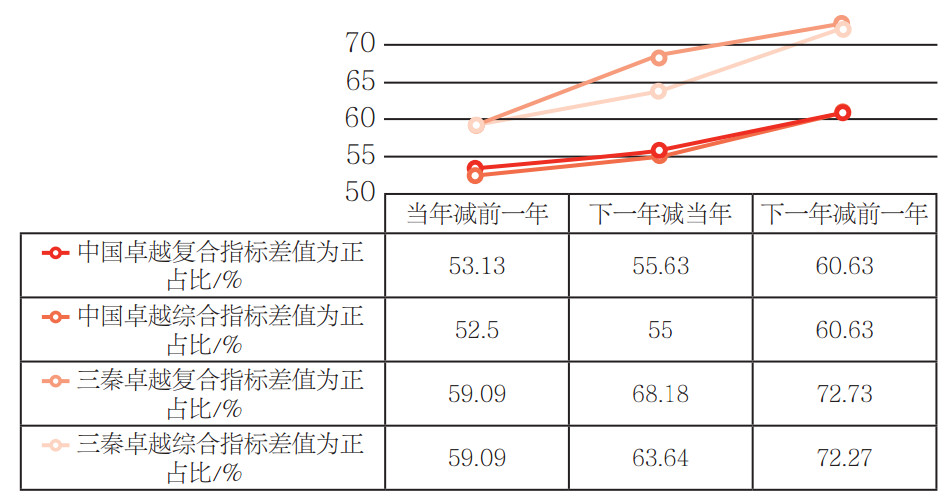
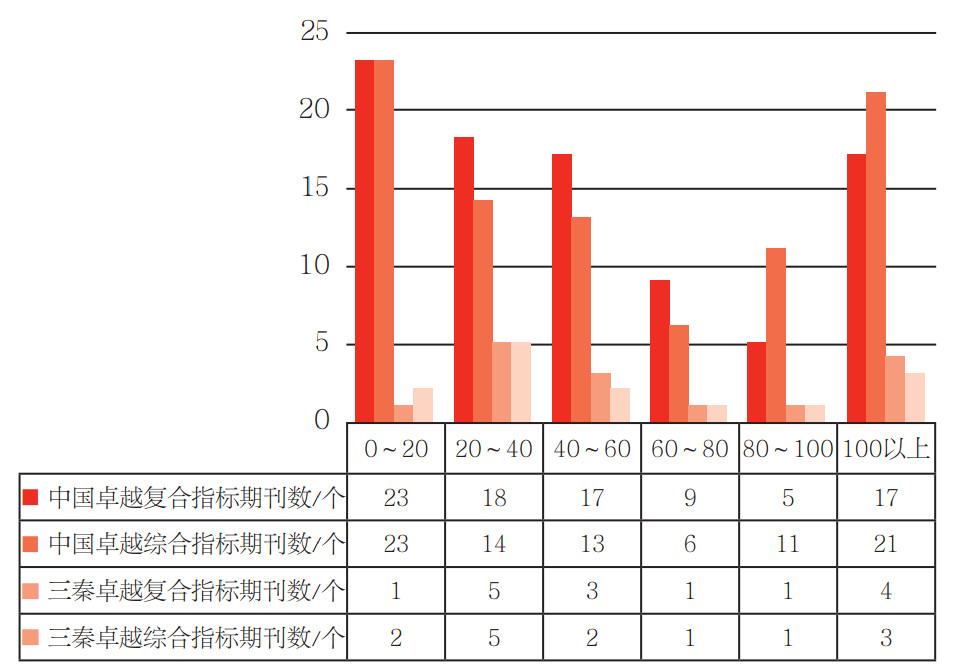
图 4  创建微信公众号当年与下一年影响因子指标差值增值比分布
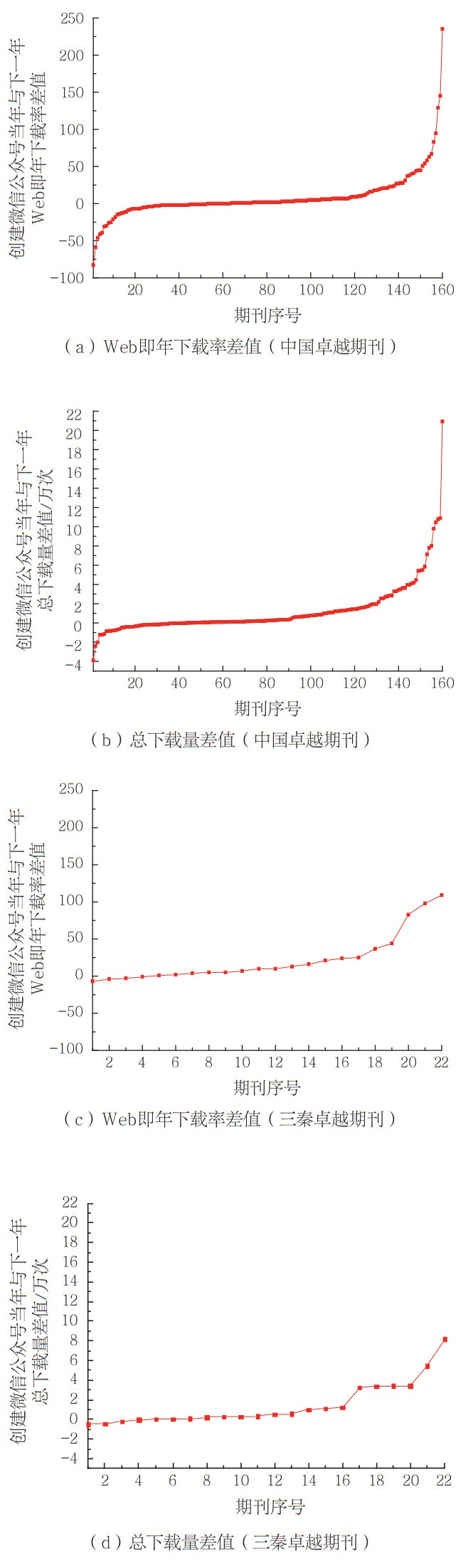
图 5  网络传播指标差值统计
图 6  网络传播指标差值(创建微信公众号后一年数值减创建微信公众号当年数值)
图 7  创建微信公众号当年与下一年网络传播指标差值增值比分布
图 8  WCI数值分布图
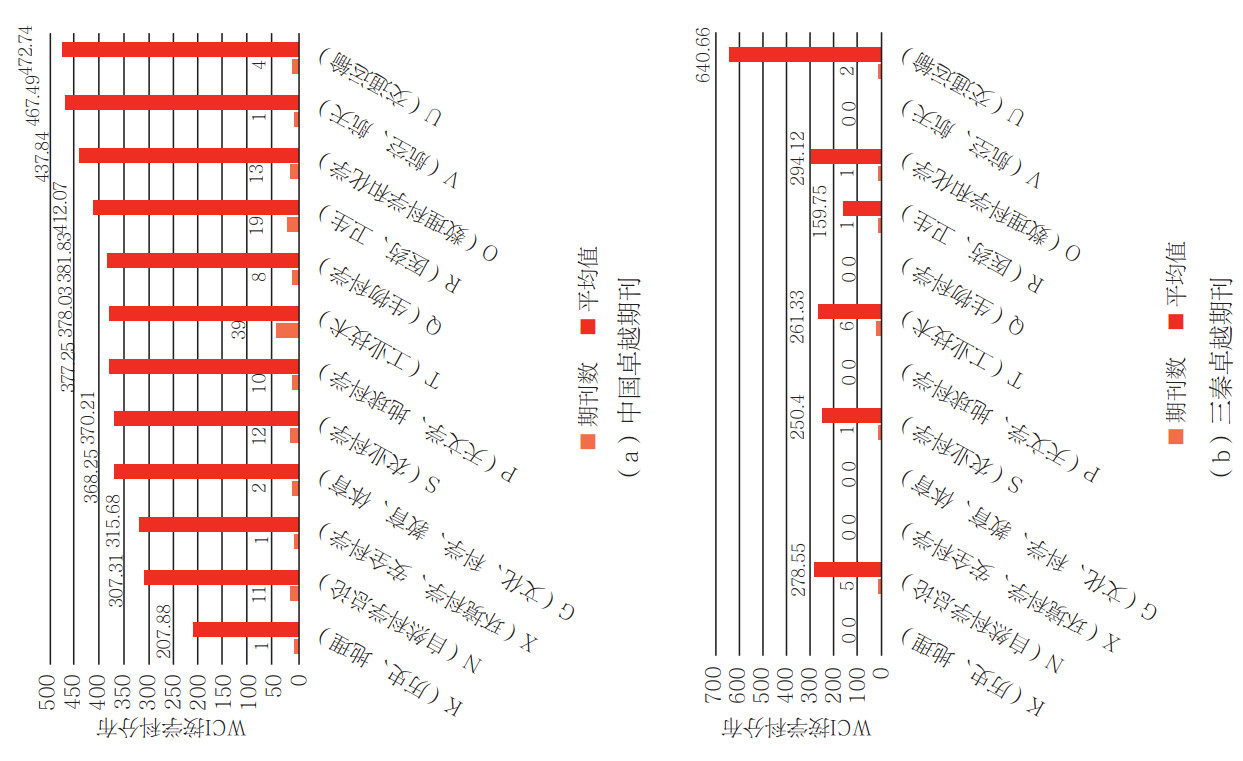
图 9  卓越期刊WCI数值按学科统计平均值
表 1  WCI值与影响因子指标皮尔森系数
表 2  WCI值与网络传播指标皮尔森系数
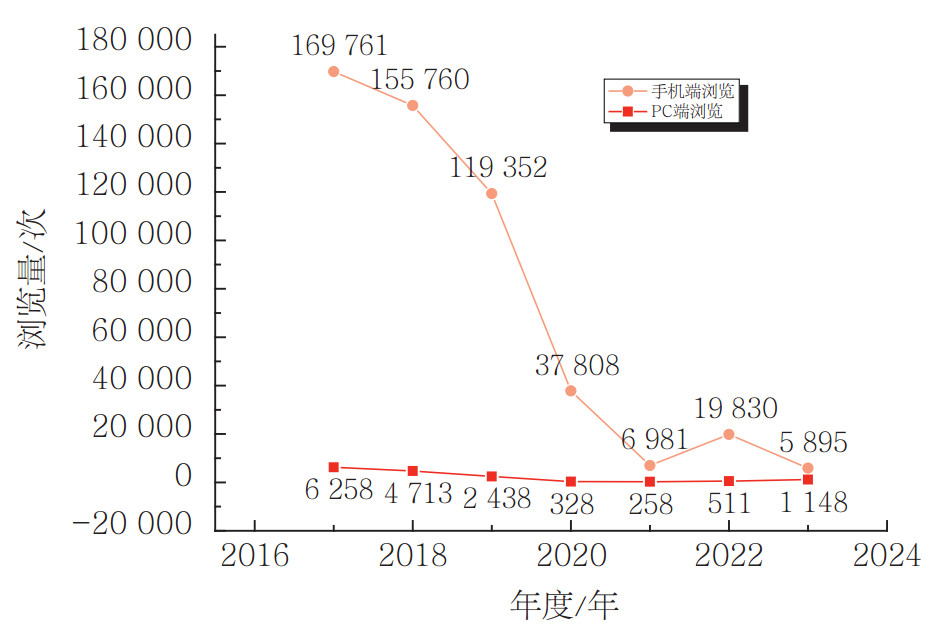
图 10  手机端和PC端浏览量
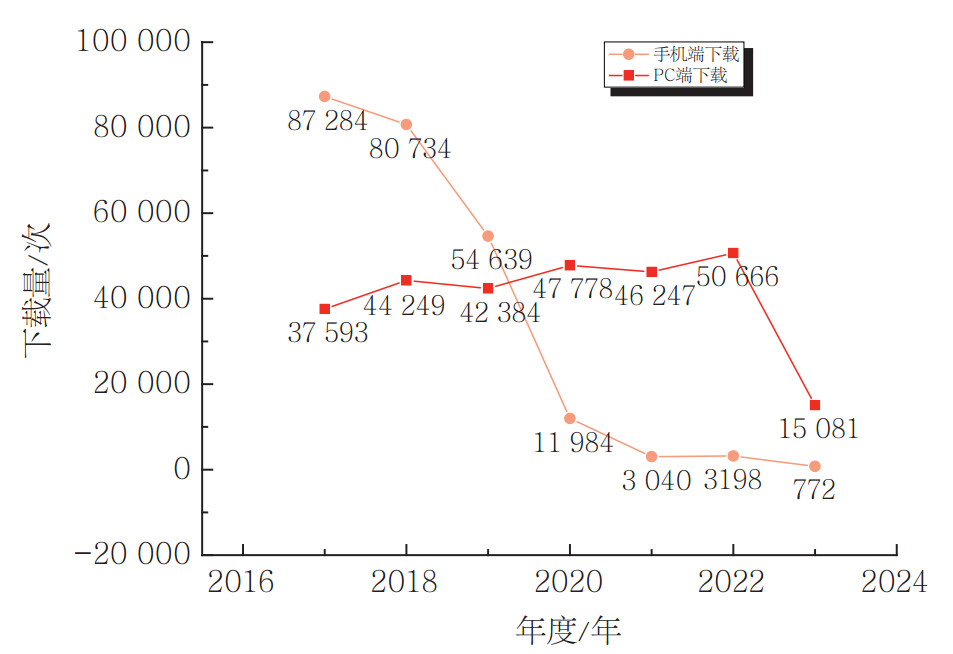
图 11  手机端和PC端下载量
表 3  浏览量与下载量和被引频次相关性
表 4  WCI计算指标及权重
表 5  WCI平均值最高期刊公众号发布内容
1 中国网络空间研究院. 中国互联网发展报告2022[M]. 北京: 电子工业出版社, 2022.
2 中共中央宣传部教育部科技部印发《关于推动学术期刊繁荣发展的意见》的通知[EB/OL].(2021-05-18)[2024-08-05]. http://www.nppa.gov.cn/xxfb/tzgs/202106/t20210623_666272.html.
3 TERRAS M . The impact of social media on the dissemination of research:Results of an experiment[J]. Journal of Digital Humanities, 2012, 1 (3): 30- 38.
4 SHUAI X , PEPE A , BOLLEN J . How the scientific community reacts to newly submitted preprints:Article downloads,Twitter mentions,and citations[J]. PLoS ONE, 2012, 7 (11): e47523.
doi: 10.1371/journal.pone.0047523
5 杨瑞芳. 融媒体时代科技期刊微信公众号建设与运营[J]. 科技与出版, 2022 (11): 101- 105.
doi: 10.16510/j.cnki.kjycb.20221107.014
6 李春丽, 张莉会, 朱明, 等. 我国食品类中文核心期刊微信公众号运营提升策略思考[J]. 科技与出版, 2022 (9): 69- 75.
doi: 10.16510/j.cnki.kjycb.20220916.002
7 徐晖, 张新宇, 韩焱晶, 等. 针灸学科技期刊微信公众号发展策略分析[J]. 科技与出版, 2022 (2): 102- 107.
8 闵甜, 孙涛, 赖富饶. 科技期刊优化微信公众号传播结构的策略[J]. 中国科技期刊研究, 2023, 34 (6): 744- 749.
9 吴晓兰, 栗延文, 邵玉洁. 科技期刊新媒体内容质量提升的方法与途径探讨:以“金属加工”微信公众号内容建设为例[J]. 编辑学报, 2022, 34 (4): 433- 437.
10 李宇佳, 王威, 张珂. 基于Kano模型的学术期刊微信公众号服务功能优化研究[J]. 中国科技期刊研究, 2022, 33 (12): 1684- 1691.
11 王萍, 李欣, 沈洋. 科技管理类期刊微信公众号运营对期刊影响力的提升研究[J]. 中国科技期刊研究, 2020, 31 (3): 304- 308.
12 孔薇. 科技期刊微信公众号信息传播效果和运营策略研究[J]. 中国科技期刊研究, 2019, 30 (7): 745- 753.
13 毛殷. 学术期刊微信平台论文阅读行为与移动传播策略[J]. 中国科技期刊研究, 2020, 31 (6): 690- 696.
14 张筱园. 基于积累阅读任务需求的学术期刊微信平台建设策略研究[J]. 科技与出版, 2023 (6): 59- 66.
doi: 10.16510/j.cnki.kjycb.20230625.001
15 孟晗菁, 罗雁飞. 学术期刊微信公众号运营与影响力提升研究:以“中国循环杂志”微信公众号为例[J]. 科技与出版, 2021 (9): 113- 117.
doi: 10.16510/j.cnki.kjycb.20210902.005
16 章诚. 学术期刊微信公众平台运营现状及提升策略[J]. 科技与出版, 2020 (8): 73- 78.
[1] 李春丽,张莉会,朱明,戴陵江. 我国食品类中文核心期刊微信公众号运营提升策略思考*[J]. 科技与出版, 2022, 41(9): 69-75.
[2] 张立,刘姝,王瑶,李大美. 对近年来数字出版评优产品的追踪测评及分析(III)[J]. 科技与出版, 2022, 41(4): 43-55.
[3] 徐晖,张新宇,韩焱晶,高永辉,张金超,罗宇婷,马兰萍. 针灸学科技期刊微信公众号发展策略分析*[J]. 科技与出版, 2022, 41(2): 102-107.
[4] 杨瑞芳. 融媒体时代科技期刊微信公众号建设与运营[J]. 科技与出版, 2022, 41(11): 101-105.
[5] 孟晗菁,罗雁飞. 学术期刊微信公众号运营与影响力提升研究[J]. 科技与出版, 2021, 40(9): 113-117.
[6] 刘颖,苌雅娴,丁佐奇,许风国. 药学类卓越期刊与一流学科协同发展的分析与思考*[J]. 科技与出版, 2021, 40(10): 132-140.
[7] 丛挺,赵婷婷. 基于微信公众号的学术期刊移动化传播研究*[J]. 科技与出版, 2019, 38(7): 80-85.
[8] 张艳萍. 学术类微信公众号运营探讨*[J]. 科技与出版, 2019, 38(7): 133-138.
[9] 杨颖,王文权. 学术类微信公众号运营模式探究及对社科类出版社微信公众号运营的启示[J]. 科技与出版, 2019, 38(6): 132-135.
[10] 黄蕾,宋秀全. 探索中稳步前行 寻常处找到突破[J]. 科技与出版, 2019, 38(4): 80-82.
[11] 刘静,王希挺,朱琳,翟亚丽,张晓宇. 我国科技期刊微信公众号现状调查与优化建议[J]. 科技与出版, 2019, 38(11): 71-76.
[12] 刘战兵. 基于聚合-专业二维定位模型的出版社微信公众号战略群组分析[J]. 科技与出版, 2019, 38(10): 47-50.
[13] 吴祝华,蔡雅雯,王国栋,李燕文,田亚玲,陈相雨. 学术期刊微信公众平台增强出版功能分析*[J]. 科技与出版, 2019, 38(05): 88-91.
[14] 陈晓堂. 科技期刊微信公众号的内容策划*[J]. 科技与出版, 2018, 37(8): 110-115.
[15] 赵文青,尚清锋. 学术期刊利用微信平台组稿的版权问题探析*[J]. 科技与出版, 2018, 37(4): 84-87.