Please wait a minute...
科技与出版  2025, Vol. 44 Issue (7): 68-80    
产业观察
我国出版融合政策体系研究——基于102项政策文本的“主体—路径—工具”三维框架分析
刘玲武1,2,胡海2,刘菡3,*
1. 中南大学出版研究院,410012,长沙
2. 中南大学人文学院,410012,长沙
3. 山东工商学院人文与传播学院,264005,山东烟台
China’s Publishing Integration Policy System: Analysis of the Three-dimensional “Subject-Pathway-Instrument” Framework Based on 102 Policy Document
LIU Lingwu1,2,HU Hai2,LIU Han3,*
1. Research Institute for Publishing, Central South University, 410012, Changsha, China
2. School of Humanities, Central South University, 410012, Changsha, China
3. School of Humanities and Communication, Shandong Technology and Business University, 264005, Yantai, Shandong, China
全文: HTML    PDF(13283 KB)  
输出: BibTeX | EndNote (RIS)      
摘要: 

文章对出版融合政策内容的分析有助于发现当前政策体系的不足,廓清政策优化方向。以102项政策文本为研究对象,构建“主体—路径—工具”三维分析框架对出版融合政策进行量化分析,结果显示:出版融合政策主体合作性不强,核心主体尤其是国家新闻出版署表现欠佳;融合路径选择存在偏向性,倚重项目融合和技术融合,体制融合、人才融合占比较低,出版数据要素价值有待释放;政策工具的整体结构失衡,呈现以供给型主导、环境型辅助、需求型补充的特征。针对存在的不足,提出强化多元主体协同合作、丰富融合路径选择和均衡政策工具结构等政策优化建议。

关键词 出版融合政策文本政策主体融合路径政策工具    
Abstract

The analysis of publishing integration policies helps identify the limitations of the current policy system and clarify the directions for policy optimization. This research examines102 publishing integration policies issued between 2014 and 2024. It establishes a three-dimensional analytical framework of “Policy subject—Integration pathway—Policy instrument” to quantitatively analyze the publishing integration policy system. Social network analysis and the core-periphery model evaluatepolicy subjects collaboration, identifying core and peripheral policy subjects. Content analysis was used to code and classify policy content, thereby revealing key characteristics of publishing integration policies regarding integration pathway selection and policy instrument utilization. The findings indicate that: first, policy subjects collaboration remains insufficient. Core subjects, particularly the National Press and Publication Administration, demonstrate suboptimal performance, necessitating substantial improvement in the collaborative engagement scope and depth. Second, integration pathway selection exhibits bias, with a reliance on project integration and technology integration, while underutilizing institutional integration and talent integration. The value of publishing data as a key production factor urgently needs to be unlocked. Third, policy instruments display structural imbalance, characterized by supply-side dominance, environmental-side supplementation, and demand-side complementation, with significant disparities within each category of instruments. To address these deficiencies, this research proposes several optimization strategies: firstly, enhance multi-subject synergy and improve the cooperation network of subjects. Establish a “one-core, multi-stakeholder” core policy subjects group led by the Central Publicity Department (Publicity Department of the CPC Central Committee). Develop a hierarchical policy subjects collaboration network where “high-level subjects steer direction, core subjects coordinate implementation, and peripheral subjects provide resource support.” Secondly, identify the shortcomings of subdivided pathways and diversify integration pathway options. This research highlights specific shortcomings in pathways related to institutional mechanisms, technology systems, organizational structures, achievement exchange, and enterprise talent cultivation, suggesting targeted interventions. Regarding the value of publishing data factors, the pathway of “data resourceization—data assetization—data capitalization” should be followed, and the value of publishing data should be unlocked through collaboration between management departments and publishing enterprises. Finally, balance the structure of policy instruments and optimize the subcategory instrument utilization. Supply-side policy instruments should enhance platform construction and capital investment. Environmental-side policy instruments should refine conceptual frameworks and objectives, while improving the operability of policies. Measures, such as upgrading legislation, innovating fiscal and financial support models, and consistently providing tax incentives, must be implemented. Demand-side policy instruments should focus on market shaping and international exchanges. Supply-side reforms are used as a means to enhance content quality and services, while encouraging publishing enterprises to expand physical exports and copyright licensing through international cooperation and overseas investment. This research establishes theoretical foundations and practical pathways for improving the publishing integration policy system and promoting comprehensive publishing industry integration.

Key wordspublishing integration    policy document    policy subject    integration pathway    policy instrument
出版日期: 2025-08-19
基金资助:国家社会科学基金项目“新时代中国出版产业政策与意识形态安全研究”(19BTQ003);中南大学研究生自主探索创新项目“智媒化语境下出版融合政策评价体系研究”(2025ZZTS0397)
通讯作者: 刘菡   
Corresponding author: Han LIU   

引用本文:

刘玲武,胡海,刘菡. 我国出版融合政策体系研究——基于102项政策文本的“主体—路径—工具”三维框架分析[J]. 科技与出版, 2025, 44(7): 68-80.
LIU Lingwu,HU Hai,LIU Han. China’s Publishing Integration Policy System: Analysis of the Three-dimensional “Subject-Pathway-Instrument” Framework Based on 102 Policy Document. Science-Technology & Publication, 2025, 44(7): 68-80.

链接本文:

http://kjycb.tsinghuajournals.com/CN/      或      http://kjycb.tsinghuajournals.com/CN/Y2025/V44/I7/68

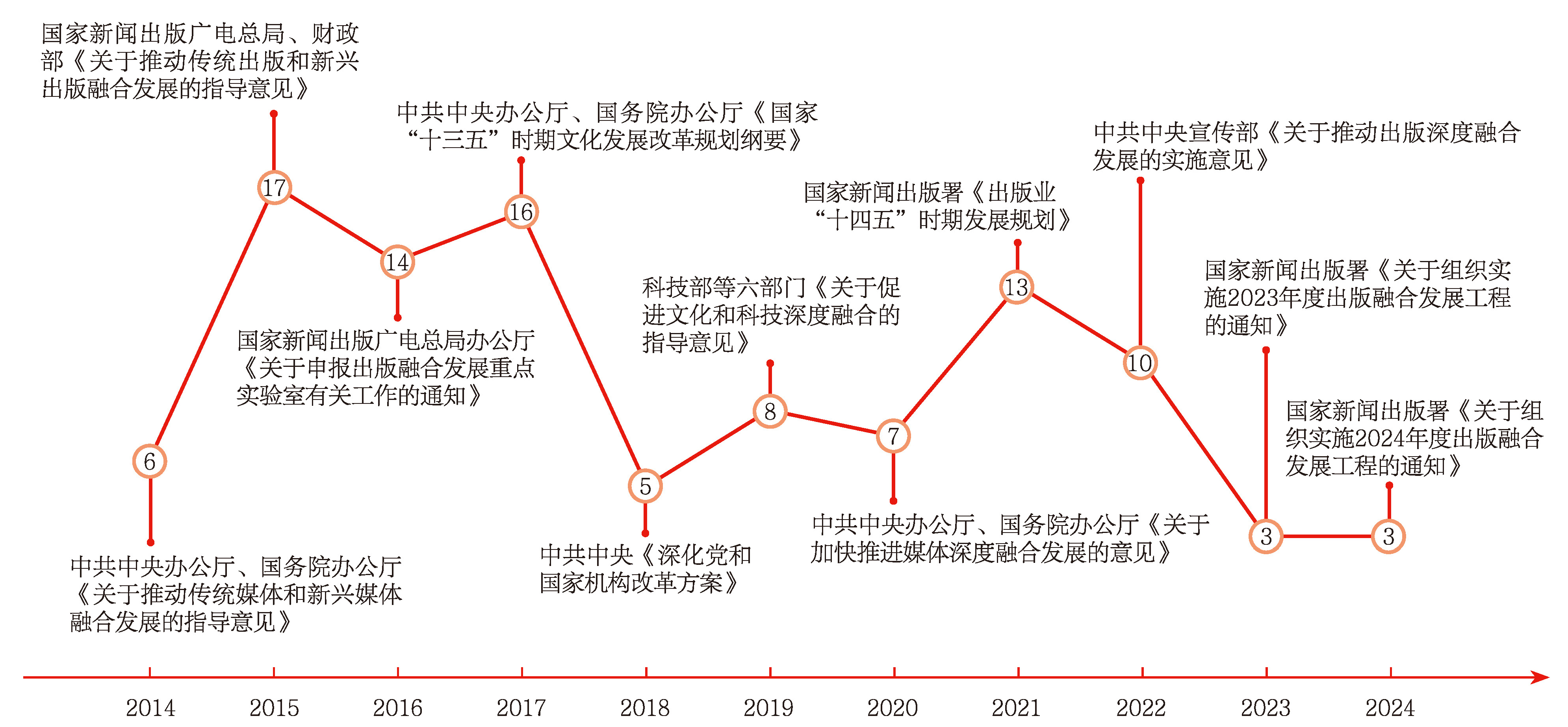
图 1  出版融合政策发布时间、数量分布趋势及重要政策
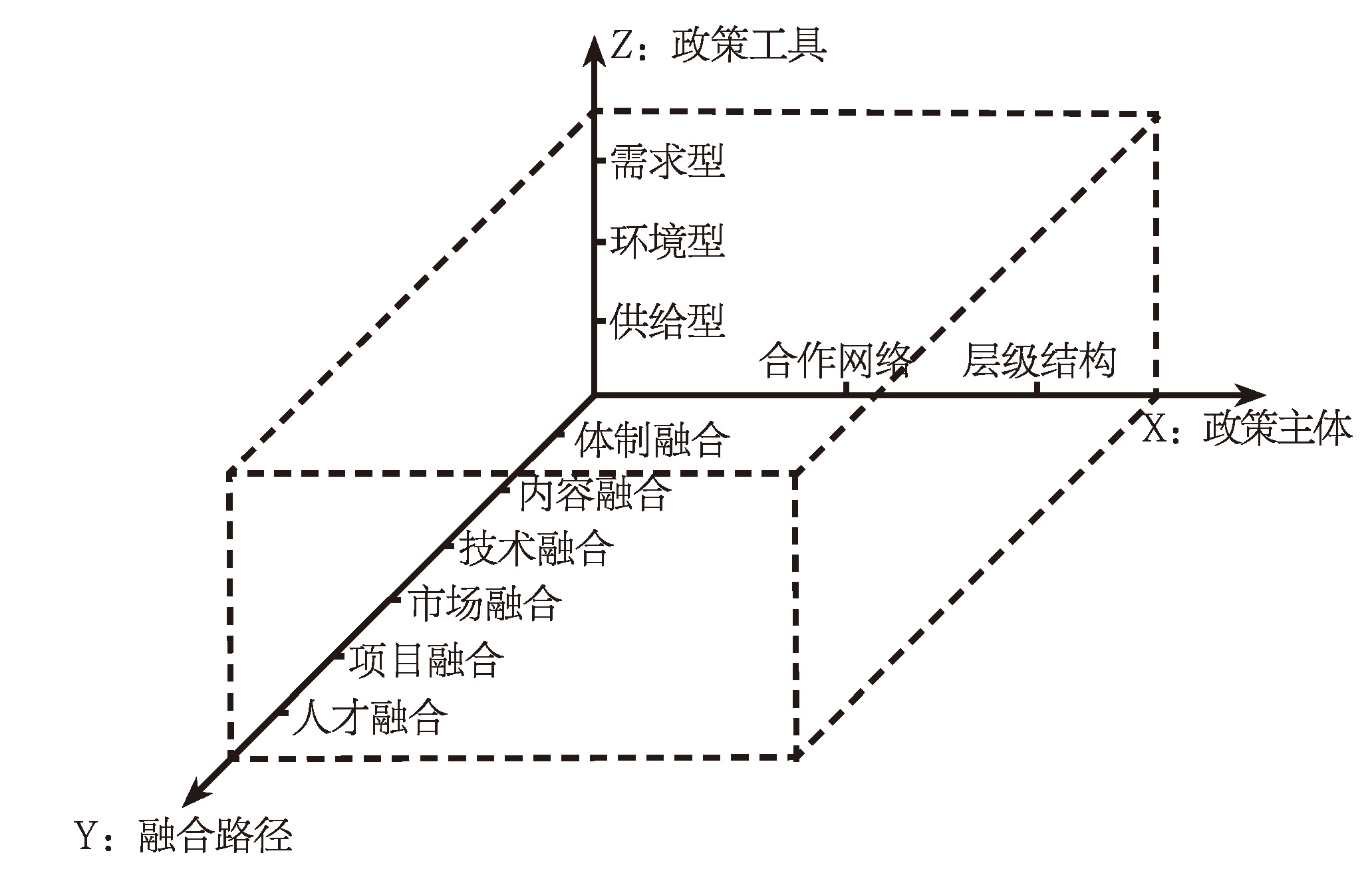
图 2  出版融合政策体系研究三维框架
表 1  融合路径归类及政策内容示例
表 2  政策工具归类及政策内容示例
表 3  我国出版融合政策内容分析单元编码表(部分)
图 3  出版融合政策主体合作网络图
图 4  政策主体、融合路径、政策工具频数统计
图 5  “政策主体—融合路径—政策工具”关联结构图
1 王勇安, 王昭. 范式演进、底层逻辑与建构原则:关于出版深度融合理论建设的思考[J]. 科技与出版, 2024 (7): 132- 140.
doi: 10.16510/j.cnki.kjycb.20240712.002
2 徐丽芳, 罗婷. 面向数字出版的深度融合:背景、演进与策略[J]. 编辑之友, 2024 (2): 36- 41.
3 出版融合转型:六大成果和五大问题[EB/OL].(2019-06-17)[2024-09-16]. http://media.people.com.cn/n1/2019/0617/c14677-31163932.html.
4 李弘. 面向知识服务的出版融合发展浅析[J]. 科技与出版, 2016 (12): 12- 16.
doi: 10.16510/j.cnki.kjycb.2016.12.004
5 吴江文. 融合创新推动数字出版产业转型升级:浅议2014年我国数字出版产业政策顶层设计[J]. 中国出版, 2015 (7): 31- 33.
6 王关义, 胥力伟. 推动传统出版与新兴出版融合发展的财税政策研究[J]. 中国出版, 2015 (17): 14- 18.
7 陈少志, 陈昊. 出版深度融合发展的政策沿革、分析与趋势[J]. 出版广角, 2024 (16): 11- 17.
8 张新新, 张璐颖. 全媒体传播体系视域的出版深度融合发展指标体系建构与分析:何为出版深度融合发展的“深度”[J]. 科技与出版, 2023 (11): 144- 157.
doi: 10.16510/j.cnki.kjycb.20231108.001
9 张新新, 周静虹, 陈少志, 等. 全媒体传播体系视角的出版深度融合发展指数研究:再论何为出版深度融合发展的“深度”[J]. 科技与出版, 2024 (3): 75- 89.
doi: 10.16510/j.cnki.kjycb.20240313.001
10 王欢妮. 新中国成立70年来我国出版产业政策的发展与变迁[J]. 编辑之友, 2019 (9): 26-32, 39.
11 黄先蓉, 马兰. 智媒时代意识形态安全下我国出版产业发展政策调整路径[J]. 编辑之友, 2020 (1): 36- 39.
12 贺德方, 唐玉立, 周华东. 科技创新政策体系构建及实践[J]. 科学学研究, 2019, 37 (1): 3-10, 44.
13 霍帆帆, 霍朝光, 马海群. 我国数据治理相关政策量化剖析:发展脉络、政策主体、政策渊源与政策工具[J]. 情报学报, 2023, 42 (12): 1424- 1437.
14 植草益. 信息通讯业的产业融合[J]. 中国工业经济, 2001 (2): 24- 27.
15 马健. 产业融合理论研究评述[J]. 经济学动态, 2002 (5): 78- 81.
16 赵筱媛, 苏竣. 基于政策工具的公共科技政策分析框架研究[J]. 科学学研究, 2007 (1): 52- 56.
17 迈克尔·豪利特,M. 拉米什. 公共政策研究:政策循环与政策子系统[M]. 庞诗,等,译. 北京:生活·读书·新知三联书店,2006:144.
18 SCHNEIDER A , INGRAM H . Behavioral assumptions of policy tools[J]. Journal of Politics, 1990 (52): 510- 529.
19 ROTHWELL R , ZEGVELD W . An assessment of government innovation policies[J]. Review of Policy Research, 1984 (3): 436- 444.
20 朱庆华, 李亮. 社会网络分析法及其在情报学中的应用[J]. 情报理论与实践, 2008 (2): 179-183, 174.
21 刘威, 陈佳梦, 钟镇. 中国特色社会主义粮食政策变迁与政策主体协同网络演化研究:基于1953—2022年政策文本的分析[J]. 智库理论与实践, 2024, 9 (3): 40- 52.
22 裴瑞敏, 姜影, 肖尤丹. 科技人才政策变迁与政策主体协同网络演化研究:基于对1978—2020年政策文本的分析[J]. 科学学与科学技术管理, 2022, 43 (8): 32- 46.
23 杨嬛, 许若冰, 薛佳丽. 中国农业绿色发展政策主题与发文机构网络演进研究:基于1982—2022年政策文本的实证分析[J]. 中国农业大学学报, 2023, 28 (11): 236- 250.
24 宋吉述, 杨阳. 2023—2024年出版业融合发展现状及趋势研判[J]. 科技与出版, 2024 (6): 26- 37.
doi: 10.16510/j.cnki.kjycb.2024.06.005
25 刘建华. 党的十八大以来我国出版业新态势、新变化与新体制[J]. 中国出版, 2022 (16): 14- 18.
26 杨军, 陶安涛. 数智时代出版数据要素价值问题探究[J]. 中国编辑, 2024 (9): 28- 33.
27 刘晓燕, 庞雅如, 侯文爽, 等. 关系-内容视角下央地科技创新政策协同研究[J]. 中国科技论坛, 2020 (12): 13- 21.
28 杨锐. 深度融合发展背景下出版传媒集团组织架构变革探索[J]. 中国出版, 2022 (9): 38- 43.
29 杜方伟. 出版业平台化发展的内在机理与演进模式[J]. 编辑之友, 2023 (10): 11- 20.
[1] 张敬柱,吴素平. 构建教育出版服务新生态的探索与思考[J]. 科技与出版, 2025, 44(7): 62-67.
[2] 汤雪梅,杨春兰,杨玥涵. “十四五”时期中国出版业的回顾与思考[J]. 科技与出版, 2025, 44(1): 6-16.
[3] 宋吉述,杨阳. 2023—2024年出版业融合发展现状及趋势研判[J]. 科技与出版, 2024, 43(6): 26-37.
[4] 杨安进,刘睿. 出版深度融合背景下工具书网络版权保护:困境与对策[J]. 科技与出版, 2024, 43(6): 100-107.
[5] 张新新,周静虹,陈少志,王健. 全媒体传播体系视角的出版深度融合发展指数研究*[J]. 科技与出版, 2024, 43(3): 75-89.
[6] 刘玲武,胡海,张天奕. 基于“工具—参与主体—效力”三维框架的我国动漫产业政策评价研究*[J]. 科技与出版, 2024, 43(11): 63-79.
[7] 孙寿山. 完善培养考核评价机制 建强数字出版人才队伍[J]. 科技与出版, 2023, 42(6): 5-9.
[8] 何珊. 政策工具视角下我国出版公共服务政策优化对策分析[J]. 科技与出版, 2023, 42(2): 151-160.
[9] 张新新,张璐颖. 全媒体传播体系视域的出版深度融合发展指标体系建构与分析*[J]. 科技与出版, 2023, 42(11): 144-157.
[10] 徐丽芳, 罗婷, 李静涵. 出版融合发展人才需求结构与协同培养路径*[J]. 科技与出版, 2022, 41(9): 12-21.
[11] 郭嘉. 虚拟数字人在图书出版领域的多元身份构建研究[J]. 科技与出版, 2022, 41(8): 56-63.
[12] 张恰. 我国编辑专业化政策建设的回顾与展望[J]. 科技与出版, 2022, 41(7): 141-147.
[13] 郝东杰. 后疫情时代出版产业发展的财税政策工具供给研究[J]. 科技与出版, 2022, 41(6): 48-53.
[14] 周蔚华,陈丹丹. 2021年中国出版融合发展报告*[J]. 科技与出版, 2022, 41(5): 60-69.
[15] 于海洋, 马瑶瑶. 数字中国视域下我国出版人才研究动态探析[J]. 科技与出版, 2022, 41(11): 160-168.