Please wait a minute...
科技与出版  2026, Vol. 45 Issue (2): 66-81    
出版育英
PMC指数模型视角下政策赋能出版人才队伍建设的机制研究
谢冰滨
福建教育杂志社,350003,福州
Mechanism of Policy Empowerment for the Development of Publishing Talent Teams from the Perspective of PMC Index Model
XIE Bingbin
Fujian Education Journal, 350003, Fuzhou, China
全文: HTML    PDF(2539 KB)  
输出: BibTeX | EndNote (RIS)      
摘要: 

政策赋能是出版人才队伍建设的动力机制之一。在“十五五”规划开局之际,客观评价现有政策的赋能情况,揭示其赋能优势与短板,可为未来政策调整和制定提供依据和参考。文章基于文本挖掘,构建我国出版人才队伍建设政策PMC指数模型,对2010年以来国家层面的74份政策文本展开量化分析,结果发现:政策总体赋能水平契合出版人才发展需求,不同政策要素的赋能效力呈非均衡性分布,不同政策的赋能分化抑制了协同效应的发挥。为推动出版人才队伍的高质量发展,我国政策可从强化时效性管理、拓展受体覆盖面、聚焦全链条建设、优化工具结构性、深化协同性设计等方面优化赋能机制。

关键词 PMC指数模型出版人才出版政策数字化转型    
Abstract

A high-caliber publishing talent pool serves as a strategic and foundational support for driving the digital transformation of the publishing industry and for building a strong publishing and cultural nation. Policy empowerment is among the driving mechanisms for the development of China's publishing talent contingent. At the outset of the 15th Five-Year Plan, an objective evaluation of the empowerment effectiveness of China's existing policies for the development of its publishing talent contingent, along with revealing the strengths and limitations of their empowerment, can provide an evidence-based foundation for future policy adjustment and formulation. This study takes 74 national-level policies on the development of China's publishing talent contingent issued since 2010 as the research sample. Based on text mining techniques, a policy modeling consistency (PMC) index model for China's policies on the development of China's publishing talent contingent was developed. Subsequently, the PMC index for each policy was calculated, and the corresponding PMC surface plots were generated. Through multi-dimensional quantitative analysis and evaluation, the following findings are presented: China's policies exhibit a certain degree of scientificity and rationality, with the overall empowerment level aligned with the development needs of publishing talents; however, different elements exhibit varying degrees of effectiveness in empowering the development of China's publishing talent contingent, presenting a heterogeneous pattern of contribution; and the PMC indices of the policy samples fluctuate significantly, with notable disparities in the empowerment effectiveness across different policies and hamper synergistic efficiency among them. To promote the high-quality development of the publishing talent contingent, China's policies for the development of publishing talent can optimize the empowerment mechanism in the following ways: First, by improving forecasting and supervision mechanisms as well as linkage and transmission mechanisms, timeliness management and facilitate seamless cycle connections should be strengthened. Second, by enhancing industry-education integration policies, implementing a talent cultivation responsibility-sharing system, and establishing talent connection and transformation mechanisms, the coverage of policy recipients should be expanded, and a pyramidal talent structure should be formed. Third, a full-chain mindset should be established. On the basis of consolidating and enhancing the advantages in talent cultivation, it is imperative to address the gaps in talent selection, utilization, and retention by building a public service platform for publishing professionals, creating an institutional environment conducive to stimulating innovative dynamism, and fostering a long-term incentive mechanism and development ecosystem competitive in the industry. Moreover, institutional linkages throughout the full chain should be strengthened to closely connect and integrate the development of all links, thereby forming an interdependent and well-functioning integrated chain. Fourth, by increasing the supply of supportive policy tools, upgrading the effectiveness of guidance-oriented policy tools, and adopting a combination of diverse policy tools, the structure of policy tools should be optimized to align with the development needs of talents. Fifth, the collaborative design should be deepened, and a scientific policy system should be constructed by improving the hierarchical structure of policy functions, strengthening the technical safeguards in the policy formulation, and establishing a regular interdepartmental collaboration mechanism.

Key wordspolicy modeling consistency (PMC) index model    publishing talents    publishing policies    digital transformation
出版日期: 2026-04-07

引用本文:

谢冰滨. PMC指数模型视角下政策赋能出版人才队伍建设的机制研究[J]. 科技与出版, 2026, 45(2): 66-81.
XIE Bingbin. Mechanism of Policy Empowerment for the Development of Publishing Talent Teams from the Perspective of PMC Index Model. Science-Technology & Publication, 2026, 45(2): 66-81.

链接本文:

http://kjycb.tsinghuajournals.com/CN/      或      http://kjycb.tsinghuajournals.com/CN/Y2026/V45/I2/66

表 1  我国出版人才队伍建设政策(部分)
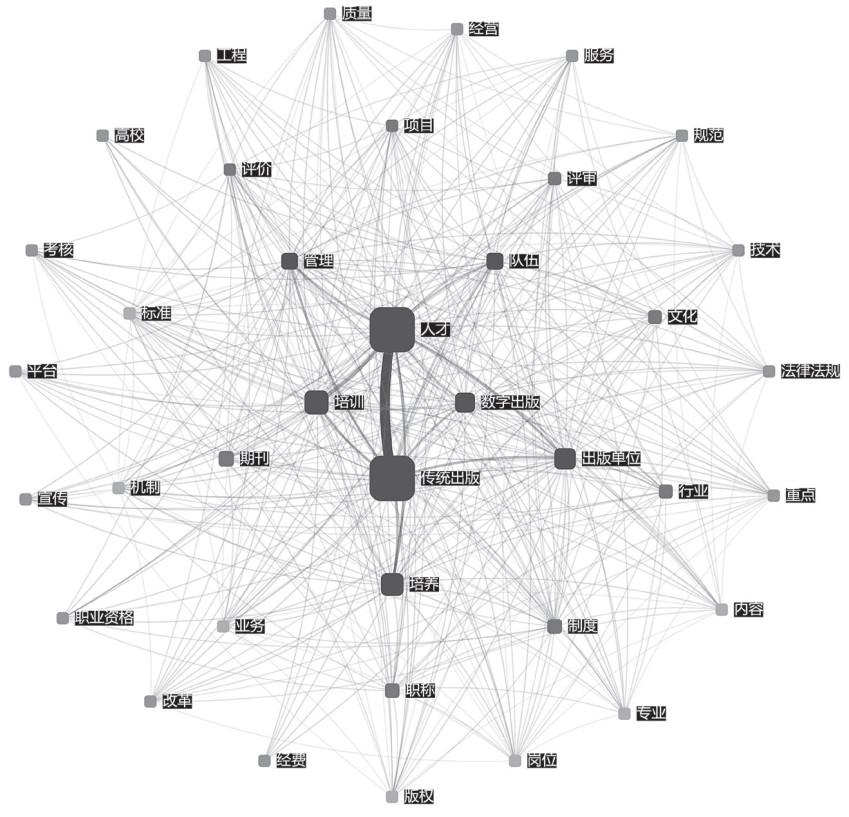
图 1  我国出版人才队伍建设政策高权重特征词网络关系图谱
表 2  我国出版人才队伍建设政策PMC指数模型评价指标体系
表 3  我国出版人才队伍建设政策多投入产出表
表 4  我国出版人才队伍建设政策PMC指数
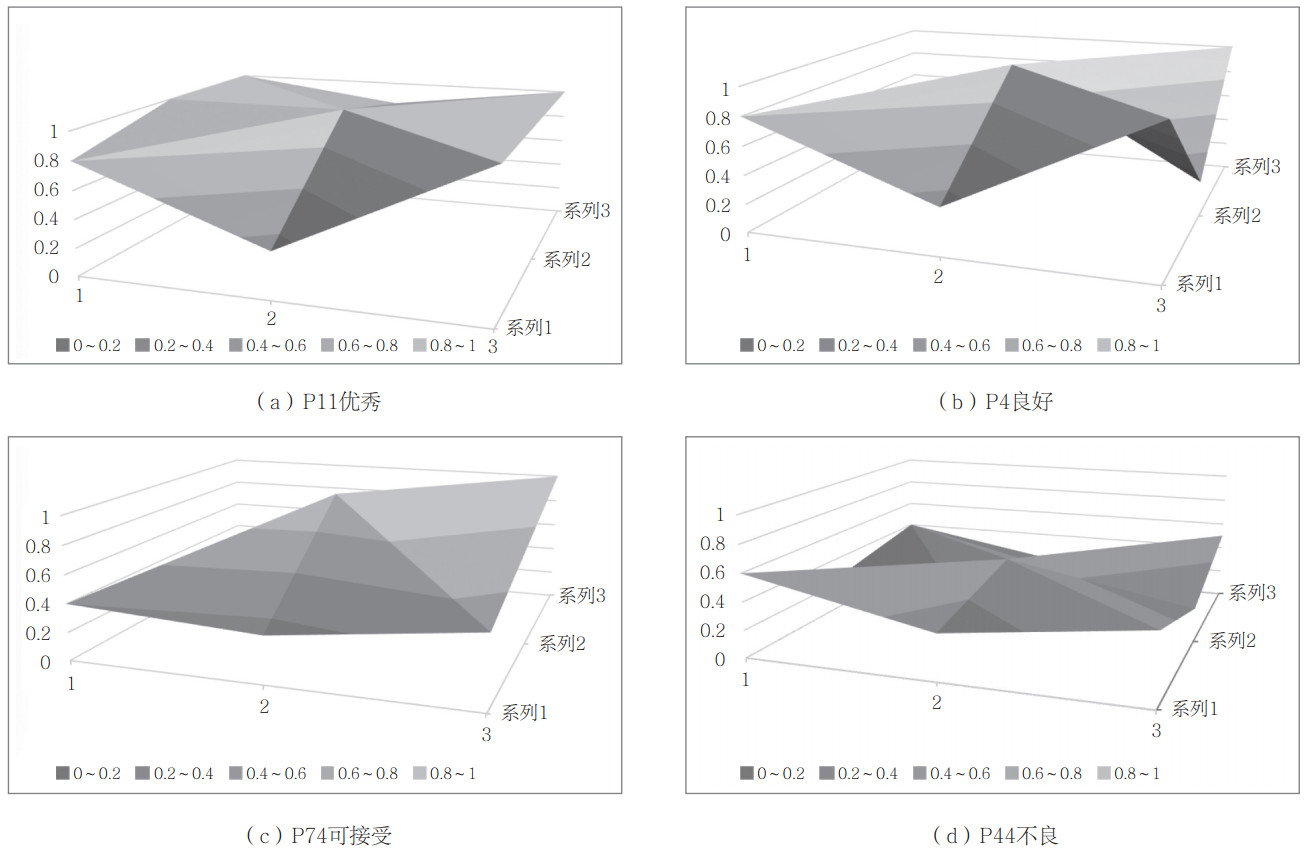
图 2  四项等级不同的出版人才队伍建设政策PMC曲面图
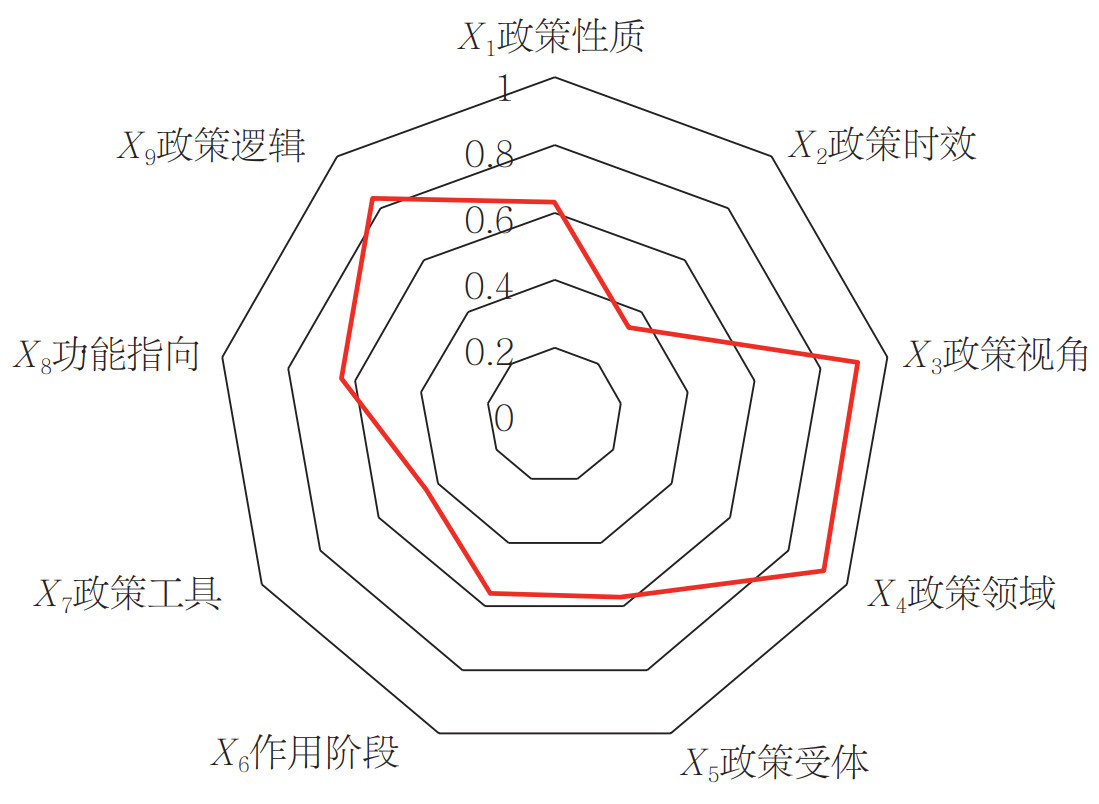
图 3  一级变量得分均值戴布拉图
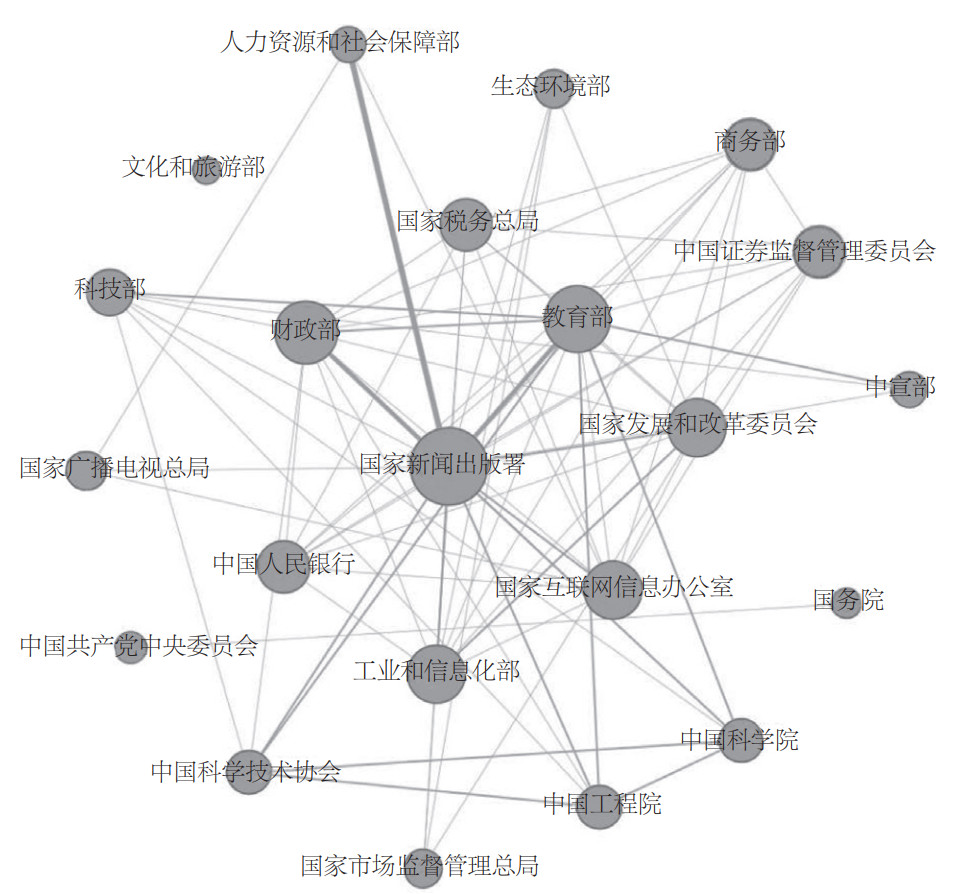
图 4  我国出版人才队伍建设政策主体合作网络图
(注:历史上名称发生变更的机构按当前职能部门进行统计,如原新闻出版总署、国家新闻出版广电总局统归为国家新闻出版署。)
1 李文娟. 十八大以来出版人才队伍建设的成就与经验[J]. 科技与出版, 2022 (6): 42- 47.
doi: 10.16510/j.cnki.kjycb.20220602.017
2 崔海教, 王平, 徐升国, 等. 出版人才队伍建设的现状、问题及建议[J]. 中国出版, 2025 (4): 10- 14.
3 本刊编辑部. 出版宣传助力出版业高质量发展: 专访中国新闻出版传媒集团有限公司党委书记、董事长马国仓[J]. 中国编辑, 2025 (4): 4- 12.
4 李文娟. "十四五"时期我国出版人才队伍建设回顾与"十五五"展望[J]. 科技与出版, 2025 (1): 39- 47.
5 方思越, 刘清. 政策文献量化研究中的PMC指数模型应用述评[J]. 现代情报, 2024, 44 (4): 168- 176.
6 刘玲武, 胡海, 张天奕. 基于"工具—参与主体—效力"三维框架的我国动漫产业政策评价研究[J]. 科技与出版, 2024 (11): 63- 79.
7 童晓雯, 康琪瑶, 袁小群. 基于文本挖掘的我国数字出版政策分析评估研究[J]. 中国数字出版, 2024 (2): 40- 46.
8 张新新, 潘煌. 出版数字化转型走向数据化改革: 出版业新质生产力劳动对象的质变[J]. 出版广角, 2024 (8): 24- 30.
9 刁羽, 薛红. 基于电子资源行为数据的TF-IDF文献推荐方法研究: 以电子资源校外访问系统为例[J]. 图书馆杂志, 2022, 41 (12): 45- 54.
10 周瑛, 严林志. 我国省级数字档案政策文本量化评价研究: 基于PMC指数模型[J]. 情报科学, 2024, 42 (4): 9- 17.
11 Estrada M A R . Policy modeling: Definition, classification and evaluation[J]. Journal of Policy Modeling, 2011, 33 (4): 523- 536.
doi: 10.1016/j.jpolmod.2011.02.003
12 周海炜, 陈青青. 大数据发展政策的量化评价及优化路径探究: 基于PMC指数模型[J]. 管理现代化, 2020, 40 (4): 74- 78.
13 胡峰, 李加陈, 翟婧. 政策文本计量视角下科技人才政策分析与评价: 基于"工具—效力"的二维框架[J]. 情报科学, 2024, 42 (6): 99- 112.
14 黄先蓉, 严贝贝. 学科共建背景下出版人才协同培养的路径研究[J]. 出版广角, 2023 (4): 10- 15.
[1] 孙保营,张宁. 学术出版机构数智化转型的人才困境与纾解[J]. 科技与出版, 2025, 44(9): 87-94.
[2] 王剑飞,林松. 媒介升维与空间重构:可交互空中成像技术对出版业的范式革新研究[J]. 科技与出版, 2025, 44(8): 28-37.
[3] 崔波. 出版人才培养的“通”与“新”:人文底蕴、技术素养与产业洞察的三维融合[J]. 科技与出版, 2025, 44(8): 77-84.
[4] 孙帅. 寻求共鸣:学术期刊数字化转型中[J]. 科技与出版, 2025, 44(6): 131-140.
[5] 李文娟. “十四五”时期我国出版人才队伍建设回顾与“十五五”展望[J]. 科技与出版, 2025, 44(1): 39-47.
[6] 高虹. 新质生产力推动学术期刊高质量发展的理论逻辑与实践路径*[J]. 科技与出版, 2024, 43(7): 70-78.
[7] 杨阳,宋昱霖. 出版企业数据资产的概念、分类与建设*[J]. 科技与出版, 2024, 43(7): 92-102.
[8] 宋吉述,杨阳. 2023—2024年出版业融合发展现状及趋势研判[J]. 科技与出版, 2024, 43(6): 26-37.
[9] 刘欣,蒋雪颖,袁也. 数智时代的国家认同与主题出版融合发展路径探析*[J]. 科技与出版, 2024, 43(2): 71-76.
[10] 刘玲武,胡海,张天奕. 基于“工具—参与主体—效力”三维框架的我国动漫产业政策评价研究*[J]. 科技与出版, 2024, 43(11): 63-79.
[11] 朱瑜. 论出版人才评价的关键指标、基本原则和重要意义[J]. 科技与出版, 2023, 42(4): 45-49.
[12] 李欣人,韩志瑞. 国外自出版作者服务平台的服务模式和成功经验分析[J]. 科技与出版, 2023, 42(3): 77-81.
[13] 曾斌,刘海溧. 我国数字教材建设与应用的路径探析[J]. 科技与出版, 2023, 42(2): 62-68.
[14] 王若扬. 从“数字化”到“智能化”:漫画出版的发展路径探究[J]. 科技与出版, 2023, 42(2): 74-80.
[15] 李润珍. 从高校外语教材出版看新形态教材建设如何讲好中国故事*[J]. 科技与出版, 2023, 42(12): 78-86.