Please wait a minute...
科技与出版  2026, Vol. 45 Issue (5): 103-111    
学术探索
学术共同体对注册式研究报告的认知及其推广路径——基于深度访谈的研究结果
龚梦月1,2
1. 《系统微生物学与生物制造(英文)》编辑部,214122,江苏无锡
2. 《食品与生物技术学报》编辑部,214122,江苏无锡
Academic Community’s Perceptions of Registered Reports and Its Promotion Pathways: Findings from In-Depth Interviews
GONG Mengyue1,2
1. Editorial Office of Systems Microbiology and Biomanufacturing, 214122, Wuxi, China
2. Editorial Office of Journal of Food and Biotechnology, 214122, Wuxi, China
全文: HTML    PDF(1718 KB)  
输出: BibTeX | EndNote (RIS)      
摘要: 

注册式研究报告的选择性同行评审更关注研究问题和方法,可以在很大程度上解决期刊出版中的阳性结果偏好、数据透明度和可重复性问题,给学术共同体各方都带来了新的机遇和挑战,本文旨在探索注册式研究报告这一研究范式在我国科技期刊中的实施可能性及其影响因素。通过扎根理论方法,对访谈记录进行质性分析,识别了影响注册式研究报告实施的关键因素,并构建了阻动力理论模型。研究结果表明,价值认知、利益相关者态度和制度执行是影响注册式研究报告实施的三大类属因素,这些因素相互作用,共同影响注册式研究报告的实施效果。科技期刊有望以注册式研究报告为契机,促进科研评审转型,我国科技期刊应密切关注学界动态,及时做出有中国特色的出版模式创新。

关键词 注册式研究报告同行评审出版模式基金评审开放科学    
Abstract

Registered Reports (RR) offer a promising pathway to mitigate publication bias, enhance data transparency, and improve research reproducibility by shifting peer review from results-based to methods-based evaluation. Despite growing international adoption, little is known about how Chinese researchers, editors, and research administrators perceive RR or what barriers impede its local implementation. This study employs grounded theory, drawing on semi-structured in-depth interviews with 30 participants from diverse disciplines (biology, medicine, psychology, materials science, engineering, and management) and roles (early-career and senior researchers, journal editors, editorial board members, and research administrators). Interviews were transcribed, coded using ATLAS.ti, and analyzed iteratively through open, axial, and selective coding, yielding 94 concepts, 10 categories, and 5 core categories. A "motivity-resistance" model is constructed, capturing three interacting dimensions: value cognition, power structure, and behavioral actors. Findings reveal a pronounced decoupling between positive value perception and behavioral intention. While most participants acknowledge RR's theoretical advantages—improved methodological rigor, reduced selective reporting, and increased efficiency—actual willingness to adopt RR in their own practice remains low. Cognitive resistance stems from a deep-rooted research culture that prioritizes positive results and serendipitous discoveries, especially in exploratory fields such as materials science and synthetic biology, where preregistration is seen as potentially constraining innovation. From a power-structure perspective, the research evaluation system—encompassing promotion criteria, funding allocation, and journal rankings—provides virtually no institutional recognition for RR, while journal leaders fear operational burdens including workload surges and 'empty registrations.' Behaviorally, different stakeholders rationally weigh costs and benefits: earlycareer researchers value the certainty of inprinciple acceptance but worry about idea theft during firstround review; reviewers support the methodological focus yet are deterred by increased unpaid workload; editorial board members and editors express cautious optimism but demand local pilot evidence before committing. Disciplinary culture significantly affects RR acceptance, whereas regional reform policies show no notable influence. To break the lock-in loop of cognitive tradition, power asymmetry, and behavioral conservatism, the study proposes actionable strategies: reforming evaluation systems to reward process rigor and negative results; establishing a third-party pre-registration platform (led by academic societies) to protect intellectual property; crediting RR peer-review work as "academic service" in promotion criteria; developing lightweight manuscript management systems for RR workflows; and adopting a phased, discipline-specific pilot approach starting with method-oriented fields (e.g., clinical psychology, biomedicine) before gradual expansion. These findings demonstrate that promoting RR in China is not merely a technical adjustment but a systemic transformation requiring aligned changes in research culture, institutional power, and stakeholder incentives. This study provides empirical evidence and context-sensitive solutions to advance open science and publishing innovation in Chinese scientific journals.

Key wordsregistered reports    peer review    publishing mode    pre-registration    open science
出版日期: 2026-06-15
基金资助:中国科学技术期刊编辑学会基金项目(2023—2024年度)(CESSP-2023-C-10);江苏省科技期刊学会暨长三角科技期刊·MPS/AJE英文期刊发展基金课题(JSKJQK-MPS/AJE-2025-003)

引用本文:

龚梦月. 学术共同体对注册式研究报告的认知及其推广路径——基于深度访谈的研究结果[J]. 科技与出版, 2026, 45(5): 103-111.
GONG Mengyue. Academic Community’s Perceptions of Registered Reports and Its Promotion Pathways: Findings from In-Depth Interviews. Science-Technology & Publication, 2026, 45(5): 103-111.

链接本文:

http://kjycb.tsinghuajournals.com/CN/      或      http://kjycb.tsinghuajournals.com/CN/Y2026/V45/I5/103

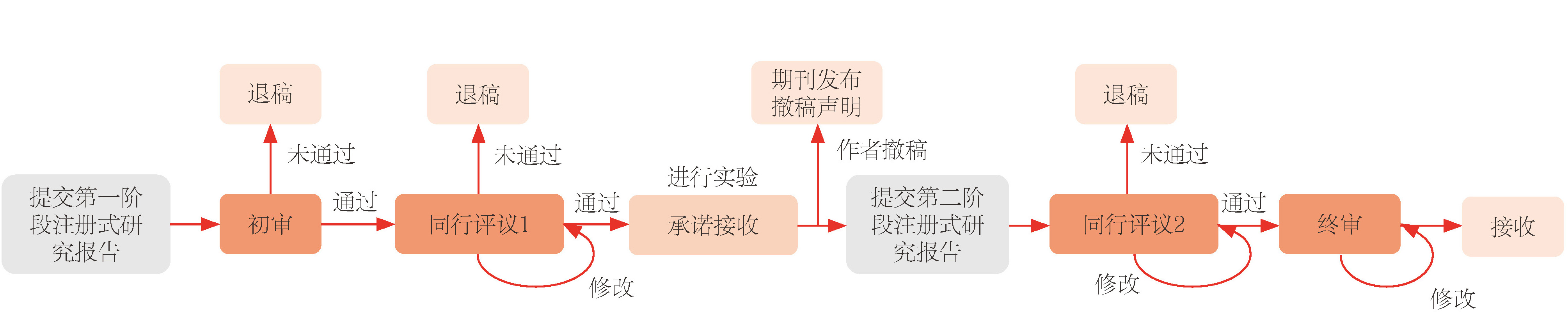
图 1  注册式研究报告文章处理流程
表 1  访谈对象信息记录表
表 2  基于扎根理论的访谈文字编码结果
图 2  注册式研究报告编码结果核心范畴与主轴编码的关系示意图
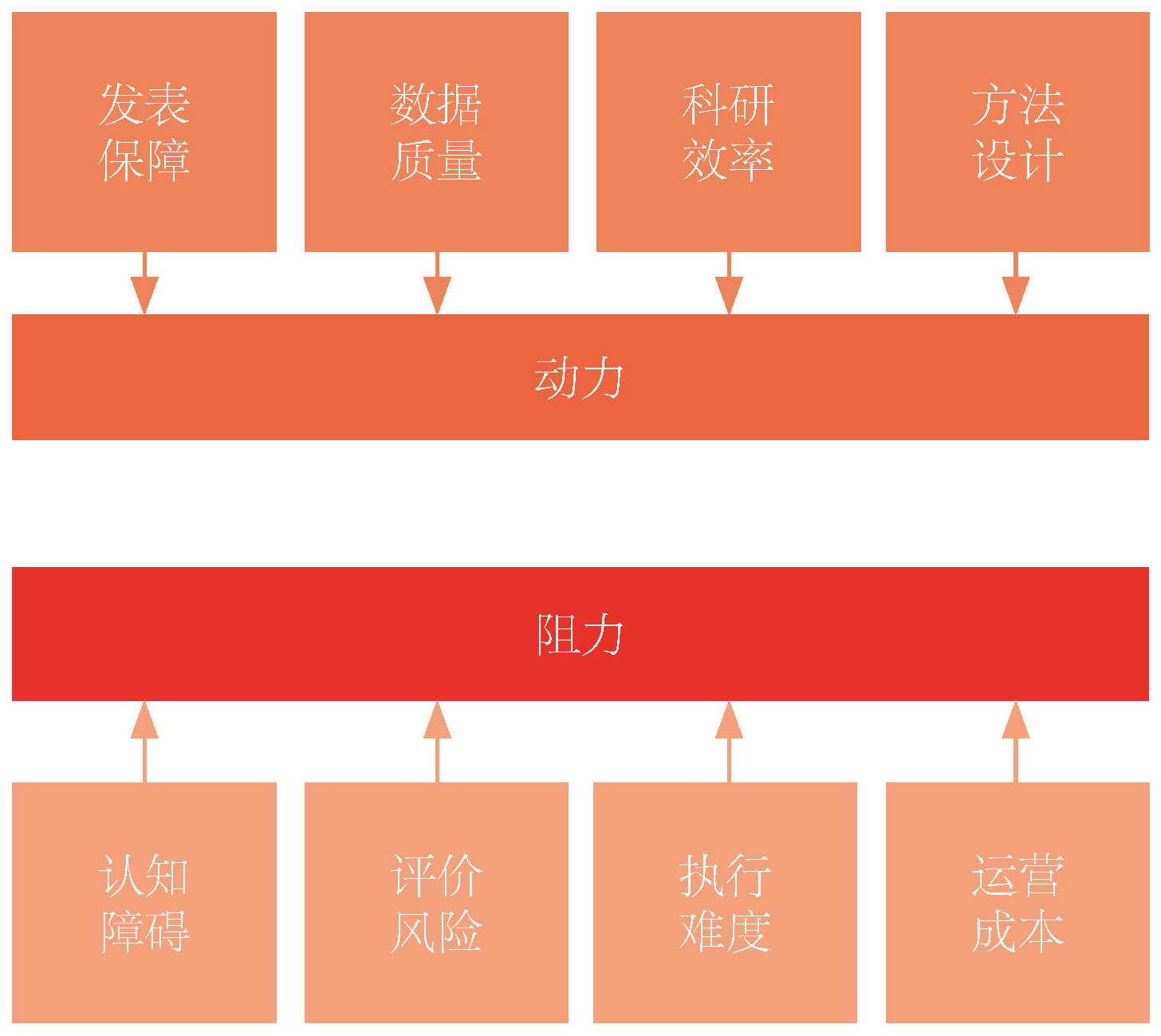
图 3  RR推广的“阻力—动力”因素图
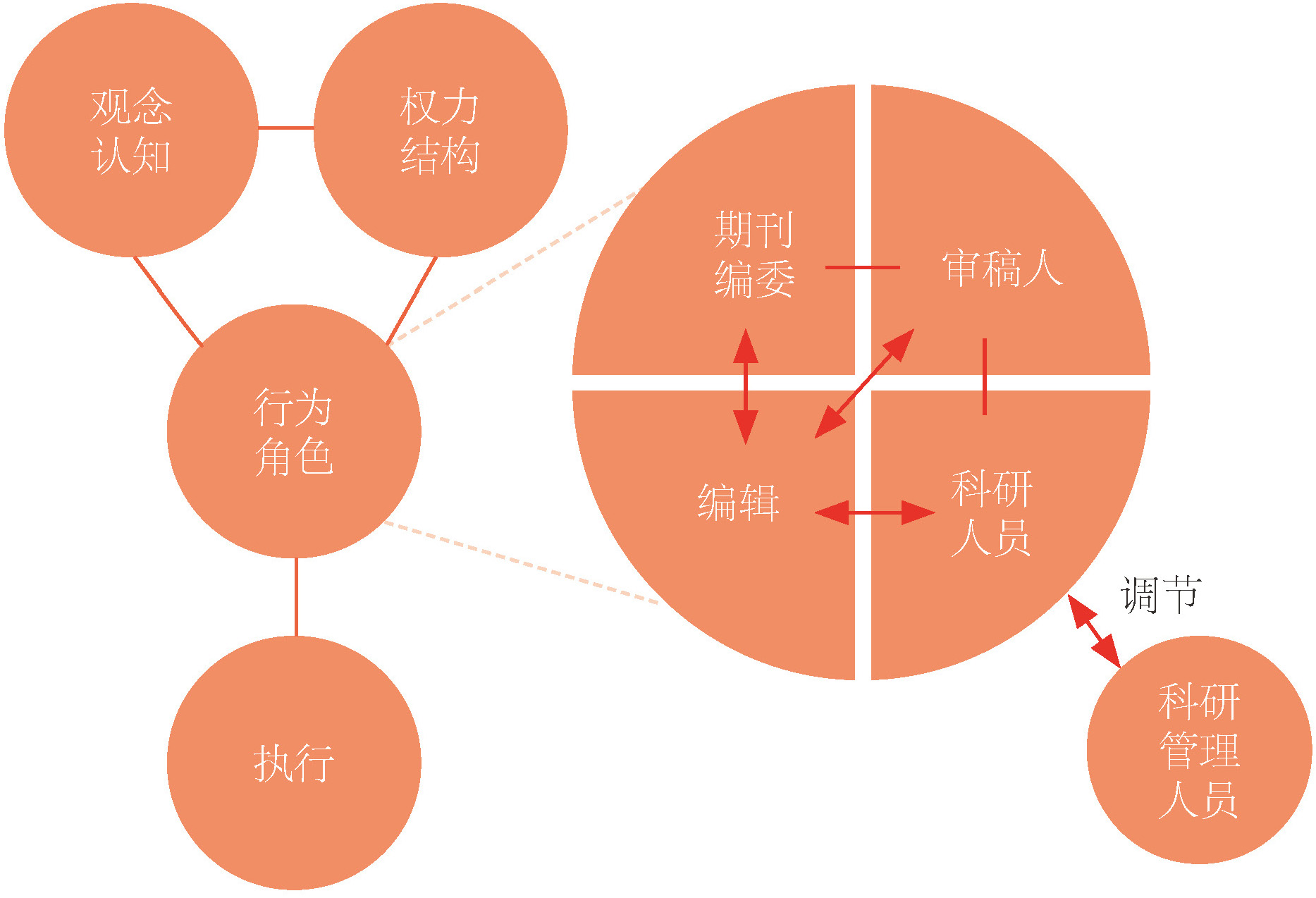
图 4  观念认知、权力结构和行为角色三个维度的循环互锁
1 Mehlenbacher A R . Registered reports: Genre evolution and the research article[J]. Written Communication, 2019, 36 (1): 38- 67.
doi: 10.1177/0741088318804534
2 龚梦月. 开放科学背景下科技期刊同行评议注册式转型路径与机遇[J]. 科技传播, 2024, 16 (5): 55- 58.
3 郑霞, 黄国彬, 崔汭. 开放科学环境下注册式研究报告的核心特点与发展前景剖析[J]. 数字出版研究, 2024, 3 (3): 20- 28.
4 Nature . Nature welcomes registered reports[J]. Nature, 2023, 614, 594.
doi: 10.1038/d41586-023-00506-2
5 Nature Neuroscience . Reducing publication bias with registered reports[J]. Nature Neuroscience, 2024, 27, 1635.
doi: 10.1038/s41593-024-01762-9
6 Errington T M , Denis A , Allison A B , et al. Experiments from unfinished registered reports in the reproducibility project: Cancer biology[J]. ELife, 10, e73430.
doi: 10.7554/eLife.73430
7 黄国彬, 毕子晗, 孙静彤, 等. 科研人员对注册式研究报告的认知水平及其提升策略研究: 基于北京8所"双一流"高校的调研[J]. 图书情报工作, 2022, 66 (1): 89- 95.
8 黄国彬, 郑霞. 推进开放科学发展的注册式研究报告及其价值研究[J]. 图书情报工作, 64 (7): 73- 83.
9 黄国彬, 刘磊, 陈丽. 注册式研究报告的同行评议机制研究[J]. 图书情报工作, 65 (18): 24- 35.
10 李潇丽, 潘云涛, 马峥, 等. 注册报告的兴起及其对传统出版模式的挑战[J]. 科技与出版, 2020, 10, 114- 120.
doi: 10.16510/j.cnki.kjycb.20201012.001
11 赵筱媛, 崔通, 郑雯雯. 国际科技期刊应对实验结果可重复性挑战的实践[J]. 情报工程, 2020, 6 (3): 42- 51.
12 郁林羲, 邢爱敏. 科技期刊应对论文可重复危机的路径探讨[J]. 中国科技期刊研究, 2024, 35 (3): 316- 322.
13 黄敏聪. 注册报告制对科技期刊论文发表的变革性影响分析[J]. 编辑学报, 2020, 32 (2): 232- 236.
14 Smith G D , Penny K I . Enhancing research integrity in academic nursing: The introduction of registered reports[J]. Journal of Clinical Nursing, 2019, 28 (7-8): 1037- 1038.
doi: 10.1111/jocn.14770
15 Munafò M R , Nosek B A , Bishop D V M , et al. A manifesto for reproducible science[J]. Nature Human Behaviour, 2017, 1, 0021.
doi: 10.1038/s41562-016-0021
16 Obels P , Lakens D , Coles N A , et al. Analysis of open data and computational reproducibility in registered reports in psychology[J]. Advances in Methods and Practices in Psychological Science, 2020, 3 (2): 229- 237.
doi: 10.1177/2515245920918872
17 Chambers C D , Tzavella L . The past, present and future of Registered Reports[J]. Nature Human Behaviour, 2021, 6, 29- 42.
doi: 10.1038/s41562-021-01193-7
18 Cook B G , Lloyd J , Therrien W J , et al. Promoting open science to increase the trustworthiness of evidence in special education[J]. Exceptional Child, 2018, 85, 104- 118.
doi: 10.1177/0014402918793138
19 Jones P M , Chow J T Y , Arango M F , et al. Comparison of registered and reported outcomes in randomized clinical trials published in anesthesiology journals[J]. Anesthesia & Analgesia, 2017, 125 (4): 1292- 1300.
20 孙静彤, 黄国彬, 刘磊. 科研人员接受注册式研究报告的影响因素实证研究[J]. 数字出版研究, 2024, 3 (3): 29- 39.
21 Richard W , Caroline W , Diana K . Registered reports: an early example and analysis[J]. PeerJ, 2019, 7, 7.
[1] 徐丽芳,田峥峥,张蒂,曹天天,王一雪. 公正导向下的开放与治理重构:2025海外科技期刊出版观察[J]. 科技与出版, 2026, 45(3): 38-55.
[2] 郭梦征,纪方方,张小利,范晨芳. 开放科学背景下的科技期刊版权管理策略研究[J]. 科技与出版, 2025, 44(7): 102-109.
[3] 李艳红,邓履翔. 科技期刊实施开放同行评议面临的挑战与应对策略[J]. 科技与出版, 2025, 44(6): 80-87.
[4] 徐丽芳,罗婷,田峥峥,张蒂. 技术驱动的开放与可信出版:2024年海外科技期刊出版动态研究[J]. 科技与出版, 2025, 44(3): 35-54.
[5] 郭盛楠,郝洋,王芳. 研究者科学数据共享与出版意识提升路径研究——基于中医药领域160位研究者的一项横断面调查[J]. 科技与出版, 2025, 44(2): 59-69.
[6] 卫夏雯,祝叶华,刘晶晶,王丽娜,徐丽娇,傅雪,王微. 开放科学背景下科技期刊出版与传播模式探析*[J]. 科技与出版, 2024, 43(9): 78-84.
[7] 王培,高虹. 开放科学环境下学术期刊同行评议的优化路径*[J]. 科技与出版, 2024, 43(3): 136-143.
[8] 徐丽芳,周伊,罗婷,田峥峥. 理念革新与技术驱动:2023年海外科技期刊出版的挑战与新思路*[J]. 科技与出版, 2024, 43(3): 33-45.
[9] 刘骐荣,张新新. 全媒体出版传播体系视域的融合出版新模式研究*[J]. 科技与出版, 2024, 43(10): 69-79.
[10] 陈铭. 开放科学背景下的数据出版:功能、困境与治理进路*[J]. 科技与出版, 2024, 43(10): 80-88.
[11] 徐丽芳, 邹青, 周伊, 罗婷, 田峥峥. 在博弈中迈向开放科学:2022年海外科技期刊出版与数据出版盘点*[J]. 科技与出版, 2023, 42(3): 36-49.
[12] 王胜兰,宁笔. 开放获取成因及其核心驱动力分析[J]. 科技与出版, 2023, 42(2): 35-40.
[13] 唐帅,曹兵,季淑娟,蒋伟. DOAJ收录的中国中文开放获取期刊的统计分析[J]. 科技与出版, 2023, 42(1): 124-133.
[14] 宁笔. 掠夺性期刊的热议与冷思考[J]. 科技与出版, 2022, 41(7): 63-67.
[15] 张黄群,孙静,张蓓,胥橙庭. “后期刊时代”再议学术期刊编辑力[J]. 科技与出版, 2022, 41(7): 123-128.