Please wait a minute...
科技与出版  2026, Vol. 45 Issue (8): 75-88    
编辑实务
我国学术期刊在中国知网平台的增强出版现状和发展路径
唐增煦1,苑弘弢1,许媛媛2,崔云裳2,*
1. 中国疾病预防控制中心营养与健康所,100050,北京
2. 中国疾病预防控制中心,102206,北京
Current Status and Development Pathways of Enhanced Publishing among Chinese Academic Journals on the China National Knowledge Infrastructure Platform
TANG Zengxu1,YUAN Hongtao1,XU Yuanyuan2,CUI Yunshang2,*
1. National Institute for Nutrition and Health, Chinese Center for Disease Control and Prevention, 100050, Beijing, China
2. Chinese Center for Disease Control and Prevention, 102206, Beijing, China
全文: HTML    PDF(1857 KB)  
输出: BibTeX | EndNote (RIS)      
摘要: 

为揭示我国学术期刊在中国知网平台的增强出版发展状况及其专辑差异,本文以中国知网期刊数据库为数据来源,采用文献计量学方法,对增强出版期刊及论文进行统计分析。研究从专辑分布、出版规模和内容形态等方面梳理我国学术期刊增强出版的基本格局。结果显示,我国学术期刊增强出版已初具规模,科技类期刊发展相对活跃,不同专辑之间在出版数量、集聚程度和增强内容类型上存在明显差异。自然科学领域更侧重数据、三维模型和实验材料等研究支撑型内容,人文社科领域更强调音视频等传播型内容,经济管理领域则更关注数据、代码与方法的透明化。总体来看,增强出版在提升研究可验证性、丰富成果表达方式和拓展数字传播能力方面发挥了积极作用,但仍存在专辑发展不均衡、头部期刊集聚、内容浅层化、规范体系和运行机制有待完善等问题。未来应从平台协同、分类推进、专辑适配和评价机制建设等方面优化增强出版路径,推动其由论文附加功能向学术期刊数字化转型的重要支撑转变。

关键词 : 增强出版,  中国知网,  学术期刊,  专辑差异,  数字化转型    
Abstract:

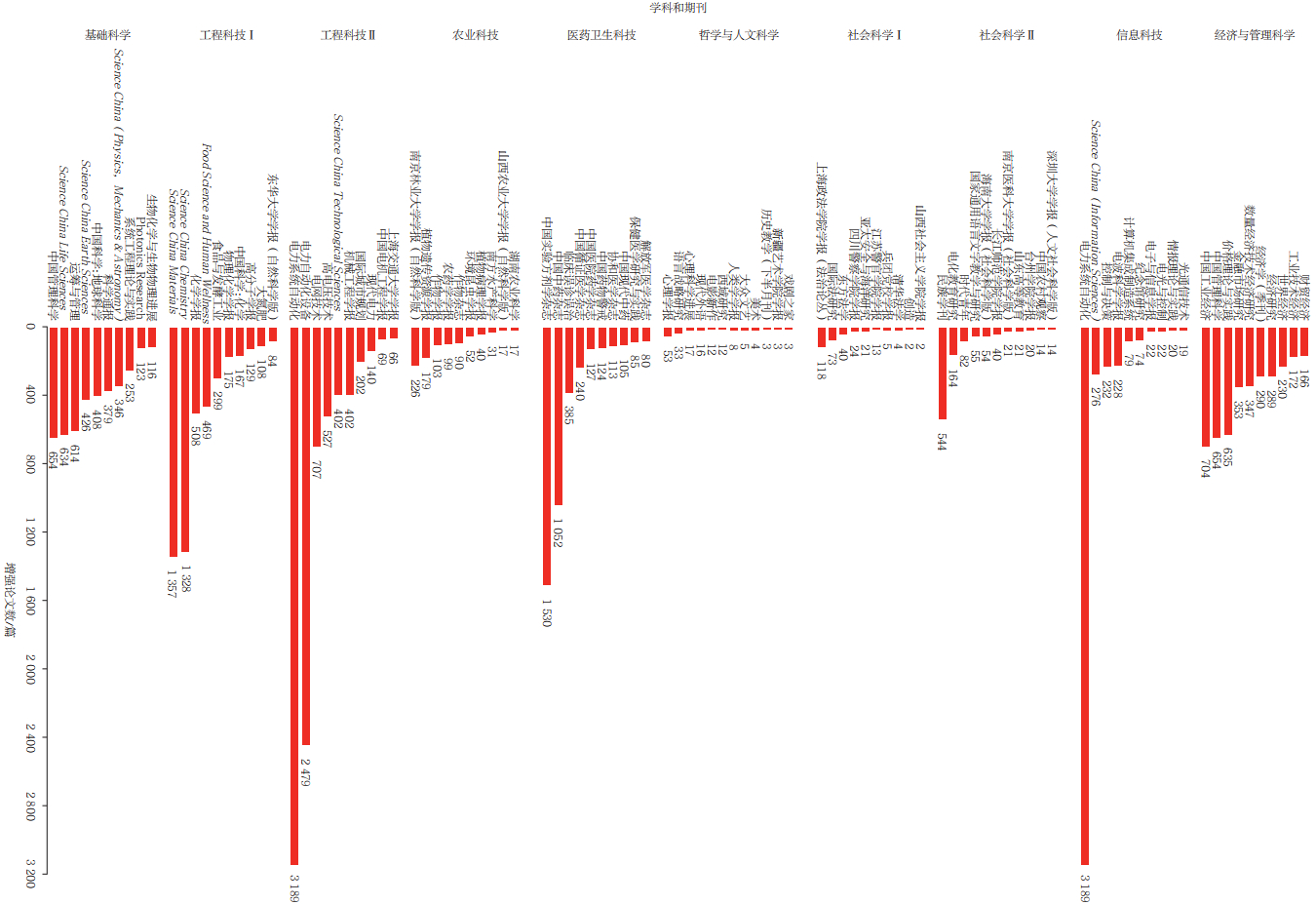
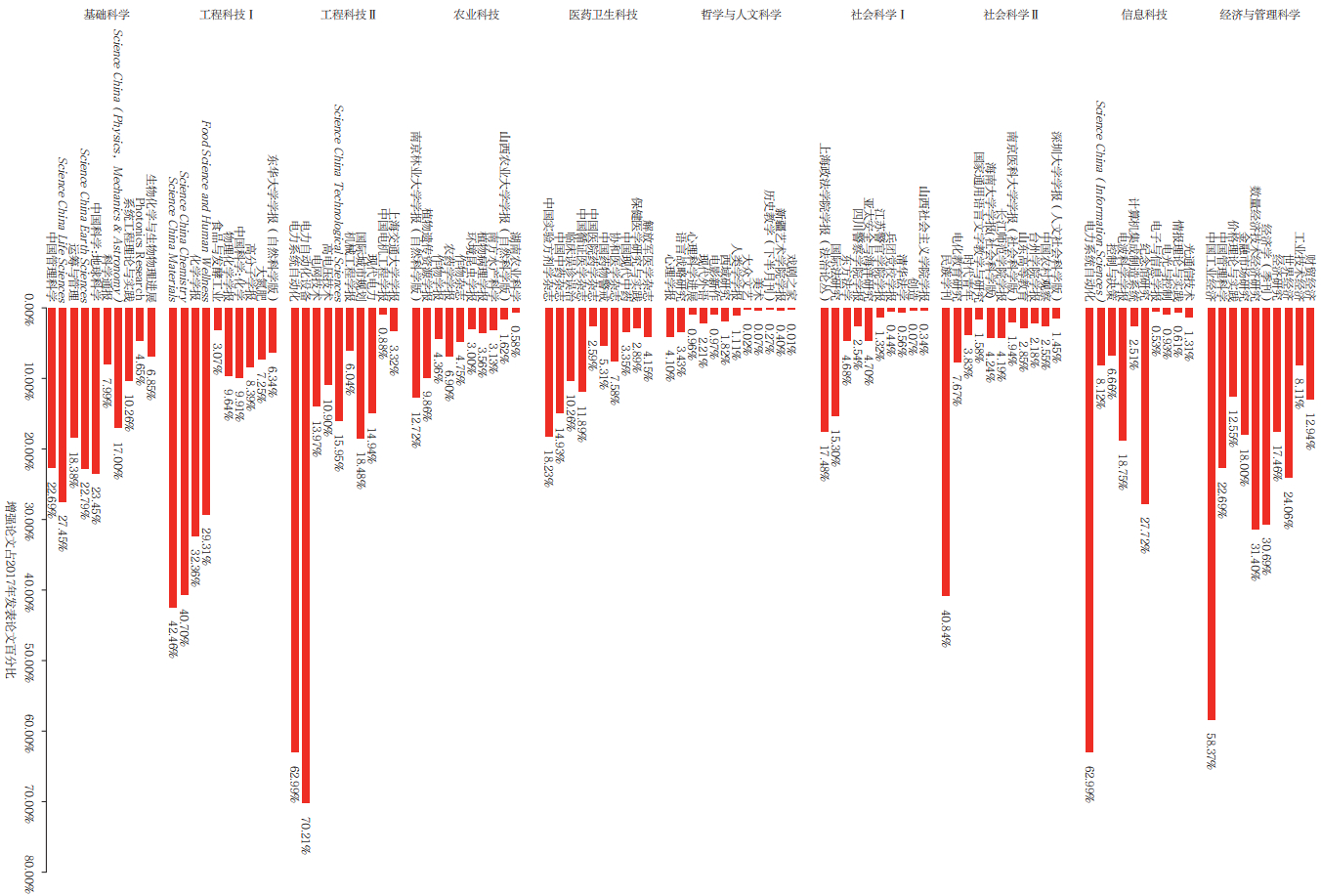
This study aims to systematically reveal the current status, disciplinary distribution characteristics, and variations in enhanced-content formats among Chinese academic journals on the CNKI (China National Knowledge Infrastructure) platform, thereby providing empirical evidence for journals to formulate differentiated enhanced publishing strategies. A bibliometric method was adopted, with the CNKI journal database serving as the data source. Data on journals and articles with enhanced content were retrieved, and a double-entry, double-verification approach was employed for data collection and cross-checking. Systematic analyses were then conducted across multiple dimensions, including disciplinary distribution, publication volume, and content forms. CNKI classifies Chinese academic journals into 10 disciplinary categories. A total of 1 487 journals were identified as engaging in enhanced publishing, among which 248 journals had published 10 or more enhanced articles. Engineering Science and Technology Ⅱ demonstrated the largest enhanced publishing scale (207 journals, 9 037 articles), followed by Engineering Science and Technology Ⅰ (239 journals, 5 695 articles) and Economics and Management Science (148 journals, 5 571 articles). Medicine and Public Health (283 journals, 5 189 articles) and Basic Sciences (168 journals, 5 409 articles) were comparable in scale, while Information Science and Technology (91 journals, 4 341 articles) also accounted for a notable share. In contrast, Agricultural Science and Technology (116 journals, 1 097 articles) and Social Sciences Ⅱ (156 journals, 1 324 articles) lagged relatively behind, with Philosophy and Humanities (40 journals, 201 articles) and Social Sciences Ⅰ (39 journals, 331 articles) at even lower levels. The disciplinary distribution exhibited a marked clustering pattern: the top 10 journals in Information Science and Technology, Engineering Science and Technology Ⅱ, and Social Sciences Ⅰ accounted for 95.85%, 90.55%, and 91.24% of articles in their respective fields, whereas distributions in Basic Sciences and Economics and Management Science were comparatively dispersed. Significant disciplinary differences were also observed in content forms: the natural sciences primarily comprised data-intensive enhancements such as datasets, 3D models, and experimental images; the humanities and social sciences placed greater emphasis on audio and video dissemination, highlighting knowledge popularization and influence diffusion; while the economics and management field underscored the open sharing of datasets and program code to strengthen methodological transparency. Overall, enhanced publishing among Chinese academic journals has achieved notable progress, particularly demonstrating strong developmental vitality within sci-tech journals. It has played a positive role in improving the verifiability of research, expanding the modes of expressing research outcomes, and enhancing digital dissemination capabilities. Nevertheless, several issues persist, including disciplinary imbalance, concentration among leading journals, superficial content, insufficient standardization, and underdeveloped mechanisms. Going forward, enhanced publishing should be advanced through multi-platform collaboration, tiered and classified development, discipline-specific approaches, and the refinement of evaluation mechanisms. These pathways will help achieve a deep alignment with disciplinary needs, an organic integration with the knowledge structure of articles, and coordinated improvement with evaluation and normative systems, thereby transforming enhanced publishing from a supplementary function into a core capability in the digital transformation of academic journals.

Key words: enhanced publishing    China National Knowledge Infrastructure (CNKI)    academic journals    disciplinary differences    digital transformation
出版日期: 2026-09-08
基金资助:中国科技期刊卓越行动计划二期项目(A2-077);中国疾病预防控制中心“卫生研究”项目(08104)
通讯作者: 崔云裳   
Corresponding author: Yunshang CUI   

引用本文:

唐增煦,苑弘弢,许媛媛,崔云裳. 我国学术期刊在中国知网平台的增强出版现状和发展路径[J]. 科技与出版, 2026, 45(8): 75-88.
TANG Zengxu,YUAN Hongtao,XU Yuanyuan,CUI Yunshang. Current Status and Development Pathways of Enhanced Publishing among Chinese Academic Journals on the China National Knowledge Infrastructure Platform. Science-Technology & Publication, 2026, 45(8): 75-88.

链接本文:

http://kjycb.tsinghuajournals.com/CN/      或      http://kjycb.tsinghuajournals.com/CN/Y2026/V45/I8/75

表 1  不同专辑期刊增强出版情况 数量/种
图 1  十大专辑前10名期刊增强出版论文情况
图 2  十大专辑前10名期刊增强出版论文占比情况
表 2  各专辑期刊增强出版论文情况
表 3  各专辑不同分层的期刊增强出版形式
1 肖宏, 赵岩. 刊网融合助力学术期刊传播: 以中国知网为例[J]. 中国科技期刊研究, 2023, 34 (5): 593- 600.
2 王国燕, 金心怡. 国际学术期刊的视听内容建设与启示[J]. 中国科技期刊研究, 2021, 32 (4): 446- 452.
3 李小燕, 田欣, 郑军卫, 等. 科技期刊增强出版及实现流程[J]. 中国科技期刊研究, 2018, 29 (3): 259- 264.
doi: 10.11946/cjstp.201710130868
4 董文杰, 张恬. 我国化学学术期刊增强出版现状、供需差异及其优化策略研究[J]. 中国科技期刊研究, 2025, 36 (9): 1160- 1168.
5 周茂, 黄可东, 张祚豪, 等. 《核动力工程》增强出版研究与实现[J]. 学报编辑论丛, 2022 (1): 421- 428.
6 金程, 张强, 向映姣, 等. 科技期刊融合出版平台建设的实践探索: 以《机械工程学报》编辑部两刊为例[J]. 编辑学报, 2024, 36 (5): 553- 556.
7 邢文明, 徐萌萌, 赵姿, 等. 学术期刊"数据可用性声明"政策实施成效: 基于Nature系列期刊的考察[J]. 中国科技期刊研究, 2025, 36 (6): 742- 751.
8 American Economic Association. Data and Code Availability Policy[EB/OL]. [2026-04-12]. https://www.aeaweb.org/journals/data/data-code-policy.
9 Perianes-Rodríguez A , Mira B S , Martínez-ávila D , et al. Real influence: A novel approach to characterize the visibility of journals and publications[J]. Quantitative Science Studies, 2024, 5 (3): 778- 804.
doi: 10.1162/qss_a_00316
10 Rigden D J , Fernández X M . The 2025 Nucleic Acids Research database issue and the online molecular biology database collection[J]. Nucleic Acids Research, 2025, 53 (D1): D1- D9.
doi: 10.1093/nar/gkae1220
11 American Geophysical Union. Data & Software for Authors[EB/OL]. [2026-04-24]. https://www.agu.org/publications/authors/journals/data-software-for-authors#needed.
12 American Journal of Political Science. Replication Policy[EB/OL]. [2026-04-24]. https://ajps.org/guidelines-for-authors/replication-policy/.
13 TEI Consortium. TEI P5: Guidelines for Electronic Text Encoding and Interchange[EB/OL]. [2026-04-26]. https://tei-c.org/guidelines/p5/.
14 The Lancet. guidelines[EB/OL]. [2026-04-26]. https://www.thelancet.com/submission-guidelines.
15 中国科学技术协会. 中国科技期刊发展蓝皮书-2020[M]. 北京: 科学出版社, 2020.
16 Wiley. Make your article open access in hybrid journals[EB/OL]. [2026-04-12]. https://authorservices.wiley.com/author-resources/Journal-Authors/open-access/hybrid-open-access/index.html.
[1] 胡晓静,王尔亮,丁媛媛,张苹. 我国医学期刊实施国际研究报告规范的现状分析:基于卓越行动计划二期项目入选医学期刊的调查[J]. 科技与出版, 2026, 45(8): 131-145.
[2] 刘普,蔡英辉. 学术期刊在科研诚信建设中的职责定位与实践路径——基于近年来曝光的涉刊学术不端典型案例的分析[J]. 科技与出版, 2026, 45(6): 5-15.
[3] 蒋辰,王武林. 新流量机制下的出版营销创新——基于浙江新华“千人主播”新媒体营销的实证研究[J]. 科技与出版, 2026, 45(6): 115-123.
[4] 葛欣. 数字化转型背景下教育出版社C端市场发展路径研究[J]. 科技与出版, 2026, 45(5): 49-56.
[5] 彭秋归. 中华文明标识体系构建中学术期刊的作用及其提升研究[J]. 科技与出版, 2026, 45(5): 112-120.
[6] 孙冠豪. 生成式人工智能赋能学术期刊出版的挑战与应对策略[J]. 科技与出版, 2026, 45(4): 59-68.
[7] 赵文义,赵吉豫. 超越学术交流:学术期刊的媒介地理学分析[J]. 科技与出版, 2026, 45(4): 129-136.
[8] 王媛,王日臻,樊丽. 大语言模型在学术期刊中应用的风险防控与治理策略——基于内容原创性、学术诚信与数据安全的视角[J]. 科技与出版, 2026, 45(4): 119-128.
[9] 谢清风,许一多. 中国出版深度数字化转型:2025年实践探索和趋势展望[J]. 科技与出版, 2026, 45(3): 6-13.
[10] 余钧,戚德祥. 推动出版产业数据要素价值化的支持政策研究[J]. 科技与出版, 2026, 45(3): 123-131.
[11] 谢冰滨. PMC指数模型视角下政策赋能出版人才队伍建设的机制研究[J]. 科技与出版, 2026, 45(2): 66-81.
[12] 刘普,孙婉婷. 社科学术期刊的AI使用政策图谱与治理进阶——基于50家社科学术期刊生成式人工智能使用政策文本的分析[J]. 科技与出版, 2025, 44(9): 52-62.
[13] 侯波,高虹. 高校学术期刊介导的学术不端四维协同治理机制研究——基于扎根理论的研究[J]. 科技与出版, 2025, 44(9): 107-116.
[14] 王剑飞,林松. 媒介升维与空间重构:可交互空中成像技术对出版业的范式革新研究[J]. 科技与出版, 2025, 44(8): 28-37.
[15] 闫碧舟. 学术期刊补白的价值定位与实践策略[J]. 科技与出版, 2025, 44(8): 95-101.