Please wait a minute...
科技与出版  2026, Vol. 45 Issue (10): 5-15    
专稿
文创赋能出版的核心能力体系及其发展路径
张铮,张慧敏
清华大学新闻与传播学院,100084,北京
Core Capabilities for Developing Publishing through Cultural Creativity and Pathways for Their Development
ZHANG Zheng,ZHANG Huimin
School of Journalism and Communication, Tsinghua University, 100084, Beijing, China
全文: HTML    PDF(1986 KB)  
输出: BibTeX | EndNote (RIS)      
摘要: 

当前,出版界普遍存在将出版文创等同于“雪糕、T恤、冰箱贴,盲盒、潮玩、帆布袋”等衍生品的窄化认识。这既忽视了文创所具有的推动出版业转型升级的潜在力量,也削弱了出版业在文化强国建设中的关键作用。引入文创理念可对这一思维局限予以突破,为出版业提供更广阔的文化创意发展思路。鉴于文创力的培育是文化创意发挥作用的关键,本研究从出版文创力的概念构成出发,在明晰文化创意赋能出版的作用过程的基础上,提炼了包括选题策展力、模态转化力与场景营建力在内的三重出版文创力。在这之后,研究进一步提出以数据激活与人机协同来提升选题策展力、以强化内容转译与技术呈现水准来提升模态转化力、以构建沉浸式体验与沟通平台来提升场景营建力的发展路径,以便为出版机构充分发挥文化创意对出版的赋能效应提供理论参照。

关键词 : 出版业,  文创理念,  文化创意,  出版文创力    
Abstract:

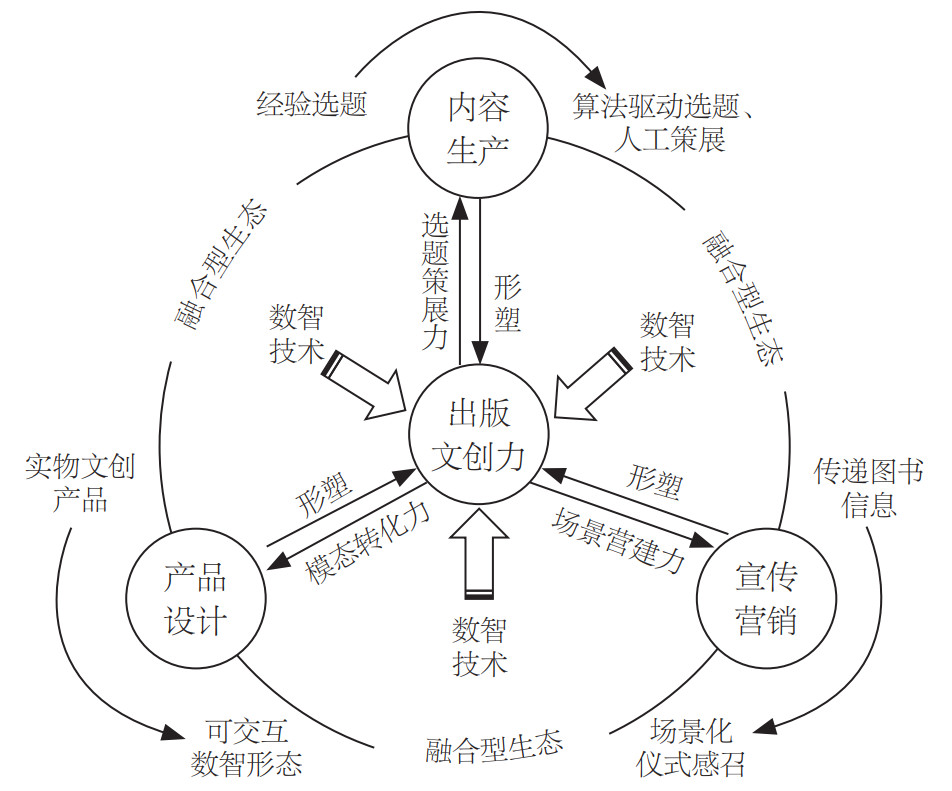
Behind the current boom in publishing-related cultural creativity lies a problematic tendency to equate cultural creativity with cultural and creative products. This product-oriented mindset significantly weakens the transformative potential of cultural creativity to drive the transformation and upgrading of the publishing industry. To address this cognitive limitation, this study introduces the cultural creativity concept — a guiding philosophy that emphasizes cultural development and innovation through creativity and cross-boundary integration — as a means to overcome it. From the perspective of the cultural creativity concept, cultural creativity in publishing should aim for the symbiotic and mutually reinforcing development of publishing and cultural creativity, rather than solely pursuing the economic returns of derivative products. Given that creative capability serves as the key underpinning for cultural creativity to function under the cultural creativity concept, this study adopts the notion of "creative capability" as an analytical anchor. This raises two key questions: What does creative capability signify in the publishing context, and how can the publishing industry cultivate such capacity? Creative capability is central to the contribution of cultural creativity to publishing. The study therefore first clarifies how cultural creativity supports publishing. Currently, the publishing industry is transitioning from "linear production to ecosystem building," forming an integrated ecosystem that combines content production, product design, marketing and promotion. In this three-dimensional and ecologically oriented development process of the publishing industry, cultural creativity serves as a crucial bridging point, with its modes of operation becoming increasingly diverse and characterized by prominent features of human-AI collaboration and mass co-creation. Accordingly, this study understands the process through which cultural creativity empowers publishing as the process in which publishing institutions, within an integrated ecosystem that combines content production, product design, marketing and promotion, leverage human-AI collaborative and mass co-created cultural creativity to achieve targeted value enhancement of publishing activities. Based on this process, this study correspondingly summarizes the creative capability required in publishing into three core capabilities: topic-curation capability, defined as the ability to organize and plan creative topics that support content building; modality-transformation capability, defined as the ability to creatively transform existing content resources into multimodal derivative products; and experience-building capability, defined as the ability to strengthen audiences' sense of connection with publications, publishing, and reading itself by constructing creative knowledge service scenarios. These three capabilities function respectively in content production, product design, and marketing and promotion. The study further explores pathways to strengthen these three capabilities. For topic-curation capability, publishers must shift from experience-based intuition to data-driven insight by activating dormant data assets, while also prioritizing human judgment in the topic planning process through human-AI collaboration. For modality-transformation capability, two sub-capabilities need to be cultivated: content adaptation and technological presentation. For experience-building capability, a ritual-oriented communication paradigm necessitates the construction of immersive knowledge experience scenarios and spaces for audience engagement, thereby transforming readers from passive consumers into co-creators who forge emotional connections with publishers and books.

Key words: publishing industry    cultural creativity concept    cultural creativity    creative capability in publishing
出版日期: 2026-11-17
基金资助:清华大学新闻与传播学院博士研究生学术创新项目(TSJCLAB2026002)

引用本文:

张铮,张慧敏. 文创赋能出版的核心能力体系及其发展路径[J]. 科技与出版, 2026, 45(10): 5-15.
ZHANG Zheng,ZHANG Huimin. Core Capabilities for Developing Publishing through Cultural Creativity and Pathways for Their Development. Science-Technology & Publication, 2026, 45(10): 5-15.

链接本文:

http://kjycb.tsinghuajournals.com/CN/      或      http://kjycb.tsinghuajournals.com/CN/Y2026/V45/I10/5

图 1  出版文创力的核心构成及其赋能出版的作用路径
1 林致. 2025年出版文创产业分析报告[N]. 中国出版传媒商报. 2026-01-09(42).
2 张妙. 文创赋能背景下我国文创出版发展路径研究[J]. 编辑之友, 2022 (7): 27- 31.
3 邝芮. 出版界能否产生故宫文创?——出版文创与博物馆文创的比较研究[J]. 出版广角, 2022 (7): 48- 52.
4 李修, 隗静秋, 孙玉豪, 等. 出版文创价值共创研究: 发展变迁、内在逻辑与协同路径[J]. 科技与出版, 2026 (3): 132- 145.
5 田立平. 文创融合发展的可行路径研究: 聚焦建筑文化的IP培育与运营[J]. 出版参考, 2026 (3): 52- 55.
6 肖东发, 卞卓舟. 2014年出版产业十大关键词解读[J]. 编辑之友, 2015 (2): 5- 9.
7 王彦祥, 赵士渊. 文创产业与出版融合已成研究新热点[J]. 编辑之友, 2014 (8): 32- 35.
8 张新华, 王炜璠. “出版+文创”: 以核心资源为基础的出版价值链延伸[J]. 出版广角, 2017 (22): 10- 12.
9 刘辉, 朱晓云, 李峰, 等. “文旅融合下博物馆文创的探索与实践”学人笔谈[J]. 东南文化, 2021 (6): 135-149, 190-192.
10 刘一文. 出版文创的进阶之路[N]. 中国新闻出版广电报. 2026-02-02(5).
11 孙珏. 2026, 出版文创能逃过“库存”宿命吗?[EB/OL]. (2026-02-02)[2026-05-01]. https://www.cbbr.com.cn/contents/560/107223.html.
12 胡钰. 文创理念: 当代文化发展的新观念[J]. 湖南师范大学社会科学学报, 2019, 48 (3): 126- 132.
13 胡钰. 文创理念与文创产业[N]. 中国文化报. 2016-10-26(6).
14 胡钰. 昆仑文化传播的文明意蕴与创新路径[J]. 湖南师范大学社会科学学报, 2025, 54 (2): 32- 40.
15 张铮, 张慧敏. AI幻觉在文创中的应用可能与风险防范[J]. 南京社会科学, 2025 (9): 137- 147.
16 于凤珍. 文化创意与创意出版[J]. 出版发行研究, 2007 (5): 30- 32.
17 赵斌. 文化需要的发掘是出版创意的不竭之源[J]. 编辑学刊, 1992 (1): 34- 37.
18 蔡娟, 杨旭. 湖南出版集团党委书记、董事长, 中南传媒董事长贺砾辉: 内容筑基数智赋能, 重塑出版新生态[EB/OL]. (2025-05-27) [2026-05-01]. https://znyd.rednet.cn/content/646949/61/14993753.html.
19 吴赟, 牛蓉. 我国出版融合研究的现有格局、深层挑战与创新路径[J]. 科技与出版, 2026 (2): 22- 32.
20 杜方伟, 方卿. 从“相加”“相融”到“深融”: 出版融合发展战略历程与展望[J]. 出版广角, 2022 (5): 6-11, 96.
21 童之磊: 从文化“新三样”看出版融合业态创新[EB/OL]. (2026-05-26) [2026-06-06]. https://mp.weixin.qq.com/s/HaZ1ylD25aXBbkfUTiX-Gg.
22 向勇, 白晓晴. 新常态下文化产业IP开发的受众定位和价值演进[J]. 北京大学学报(哲学社会科学版), 2017, 54 (1): 123- 132.
23 朱逸伦, 郝雨. 新文创, 让传统文化更好地“活”在当下[J]. 出版广角, 2019 (12): 18- 21.
24 张淑莉, 张雨强. 延异共生: 人工智能技术何以重塑创造力范式: 斯蒂格勒技术哲学视角下的教育审思[J]. 中国远程教育, 2026, 46 (1): 125- 142.
25 江飞. 新大众文艺的“三变”[N]. 中国艺术报. 2025-06-27(3).
26 邝芮. “鲁迅的毛衣”出圈展现文学的另一种可能[EB/OL]. (2025-09-05) [2026-06-13]. https://news.cyol.com/gb/articles/2025-09/05/content_Lgngy3uGKN.html.
27 跳出出版做出版: 一家传统出版集团的新增长探索[EB/0L]. (2026-03-06) [2026-05-01]. https://www.jinantimes.com.cn/news-101-10350678.html.
28 杨金花. 图书选题科学决策与决策质量提升研究进路[J]. 决策与信息, 2023 (7): 38- 46.
29 郭雪吟, 施其明. 专业大模型赋能出版全链条路径分析[J]. 出版广角, 2025 (5): 10- 17.
30 董天策. 新闻策展时代要注重原创新闻策划[J]. 当代传播, 2024 (3): 1.
31 王景行. 书博会观察: 从“书海捞针”到“知识引航”[EB/0L]. (2025-07-27) [2026-05-01]. http://www.cqwenyi.net/html/1398944124877492224/web/content_1398944124877492224.html.
32 刘冰. 新闻策展: 从内容整合展示到智能算法应用[J]. 中国出版, 2019 (22): 45- 48.
33 王艺, 曹越. AIGC技术赋能下图书选题智能策划系统的技术逻辑与体系构建[J]. 出版发行研究, 2024 (2): 31- 37.
34 林懿, 李靖. 数智赋能背景下AIGC技术在三星堆文创产品设计中的实践研究[J]. 包装工程, 2026 (4): 413- 420.
35 王慧文. 第十届世界妈祖文化论坛发布《湄洲·妈祖》AR立体书[EB/0L]. (2025-11-03) [2026-05-01]. http://mobile.rmzxw.com.cn/tranm/index/url/www.rmzxw.com.cn/c/2025-11-03/3812010.shtml.
36 杨大禹, 杜宸霄. 数字化时代下出版文创的发展[J]. 出版广角, 2024 (7): 25- 28.
37 浙江宣传. 为“阅读”立法, 有哪些深意[EB/0L]. (2025-12-17) [2026-05-01]. https://mp.weixin.qq.com/s/oFF9tW8fVSe9Sie1gkWqgA.
38 王晶. 传播仪式观研究的支点与路径: 基于我国传播仪式观研究现状的探讨[J]. 当代传播, 2010 (3): 32- 34.
39 陈力丹. 传播是信息的传递, 还是一种仪式: 关于传播“传递观”与“仪式观”的讨论[J]. 国际新闻界, 2008 (8): 44- 49.
40 图书市场码洋同比下降9.08%, 科技经管类实现正增长: 中金易云一季度数据分析[EB/0L]. (2026-04-10) [2026-05-01]. https://mp.weixin.qq.com/s/x_D3eqgrgwIOnTZ2Xp-hhg.
41 陈婧薇, 殷中玥. 从“内容场”到“情境场”: 图书短视频构建“数字书房”的出版营销逻辑[J]. 出版广角, 2026 (1): 104- 110.
42 邢俊华. 人工智能时代图书选题策划新思维[N]. 中国新闻出版广电报. 2025-07-30(A4).
43 邓向阳, 许虚涵. 以数据要素驱动出版业深度融合与高质量发展[EB/0L]. (2025-11-04) [2026-05-01]. https://www.hunantoday.cn/news/xhn/202511/30823954.html.
44 王思楠. 人工智能时代, 我们怎么做书[J]. 出版人, 2025 (9): 54- 55.
45 中共中央宣传部. 习近平新时代中国特色社会主义思想学习纲要[M]. 北京: 学习出版社, 2019: 147.
46 魏明勇, 王永友. 青年“玩抽象”现象的外在表征、内在机理、现实隐忧及应对策略[J]. 理论导刊, 2026 (4): 124- 131.
47 厉欣. 听·见丨鲁迅同款毛背心, 凭啥走红网络?[EB/0L]. (2025-08-25) [2026-05-01]. https://jsnews.jschina.com.cn/jsyw/202508/t20250825_s68ac49fde4b03d7946207884.shtml.
48 黄劲草. 知识形态变革与编辑自主性困境: 对编辑“双重束缚”现象的考察[J]. 中国出版, 2025 (24): 39- 46.
49 施勇. 社科类图书产品线运营的实践与思考: 以广东人民出版社“万有引力”书系为例[J]. 中国编辑, 2021 (07): 74-76, 85.
50 罗赟. 后体验时代实体书店产业价值递进[J]. 中国出版, 2022 (6): 10- 13.
51 徐有珍. 创“新”求“质”: XR《觉醒年代》发布活动顺利举行[EB/0L]. (2024-04-19) [2026-05-01]. https://www.cbbr.com.cn/contents/533/92068.html.
52 中信童书小红书营收年翻4倍: 紧跟需求、出版与读者共创时代已来[EB/0L]. (2026-04-24) [2026-05-01]. https://cn.chinadaily.com.cn/a/202604/24/WS69eb285fa310942cc49a94c9.html.
53 林彦虎. 把文化资源优势转化为文化发展优势[J]. 红旗文稿, 2025 (3): 41- 44.
54 李慧, 訾谦. 数智赋能出版融合发展: 2026文化强国建设高峰论坛“出版融合发展论坛”侧记[N]. 光明日报. 2026-05-25(2).
[1] 李金城,谭涘雨. 人工智能时代出版达人营销逻辑转向研究:基于资源行动视角[J]. 科技与出版, 2026, 45(8): 111-119.
[2] 林青,张立,孙晓翠. 创新价值链视角下出版业科技创新的结构及发展趋势研究——基于上市出版企业专利与软件著作权的实证分析[J]. 科技与出版, 2026, 45(6): 16-25.
[3] 刘忠波,兰诗雨. 日本漫画出版社国际传播策略研究——以四大漫画出版社为例[J]. 科技与出版, 2026, 45(2): 33-41.
[4] 左仲海,王淑月. 出版业高质量发展路径研究:以新质生产力为核心驱动[J]. 科技与出版, 2025, 44(2): 51-58.
[5] 汤雪梅,杨春兰,杨玥涵. “十四五”时期中国出版业的回顾与思考[J]. 科技与出版, 2025, 44(1): 6-16.
[6] 戚天姣,吴怡频. 英美知名出版企业数字化发展策略*[J]. 科技与出版, 2024, 43(5): 76-83.
[7] 杨涵,庄红权. 基于新质生产力视阈的数字出版科技创新体系完善:问题与路径*[J]. 科技与出版, 2024, 43(12): 69-75.
[8] 彭昱剑,范军. 生成式人工智能视角下的出版品牌资源建设[J]. 科技与出版, 2023, 42(9): 29-35.
[9] 周霞. 美国青少年“高兴趣易读书”的出版实践及其借鉴意义[J]. 科技与出版, 2023, 42(7): 136-143.
[10] 卢先和. 出版业高质量发展的内涵、要求与路径[J]. 科技与出版, 2023, 42(6): 27-32.
[11] 张晶. 国际标准体系下我国出版业建立新标识标准应遵循的标识原则探究[J]. 科技与出版, 2023, 42(5): 106-114.
[12] 刘坚. 新文科视野下的出版业:核心价值与创新发展*[J]. 科技与出版, 2023, 42(5): 130-136.
[13] 朱小妮, 柳斌杰. 凝心聚力 攻坚克难 率先实现中国式出版现代化[J]. 科技与出版, 2023, 42(2): 5-11.
[14] 王忠,胡锐翔. 特区定位的呈现与对接:澳门出版业的现状、机遇及展望*[J]. 科技与出版, 2023, 42(12): 51-61.
[15] 杨晓文. 生成式AI与图书封面设计[J]. 科技与出版, 2023, 42(12): 95-102.