Please wait a minute...
科技与出版  2025, Vol. 44 Issue (12): 47-57    
融媒之光
数字叙事理论视域下社科学术期刊短视频传播研究——基于CSSCI期刊实践分析
顾青1,秦钠1,刘文杰2
1. 上海大学期刊社,200444,上海
2. 中国农业大学人文与发展学院,100091,北京
Short Video Dissemination of Social Science Academic Journals from the Perspective of Digital Narrative Theory: Evidence from CSSCI Journal Practices
GU Qing1,QIN Na1,LIU Wenjie2
1. Shanghai University Journal Press, 200444, Shanghai, China
2. School of Humanities and Development, China Agricultural University, 100091, Beijing, China
全文: HTML    PDF(2254 KB)  
输出: BibTeX | EndNote (RIS)      
摘要: 

短视频是学术传播重要阵地,但当前针对社科学术期刊短视频传播实践的研究较少。本文构建数字叙事“主体—机制—效果”分析框架,对CSSCI收录期刊公众号推文榜和阅读榜TOP30的样本集合进行跨平台分析。研究发现,叙事主体影响受众注意力,叙事机制决定受众参与,二者共同决定受众反馈与传播效果。据此提出,推动主体多元化、优化叙事机制与促进反馈转化策略。期刊在数字叙事语境中的主体、机制与效果的耦合逻辑揭示社科知识传播和意识形态叙事数字化转型的新路径。

关键词 社科学术期刊短视频数字叙事    
Abstract

Short video platforms have developed as pivotal arenas for academic communication and public engagement. Consequently, a growing number of academic journals have established official accounts on these platforms to disseminate research outputs and enhance public visibility. This trend has attracted considerable scholarly attention, with existing studies mainly focusing on science and technology journals. In contrast, the digital practices of social science journals on short video platforms remain largely unexplored. This study therefore aims to develop a comprehensive analytical framework for digital narratives that integrates subject, mechanism, and effect, and applies it to a multi-platform "narrative field" encompassing the top 30 CSSCI journals ranked by WeChat public accounts dissemination data. A cross-platform comparative analysis is conducted using data collected from WeChat Channels, Bilibili, and Douyin. This study conceptualizes the dissemination as a complex system with three elements: the dynamics primarily driven by the authority and credibility of the accounts, the specific translation pathways and stylistic narrative strategies employed in the process, and the audience reception and engagement. The first element is related to audience attention, the second one determines the depth and sustainability of audience engagement, and the third one refers to audience feedback and dissemination effectiveness. Together, these elements form a dynamic "content-context-feedback" chain. Narrative subjects employ distinct discourse to reconstruct academic authority and garner attention. They utilize various narrative mechanisms to encode and recode academic content, balancing comprehensibility with scholarly credibility. Simultaneously, platform algorithms modulate the visibility and interactivity of academic short videos. This study reveals several bottlenecks in current digital practices of social science journals. Regarding narrative subjects, there is a notable lack of official verification, compromising the perceived credibility. The narrative process often fails to provide deep interpretation of academic content in some circumstances, and the current dissemination strategies are highly homogenized. Concerning the narrative effect, user feedback remains sparse, and audience stickiness is weak. Enhancing the effectiveness of the digital narrative practices needs a concerted endeavour. We suggest that social science journals pursue a further overall improvement across three core elements: authority, comprehensibility, and effectiveness. This necessitates strengthening the authority of the narrative subjects, diversifying the dissemination strategies, enhancing the innovation and differentiation of narrative mechanisms, encouraging audience participation through a combination of expert-generated-content and user-generated-content and developing an agreeable framework to measure the conversion of platform traffic into knowledge adoption, including journal subscriptions and citations. In conclusion, this study shows that the interrelationship between subject and audience has the potential to be a significant perspective in analyzing the digital transformation of social science knowledge and ideologies. We suggest that social science journals develop a diversified cross-media portfolio of strategies: print publications to ensure academic depth, WeChat official accounts to increase visibility, and short video platforms to broaden social reach—thereby achieving both greater depth and expanded breadth. This study advances theoretical and empirical understandings of digital publishing and provides actionable guidance for social science journals to cultivate a sustainable and recognizable knowledge brand on short video platforms.

Key wordssocial science journals    short video    digital narrative
出版日期: 2026-01-09
基金资助:中宣部出版局“学术期刊集约化数字化案例收集和推广”;韬奋基金会2025年度规划课题“高校期刊集群发展与人才队伍建设的双向赋能机制研究”(TF2025117)

引用本文:

顾青,秦钠,刘文杰. 数字叙事理论视域下社科学术期刊短视频传播研究——基于CSSCI期刊实践分析[J]. 科技与出版, 2025, 44(12): 47-57.
GU Qing,QIN Na,LIU Wenjie. Short Video Dissemination of Social Science Academic Journals from the Perspective of Digital Narrative Theory: Evidence from CSSCI Journal Practices. Science-Technology & Publication, 2025, 44(12): 47-57.

链接本文:

http://kjycb.tsinghuajournals.com/CN/      或      http://kjycb.tsinghuajournals.com/CN/Y2025/V44/I12/47

表 1  样本账号短视频平台运营情况
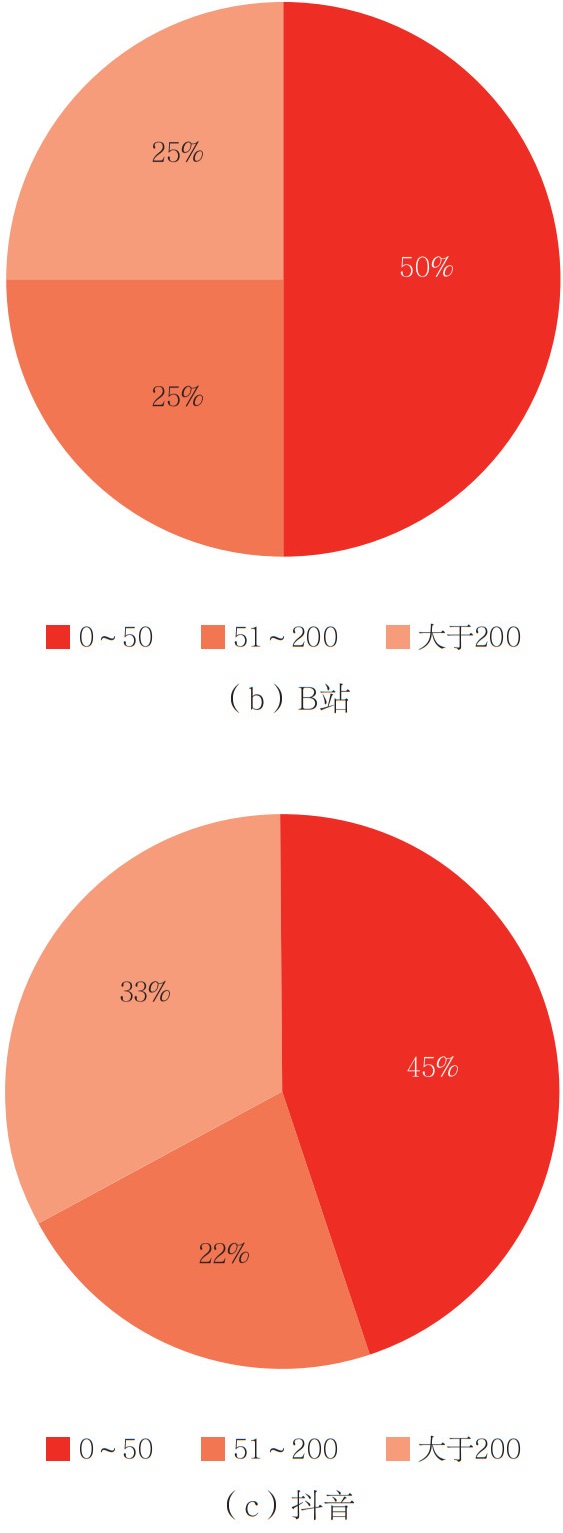
图 1  样本账号短视频数量在三个平台的占比分布
图 2  短视频主题词词频排行前100的词云图
表 2  未发布视频与2025年1—8月未更新的期刊账号
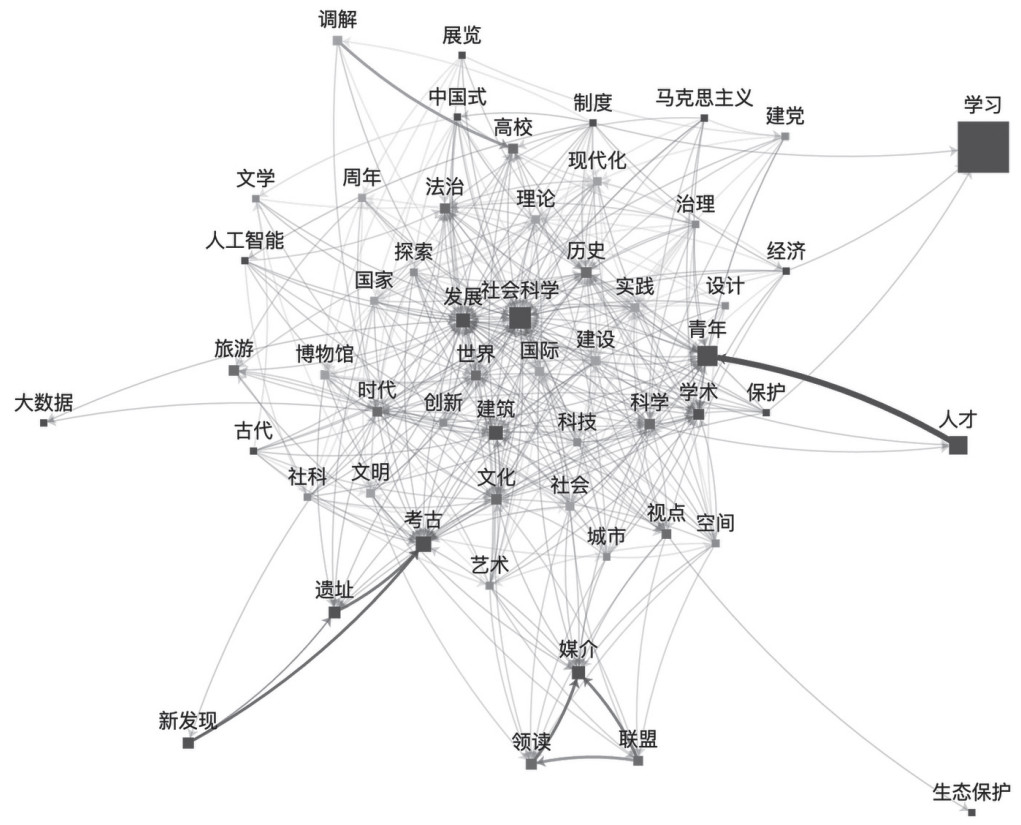
图 3  内容叙事类视频关键词共现网络图谱
1 中国共产党第二十届中央委员会第四次全体会议公报[EB/OL]. [2025-10-30]. https://www.news.cn/20251023/5036defefddc4cc68ac92331e24f7551/c.html.
2 李军. 出版深度融合发展的根本遵循[J]. 编辑之友, 2022 (6): 5- 10.
3 高存玲, 聂友华. 科技期刊微信视频号运营现状、问题与策略探析:以“中国科技期刊卓越行动计划”入选期刊为例[J]. 中国科技期刊研究, 2022, 33 (9): 1218- 1224.
4 李歌朗, 王丹青, 揭其涛. 科普期刊短视频视觉修辞效果提升策略研究[J]. 科技与出版, 2025 (4): 47- 53.
5 DUTT A , KASILINGAM D , ANGELL R , et al. The future of marketing and communications in a digital era:Data,analytics and narratives[J]. Journal of Strategic Marketing, 2024 (8): 1435- 1443.
6 KOENITZ H , ROTH C , MEKLER E . Alternate realities in interactive digital narratives:Understanding and improving design and prosocial effects through empirical methods[J]. Multimedia Tools and Applications, 2024 (15): 46757- 46778.
7 钱烨夫, 徐剑. 短视频图书营销的数字叙事策略研究:以两个抖音“书单号”为对象的分析[J]. 出版发行研究, 2022 (1): 20- 26.
8 齐正达, 李芸, 孙晓晴, 等. 国外短视频研究:格局、径路与前沿展望[J]. 中国广播电视学刊, 2023 (11): 72- 77.
9 张兰, 陈信凌. 社科类学术期刊微信公众号传播效果影响因素实证研究:以CSSCI来源期刊(2019—2020)为例[J]. 中国科技期刊研究, 2019, 30 (9): 1014- 1021.
10 郭小敏, 徐学友. 科技学术期刊的短视频平台运营现状分析及策略探讨[J]. 编辑学报, 2022, 34 (4): 443- 448.
[1] 刘普,孙婉婷. 社科学术期刊的AI使用政策图谱与治理进阶——基于50家社科学术期刊生成式人工智能使用政策文本的分析[J]. 科技与出版, 2025, 44(9): 52-62.
[2] 李歌朗,王丹青,揭其涛. 科普期刊短视频视觉修辞效果提升策略研究[J]. 科技与出版, 2025, 44(4): 47-53.
[3] 李晶,郝静怡. 我国社科学术期刊编辑人才队伍建设研究[J]. 科技与出版, 2025, 44(10): 73-81.
[4] 张怀东. 科技期刊短视频传播效果影响因素实证研究[J]. 科技与出版, 2024, 43(8): 60-66.
[5] 李瑞华,付晓静. 社会支持视角下健康科普图书短视频的创新路径*[J]. 科技与出版, 2024, 43(6): 108-115.
[6] 韩云波,陈思思. 社科学术期刊引领中国自主知识体系建构*[J]. 科技与出版, 2024, 43(4): 5-13.
[7] 张立,王扬,李梦竹,孙晓翠. 对近年来数字出版评优产品的追踪测评及分析(Ⅵ)[J]. 科技与出版, 2024, 43(4): 48-63.
[8] 李子星,张新新,李佰珏. 数字出版十大学术热点分析*[J]. 科技与出版, 2024, 43(4): 99-111.
[9] 甘从正,付晓静. SICAS视角下运动健康类图书短视频营销策略研究*[J]. 科技与出版, 2024, 43(12): 88-94.
[10] 刘旸,王维杰. “知沟”语境下科技期刊短视频平台传播效果分析与优化策略*[J]. 科技与出版, 2024, 43(12): 60-68.
[11] 战炤磊. 综合性社科学术期刊主题宣传的特色优势与推进路径[J]. 科技与出版, 2024, 43(10): 128-134.
[12] 刘有祥. 中国式现代化视域下社科学术期刊的使命担当[J]. 科技与出版, 2023, 42(7): 49-55.
[13] 肖代柏,王道堃,于晨曦,周华清. 知识网红的科普图书营销价值与路径探析*[J]. 科技与出版, 2023, 42(5): 124-129.
[14] 刘普, 孙婉婷. 以党的二十大精神为指引 打造高品质社科学术期刊[J]. 科技与出版, 2023, 42(5): 41-48.
[15] 韩云波. 习近平文化思想引领中国社科学术期刊高质量发展*[J]. 科技与出版, 2023, 42(12): 11-25.