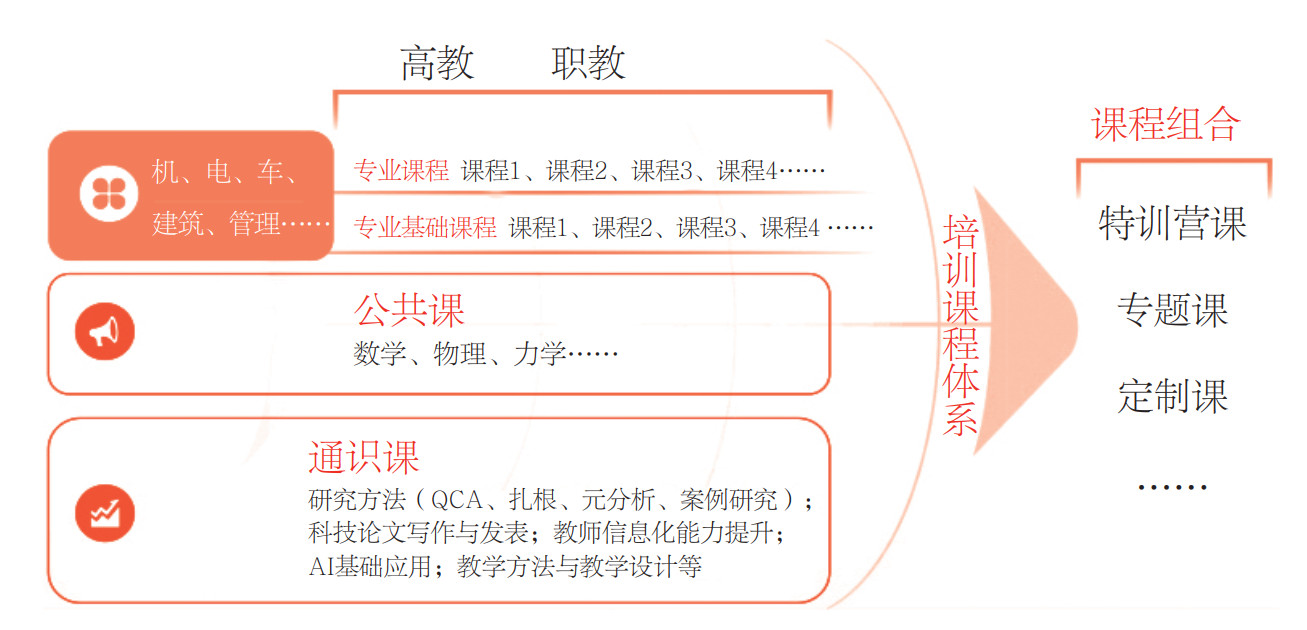
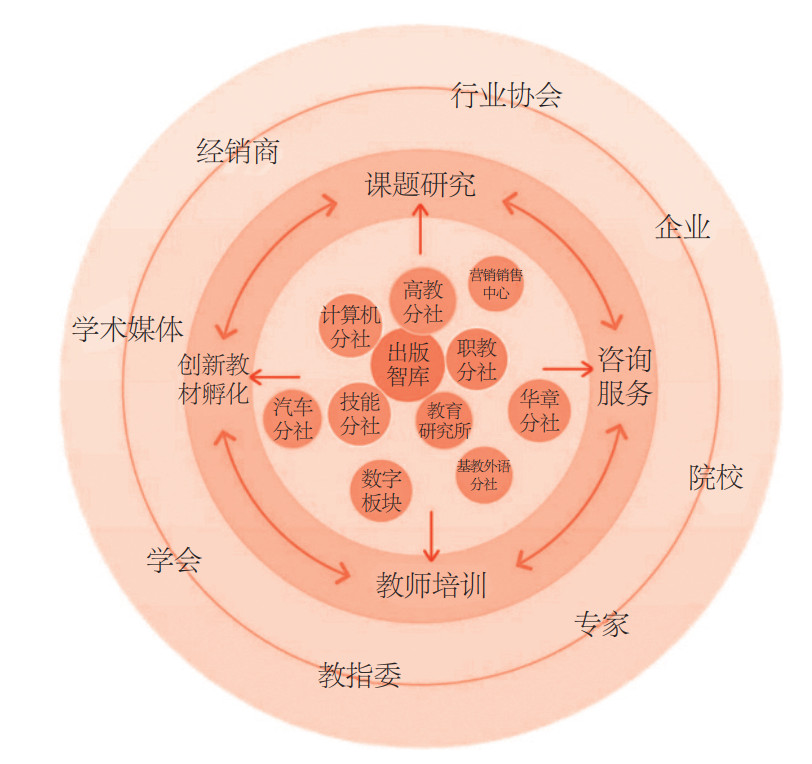
面对教育变革与出版融合趋势下教育出版的新需求与挑战,教育出版机构应通过整合企业内外部资源,以业务协同来创新出版模式,拓展出版价值链。文章以机械工业出版社教育研究所为主要研究样本,结合其他相关案例,深入剖析“研究+出版+培训+咨询”四位一体教育出版服务新生态的业务逻辑、协同运行机制与实践经验,旨在为教育出版机构创新升级提供参考。
The integration of publishing is driving the transformation of educational publishing from products to services and from channels to ecosystems. The digitalization of education has given rise to new demands for educational publishing services. Educational publishing institutions face several challenges: misalignment between textbook content and teaching requirements, increased competition in a contracting educational publishing market, and limitations in traditional distribution and promotion models. This paper examines how educational publishing institutions can achieve business collaboration by integrating internal and external resources to expand the publishing value chain. Using the Educational Research Institute of China Machine Press as the primary research subject, along with other relevant cases, this paper analyzes the business logic of the new ecosystem of educational publishing services through four key aspects:① Research foundation: Advancing publishing innovation through practical research and the transformation and application of findings ensures textbooks reflect the latest teaching concepts, research outcomes, and applied technologies. This approach enables the organization to function as an industry think tank, addressing strategic, fundamental, and forward-looking challenges in educational publishing development, thus supporting industry advancement and decision-making.② Production reform: Establishing an editorial-research collaborative textbook publishing model integrate the relevant research on education and teaching, curriculum textbooks, and digitalization of educational publishing into teaching materials. This approach enhances teaching material quality from both the supply and demand sides, developing professional paper-digital textbooks and related teaching resources characterized by forward-thinking, systematic approaches, and practicality. The model promotes research-oriented editors through a comprehensive growth path of "theoretical research + practical application + integrated innovation" to improve the quality of teaching materials compilation.③ User engagement: Implementing teacher training programs facilitates direct user contact, carrying out the publicity and marketing of teaching materials, thus enabling comprehensive understanding of textbook compilation principles, characteristics, and innovations. This approach enhances marketing effectiveness and optimizes content development while utilizing new media communication matrix to build vertical professional communities to promote secondary communication. Additionally, it addresses teachers' diverse needs in teaching competency, scientific research capability, teaching materials development, and information literacy, while expanding the service modes of educational publishing.④ Brand development: Expanding services to provide diversified and professional consulting services for higher education institutions, including academic paper guidance and publishing support, thereby extending professional influence. The integration of these four modules—research, publishing, training, and consulting—creates a closed-loop ecosystem of educational publishing services, formulating the collaboration and interest distribution mechanisms among departments internally, expanding expert teams and cooperation with multiple entities externally, promoting the efficient operation and sustainable development of the ecosystem for educational publishing services. The approach facilitates the transformation of publishing institutions from "textbook providers" to "educational service providers, " promoting the high-quality development of educational publishing, and helping build a strong educational country and a strong publishing country.
张敬柱,吴素平. 构建教育出版服务新生态的探索与思考[J]. 科技与出版, 2025, 44(7): 62-67. ZHANG Jingzhu,WU Suping. Exploration and Reflections on Constructing A New Ecosystem of Educational Publishing Services. Science-Technology & Publication, 2025, 44(7): 62-67.
http://kjycb.tsinghuajournals.com/CN/ 或 http://kjycb.tsinghuajournals.com/CN/Y2025/V44/I7/62
Cited