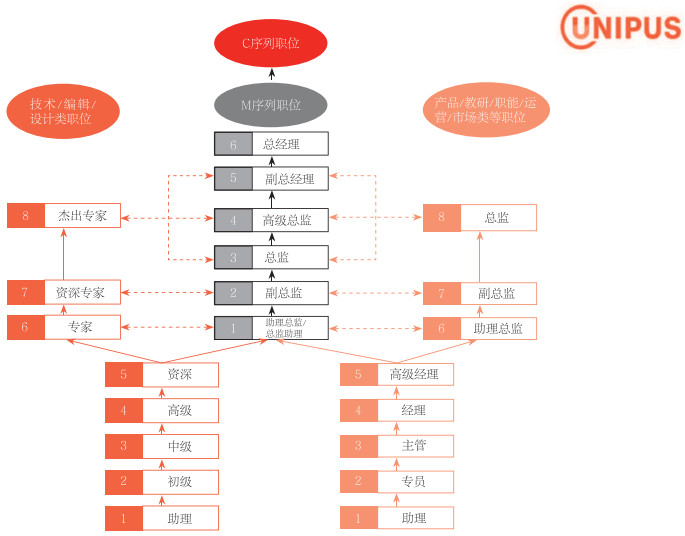
在数字技术与文化产业深度融合的背景下,出版业正经历从“纸与墨”到“数与智”的根本性变革,融合出版成为行业高质量发展的核心路径,而人才培养是推动这一转型的关键。当前出版行业人才培养面临能力需求升级、体系滞后、人才竞争加剧等多重困境。本文以外研在线为案例,系统梳理融合出版人才的能力要求与培养难点,提炼出“愿力、能力、阅历、潜力、心力”的“五力”人才模型,并构建岗位坐标体系、全域人才地图、培养成长体系、量化评价体系、激励回馈体系、文化滴灌工程六大核心体系,旨在为出版行业破解人才培养瓶颈、培育新质生产力提供可借鉴的实践路径。
Against the backdrop of deep integration between digital technology and the cultural industry, the publishing sector is undergoing a fundamental transformation from “paper and ink” to “digitalization and smart technologies.” Integrated publishing has emerged as the primary pathway for high-quality development in the industry, with talent cultivation being pivotal to driving this transformation. The publishing industry currently faces multiple challenges in talent development, including rapidly evolving competency demands, outdated training systems, and intense competition for skilled professionals. This paper adopts a case-based research approach, examining Beijing Waiyan Online Digital Technology Co., Ltd. (UNIPUS), a wholly-owned subsidiary of the Foreign Language Teaching and Research Press (FLTRP), to investigate how talent strategies can effectively support digital transformation in publishing. Based on Unipus’s decade-long practical experience, this paper systematically analyzes the competency requirements and training challenges for integrated publishing professionals. The research identifies and elaborates on the “Five-LI” talent model, comprising “YuanLi” (willpower and intrinsic motivation), “NengLi” (capabilities and multidisciplinary expertise), “YueLi” (practical experience and industry insight), “QianLi” (potential for growth and adaptation), and “XinLi” (resilience and mental strength). This model provides a comprehensive framework defining the core attributes necessary for success in the evolving publishing landscape. Based on this model, the study further establishes six core systems and details their practical application. The Position Coordinate System clarifies job values and development pathways through precise positioning, grading, and channel design, ensuring alignment between individual roles and organizational strategy. The All-round Talent Map visualizes talent capabilities and identifies gaps through OKR-based performance management and systematic talent review, enabling data-driven decision-making. The Training and Growth System encompasses the entire employee lifecycle, from structured onboarding programs including “one-on-one” mentorship to leadership development initiatives such as the “M0 Management Reserve” program, fostering continuous learning and capability building. The Quantitative Evaluation Mechanism integrates performance outcomes, capability assessments, and values-based behavior metrics, providing a comprehensive and objective basis for talent appraisal. The Incentive and Feedback System connects material rewards, spiritual recognition, and career development opportunities, establishing a motivating environment that retains and engages top talent. The Cultural Nurturing Program converts abstract corporate values into tangible behaviors through employee co-creation and high-frequency cultural immersion, fostering a supportive and adaptive organizational culture. These systems collectively form a robust, dynamic, and culturally-grounded talent development framework that is strategically aligned, role-based, data-supported, and scalable. This paper highlights how UNIPUS’s practices have addressed internal talent development challenges while contributing to building new productive forces capable of driving innovation and growth. This paper provides valuable insights and actionable recommendations for the publishing industry, particularly for organizations navigating digital transformation and cultivating a new generation of integrated publishing professionals. The findings indicate that a systematic and holistic approach to talent management—combining clear positioning, continuous assessment, targeted development, and cultural embedding—can effectively overcome existing barriers and support sustainable industry development. The case of UNIPUS provides a replicable model for other enterprises seeking to enhance their talent systems and achieve high-quality growth in the era of integrated publishing.
商其坤. 融合出版人才培养体系的构建与实践——以外研在线为例[J]. 科技与出版, 2025, 44(9): 38-46. SHANG Qikun. Construction and Practice of Integrated Publishing Talent Training System: A Case Study of UNIPUS. Science-Technology & Publication, 2025, 44(9): 38-46.
http://kjycb.tsinghuajournals.com/CN/ 或 http://kjycb.tsinghuajournals.com/CN/Y2025/V44/I9/38
Cited