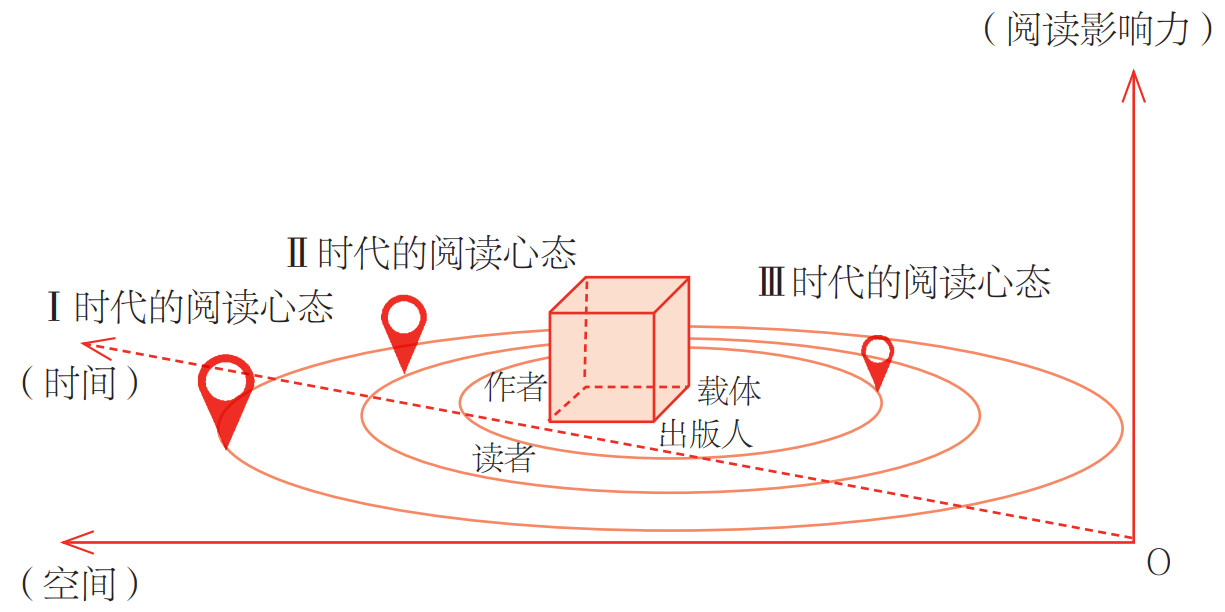
涌现论强调系统由简入繁、整体大于部分之和,为解读全民阅读这一社会复杂系统提供了方法论。全民阅读事业历经长期积淀,始于新中国成立后阅读推广基础结构的搭建、主体机制的形成,以及全民阅读“神经网络”的发育。专业阅读推广力量和数字技术的出现,推动生成了基层的全民阅读微循环系统,让阅读推广更加精准高效。《全民阅读促进条例》的出台是全民阅读事业在多层级互动中的复杂涌现结果。建立“阅读理念的‘方糖’模型”,可以更好地理解如何进一步推动全民阅读微观层面的涌现,从而获得更大效能——深化全民阅读宣传推广机制;培育专业阅读推广人激活基层微循环;坚守对认知原创性和对美的追求,依托数字技术突破传统阅读边界。
Emergence theory holds that systems develop from simplicity to complexity and that the whole exceeds the sum of its parts, offering a core analytical framework for interpreting national reading as a complex social system. China's national reading campaign has been shaped by long-term historical accumulation. Since the founding of the People's Republic of China in 1949, the country has faced immense challenges, including severe shortages of publications, especially in finance, natural sciences, and children's literature; an underdeveloped distribution network unable to reach rural factories and remote areas; and high book prices juxtaposed with weak purchasing power among readers. Despite these constraints, the state gradually established a basic structure for coordinating reading promotion and a primary mechanism for organizational mobilization, involving publishing authorities, educational institutions, and mass organizations such as trade unions and the Women's Federation. The introduction of the Regulations on the Promotion of National Reading signifies the emergence of complex systemic emergence in China’s national reading campaign through multi-level interactions. The national reading system is divided into six levels, ranging from central coordination to individual readers. Actors across these levels interact vertically and horizontally, forming an intricate ecological system. The fourth level, which directly connects with individual readers—the ultimate target of reading promotion—serves as a critical link for policy implementation and bidirectional information flow. The implementation of the Regulations lays an institutional foundation for higher-level systemic emergence. Reading promoters fall into two major groups. The first consists of part-time reading promoters, who are usually practitioners in fields closely related to reading, such as teachers, librarians, writers, bookstore clerks, and journalism and publishing practitioners. The second comprises full-time reading promoters, who often start by donating books and supporting reading activities, gradually accumulating experience, and developing professional expertise in reading promotion. They can help grassroots organizations and institutions establish better microcirculation systems for national reading and ensure the implementation of reading policies and regulations. At the micro level, drawing on a "sugar cube" model of reading ideals—where reading intrinsic sweetness is dissolved in specific historical and social solutions—this study proposes three optimization strategies. First, the theoretical research should be deepened, reader surveys should be refined, and public understanding should be enhanced to accelerate the spread of reading culture. Second, professional reading promoters should be nurtured to activate grassroots microcirculation and the imbalance between hardware construction and software capacity should be addressed. Third, digital technology should be leveraged to transcend traditional reading boundaries while upholding the core values of cognitive originality and aesthetic pursuit. Although digital technologies have profoundly reshaped reading habits, creating both opportunities and chaos; the enduring sweetness of reading—the pursuit of original cognition and beauty—should guide the future of digital reading. Through these efforts, national reading can achieve deeper and broader social emergence, ultimately building a society characterized by universal participation in reading.
张文彦,张雯. 阅读的涌现:全民阅读效能的系统建构与反思[J]. 科技与出版, 2026, 45(4): 25-32. ZHANG Wenyan,ZHANG Wen. Emergence of Reading: Systematic Construction and Reflection on the Effectiveness of National Reading. Science-Technology & Publication, 2026, 45(4): 25-32.
http://kjycb.tsinghuajournals.com/CN/ 或 http://kjycb.tsinghuajournals.com/CN/Y2026/V45/I4/25
Cited