Please wait a minute...
科技与出版  2026, Vol. 45 Issue (5): 121-132    
学术探索
AIGC重塑网络文学IP:从线性写作到循环生成工作流研究
袁萱
北京印刷学院,102600,北京
From Linear Writing to Circular Generation: AIGC-Driven Narrative Workflow Transformation and the Rise of Narrative Management in Web Literature IP
YUAN Xuan
Beijing Institute of Graphic Communication, 102600, Beijing, China
全文: HTML    PDF(1920 KB)  
输出: BibTeX | EndNote (RIS)      
摘要: 

本文聚焦AIGC技术驱动下中国网络文学IP生产从“线性写作”向“循环生成”的范式转型。基于媒介融合理论与行动者网络理论,本文揭示了AIGC作为关键行动元如何重塑叙事生产的权力边界。通过构建“触发—生成—筛选—反馈”的动态叙事工作流模型,并运用演进谱系案例分析法,本文解构了数据驱动、AI生成驱动及数据与AI融合驱动三个阶段的平台实践,系统解析了技术逻辑、产业逻辑与权力逻辑的三维耦合演进过程。这一转型推动出版业从静态的“作品管理”迈向动态的“叙事管理”新机制:管理对象由封闭文本转向开放的叙事活系统,流程由线性流水线转向人机协同网络,目标由交付产品转向运维生态与创造体验。在此机制下,传统编辑必须从“知识守门人”的角色历史性地重构为具备架构力、提示力、数据力与整合力的“叙事工程师”。本文不仅为理解算法时代的叙事权力重组提供了中观理论框架,也为出版机构在AIGC时代的流程再造与人才培养指明了系统性转型路径。

关键词 AIGC网络文学循环生成叙事管理编辑角色转型    
Abstract

This study examines the paradigm shift in Chinese web literature intellectual property (IP) production, driven by rapid advances in Artificial Intelligence Generated Content (AIGC). Grounded in Henry Jenkins' "Convergence Culture" theory and Actor-Network Theory (ANT), the research conceptualizes AIGC not merely as a passive tool, but as a pivotal "actant" that propels web literature from a "human-interaction" model (Convergence 2.0) to a "human-machine collaborative system" (Convergence 3.0). This study asks: How does AIGC reshape the narrative production and power structures of web literature IPs? Using evolutionary case analysis, this study traces the transformation across three stages by analyzing the practices of leading platforms. It constructs and validates a dynamic narrative workflow model—trigger–generation–screening–feedback— Stage 1, represented by Tomato Novel, illustrates a data-driven workflow where behavioral metrics construct a "database authority, " gradually transforming authors into "data product managers" through algorithmic governance. Stage 2, exemplified by Yuewen's "Miaobi" model, introduces AI-generated creation, enabling generative exploration while risking the dilution of artistic individuality and the erosion of textual “aura” through algorithmic standardization. Stage 3, conceptualized through Zhihu Salted Fish, envisions a fused data-AI intelligent workflow characterized by a "diagnosis-generation closed loop, " where extreme algorithmic centralization paradoxically coexists with maximal democratization of user participation. The core findings reveal that this evolutionary shift establishes a radically new mechanism of "narrative management, " marking a fundamental departure from traditional static "work management." This transition manifests across three dimensions: the management object shifts from a closed text to an open, expandable "narrative system" (comprising narrative databases, generation engines, and multimodal interfaces); the management process transforms from a linear assembly line to a dynamic, real-time collaborative network; and the management goal migrates from delivering a finite product to sustainably operating an IP narrative ecology and scaling personalized experiences. Consequently, this technological and structural upheaval necessitates a historic reconstruction of human labor within the publishing industry. The traditional web novel editor must transition from a passive "gatekeeper of knowledge" into a more proactive "narrative engineer." To operate effectively in this AIGC-mediated environment, narrative engineers must master four core competencies: "architectural competency" to design self-consistent, expansive narrative universes; "prompting competency" to translate abstract aesthetic demands into precise machine-executable instructions; "data competency" to interpret algorithmic metrics and optimize narrative iterations; and "integration competency" to seamlessly stitch AI-generated fragments with human creativity, ensuring final artistic coherence. Ultimately, this study contributes a meso-theoretical framework bridging convergence theory and digital publishing practice. It offers strategic pathways for publishing institutions—shifting from product delivery to ecological operation, restructuring organizational workflows, and cultivating interdisciplinary "narrative management" talents—while highlighting future research directions in narrative ethics and cognitive mechanisms of human-machine co-creation.

Key wordsAIGC-driven    web literature IP    circular generation    narrative management    editorial role transformation
出版日期: 2026-06-15
基金资助:北京印刷学院学科建设项目“面向出版融合的AIGC产学研平台建设与拔尖创新人才培养”(20190326003);北京社科基金青年项目(15WYC062)

引用本文:

袁萱. AIGC重塑网络文学IP:从线性写作到循环生成工作流研究[J]. 科技与出版, 2026, 45(5): 121-132.
YUAN Xuan. From Linear Writing to Circular Generation: AIGC-Driven Narrative Workflow Transformation and the Rise of Narrative Management in Web Literature IP. Science-Technology & Publication, 2026, 45(5): 121-132.

链接本文:

http://kjycb.tsinghuajournals.com/CN/      或      http://kjycb.tsinghuajournals.com/CN/Y2026/V45/I5/121

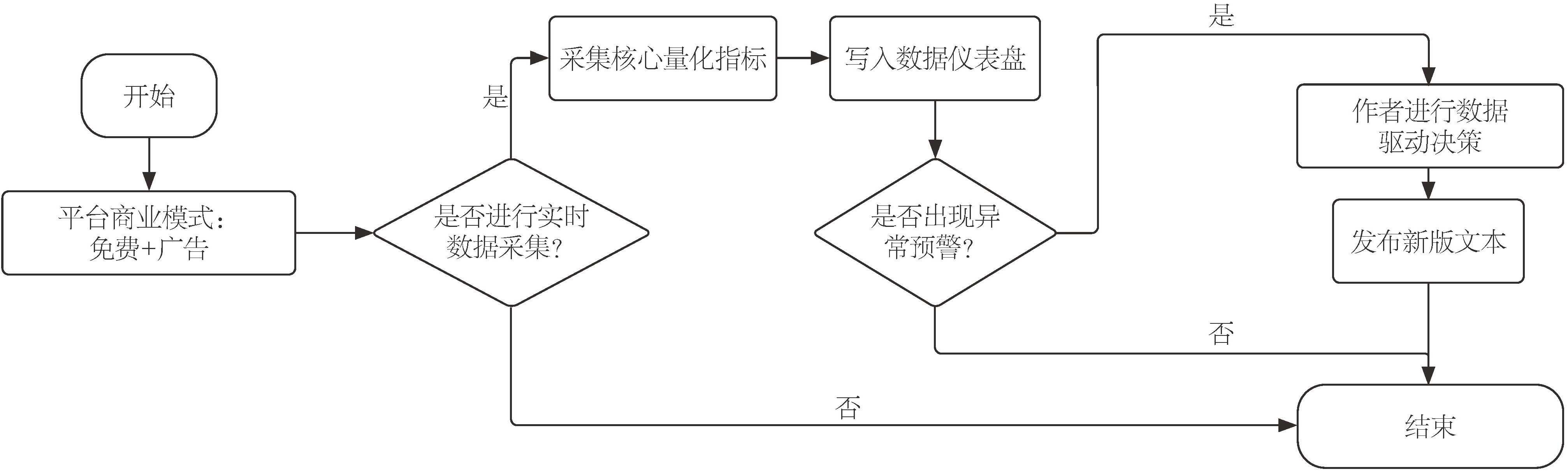
图 1  阶段一:数据驱动的动态叙事工作流
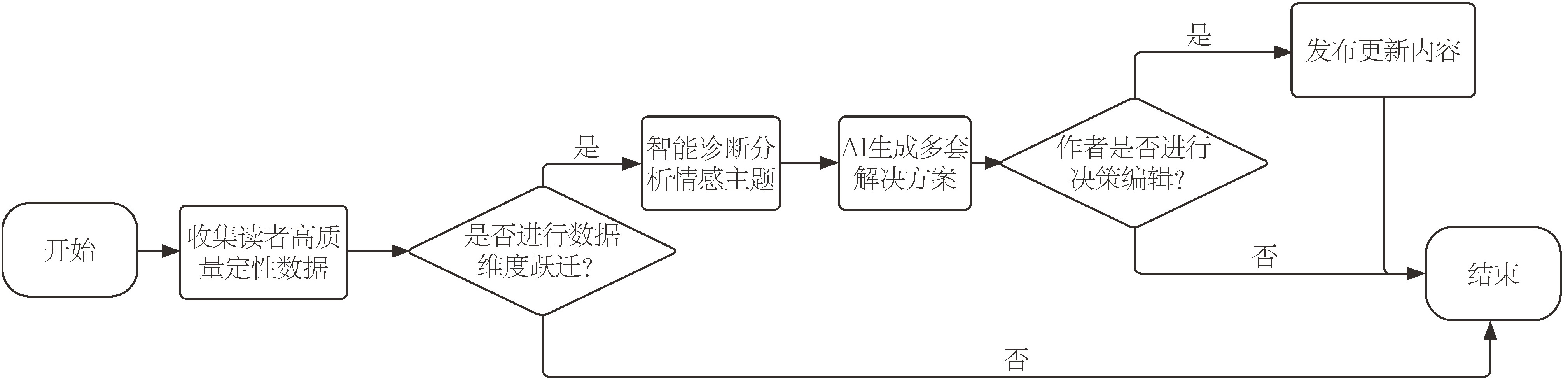
图 2  阶段二:AI生成驱动的动态叙事工作流
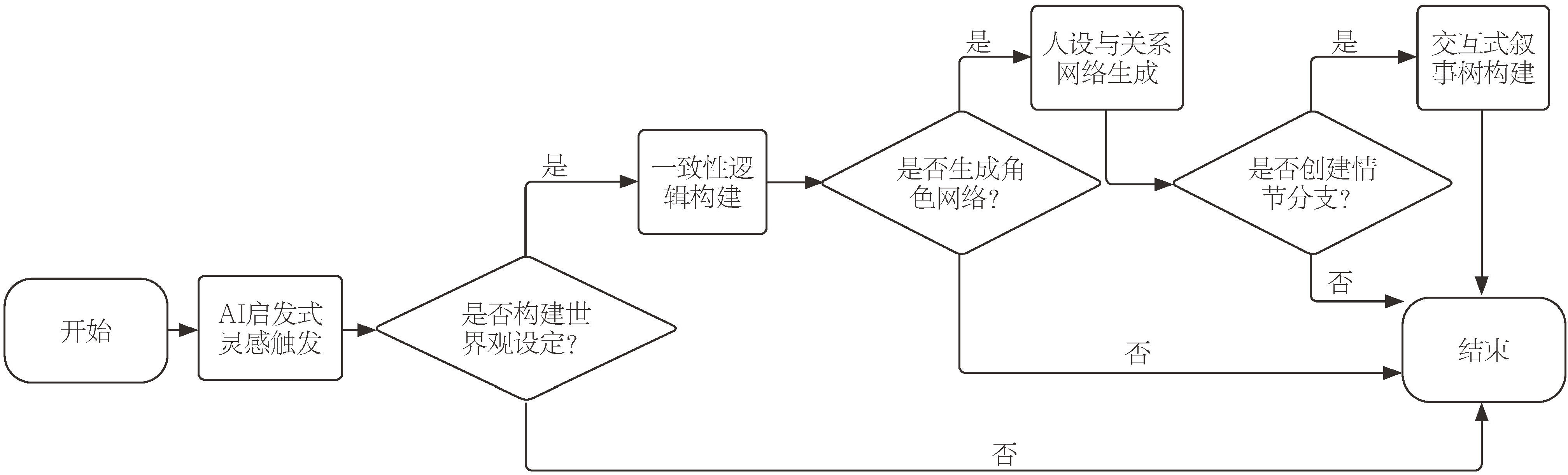
图 3  阶段三:数据与AI融合驱动的动态叙事工作流
表 1  动态叙事工作流三维逻辑演进谱系
图 4  从“作品管理”到“叙事管理”
图 5  流程演进:从“线性流水线”到“动态协同网络”
1 Jenkins H, Plasencia A. Convergence culture: Where old and new media collide[M]//Is the Universe a Hologram?. Cambridge, MA, USA: The MIT Press, 2017.
2 Latour B . Reassembling the social[M]. New York: Oxford University Press, 2005: 59- 75.
3 江玉娇, 邓香莲. 网络文学出版平台的内容生产集聚效应及其内在机制研究: 以阅文集团为例[J]. 出版广角, 2023 (15): 53- 59.
4 刘锦宏, 赵雨婷. 泛娱乐生态中网络文学全产业链生产和运营模式解析: 以阅文集团旗下猫腻作品《择天记》为例[J]. 出版科学, 2017, 25 (1): 28- 33.
5 邵燕君. 基于"书友经济"的大规模文学生产: 中国网络文学的独特属性及其生产机制的建立[J]. 文艺争鸣, 2025 (7): 19- 29.
6 Boden M A . AI[M]. Oxford: Oxford University Press, 2016: 1- 2.
7 Crawford K . The Atlas of AI: Power, Politics, and the Planetary Costs of Artificial Intelligence[M]. New Haven: Yale University Press, 2021: 211.
8 Duffy B E , Poell T , Nieborg D B . Platform practices in the cultural industries: Creativity, labor, and citizenship[J]. Social Media+Society, 2019, 5 (4): 2056305119879672.
doi: 10.1177/2056305119879672
9 Woodcock J . The algorithmic panopticon at Deliveroo: Measurement, precarity, and the illusion of control[J]. Journal of Digital Labor Studies, 2020 (3): 112- 135.
10 席志武, 李辉. 平台化社会重建公共价值的可能与可为: 兼评《平台社会: 连接世界中的公共价值》[J]. 国际新闻界, 2021, 43 (6): 165- 176.
11 Yeung K . Algorithmic regulation: A critical interrogation[J]. Regulation & Governance, 2018, 12 (4): 505- 523.
12 Lin Z, Ehsan U, Agarwal R, et al. Beyond prompts: Exploring the design space of mixed-initiative co-creativity systems[PP/OL]. V1. arXiv(2023-05-03)[2025-11-21]. https://doi.org/10.48550/arXiv.2305.07465.
13 雷宁. AI人机协同写作: "像人的机器"和"机器化的人"[J]. 当代文坛, 2024 (6): 81- 88.
14 沈梅.升级创作扶持, 阅文发布行业首个网文大模型“阅文妙笔”[EB/OL].(2023-07-19)[2025-11-28]. http://sh.xinhuanet.com/20230719/434366aa8bf945538f7d91b01d29c169/c.html.
15 刘书亮. 数字复制时代的艺术作品: 重返瓦尔特·本雅明的"灵韵"概念[J]. 文艺理论与批评, 2025 (6): 139- 149.
16 邓冰冰. 以短见长: 知乎短篇网文的内外生产机制研究[J]. 中国创意写作研究, 2025 (1): 155- 168.
[1] 刘玲武,宋例谣,胡海,孙桥. 我国网络文学产业政策:脉络演进、工具选择与路径优化——基于国家层面政策文本的内容分析[J]. 科技与出版, 2026, 45(5): 16-27.
[2] 丁靖佳,宋宁远. 生成式出版:内涵、外延与框架[J]. 科技与出版, 2026, 45(1): 112-120.
[3] 本刊编辑部. 从工具到伙伴:AI如何赋能期刊未来发展[J]. 科技与出版, 2025, 44(9): 47-51.
[4] 本刊编辑部. AI驱动下的学术创作范式重构——基于七位跨学科专家观点类编与深度述要[J]. 科技与出版, 2025, 44(8): 5-15.
[5] 吕晓峰,孟祥晴,詹洪春. 人工智能时代出版业知识服务的伦理挑战、价值重构与实践进路[J]. 科技与出版, 2025, 44(8): 47-55.
[6] 董慧娟,余非. AIGC可版权的必要非充分要件:“有限控制论”的证成与适用展开*[J]. 科技与出版, 2025, 44(8): 113-127.
[7] 陈强,张钢花. 适老化数字出版的现实与未来:基于数字可供性视角[J]. 科技与出版, 2025, 44(6): 73-79.
[8] 孙保营,董琎. AIGC融入学术出版:变革、问题与对策[J]. 科技与出版, 2025, 44(4): 31-36.
[9] 马文欢,王梓薇,陈磊,王纪坤,曹凯. AIGC赋能视阈下数字出版产业链韧性的评价模型研究[J]. 科技与出版, 2025, 44(12): 36-46.
[10] 邱蕾,郑汀兰. AIGC背景下学术期刊出版伦理建设的思考[J]. 科技与出版, 2025, 44(12): 85-91.
[11] 马文欢,王梓薇,黄超兰. AIGC影响数字出版产业链韧性机制模型研究*[J]. 科技与出版, 2024, 43(9): 54-62.
[12] 刘丁勤. 论AIGC创作中的因果可预见性*[J]. 科技与出版, 2024, 43(7): 36-47.
[13] 王霞霞. 文化大模型建构的需求、模式与哲思*[J]. 科技与出版, 2024, 43(6): 60-67.
[14] 李雅筝,刘洪权. AIGC技术赋能高校编辑出版人才培养:转型机遇、能力重构与实践策略*[J]. 科技与出版, 2024, 43(2): 52-57.
[15] 赵凯. 版权、伦理与价值观审核[J]. 科技与出版, 2023, 42(8): 62-68.