Please wait a minute...
科技与出版  2026, Vol. 45 Issue (5): 16-27    
产业观察
我国网络文学产业政策:脉络演进、工具选择与路径优化——基于国家层面政策文本的内容分析
刘玲武1,2,宋例谣1,胡海1,孙桥1,2,*
1. 中南大学人文学院,410012,长沙
2. 中南大学出版研究院,410012,长沙
Governing China's Online Literature Industry: Policy Evolution, Tool Selection, and Optimization Strategies—A Content Analysis of National Policy Texts (2006—2025)
LIU Lingwu1,2,SONG Liyao1,HU Hai1,SUN Qiao1,2,*
1. School of Humanities, Central South University, 410012, Changsha, China
2. Research Institute for Publishing, Central South University, 410012, Changsha, China
全文: HTML    PDF(1967 KB)  
输出: BibTeX | EndNote (RIS)      
摘要: 

本文以2006—2025年我国出台的234项网络文学相关政策文本为研究对象,构建“政策工具—政策目标—政策参与主体”三维政策分析框架,开展系统量化与内容分析。研究发现,我国网络文学产业政策历经萌芽期、发展期、完善期三个阶段;政策工具呈现“环境型为主、供给型与需求型为辅”的结构性失衡状态,子工具配置差异显著;政策目标高度偏向社会效益目标,经济效益维度支撑不足;政策参与主体以政府与企业为主,创作者、读者与研究者的参与程度偏低,协同治理格局尚未形成。基于此,本文从优化政策工具使用结构、均衡政策目标设置比例、协调产业主体参与程度三个方面提出优化建议,以期完善我国网络文学产业政策体系,推动网络文学产业高质量发展。

关键词 网络文学产业政策文本政策工具政策目标政策参与主体    
Abstract

This study analyzes 234 policy texts on online literature issued between 2006 and 2025 and constructs a three-dimensional policy analysis framework of "policy tools – policy goals – policy participants" to conduct systematic quantitative and content analysis. The findings reveal that industrial policies for online literature in China have evolved through three stages: the nascent stage, the development stage, and the consolidation stage; the policy instruments exhibit a structural imbalance—environmental-type tools predominate while supply-type and demand-type instruments remain supplementary—with significant variation in sub-tool deployment; policy goals show a pronounced bias toward social benefits, with inadequate support for economic objectives; policy participation remains primarily governmental and enterprise-driven, with limited engagement from creators, readers, and researchers, and a collaborative governance framework has yet to emerge. Based on these findings, three optimization directions are proposed. First, rebalance the policy tool mix. On the supply side: build enterprise capacity in editorial operations, content review, and platform governance; accelerate the research and application of intelligent review, copyright registration and traceability technologies; increase financial support for high-quality content creation and publication transformation projects of online literature. On the demand side: incorporate online literature into the national reading project framework; formulate differentiated support policies for dimensions such as copyright export; encourage systematic research on the overseas dissemination effects of online literature publishing practices. On the environmental side: strengthen the implementation and feedback mechanisms for financial support policies; introduce targeted fiscal incentives for content creation; and develop clearer regulatory standards for online literature publishing. Second, rebalance policy goal priorities. Invigorate the industry value chain by prioritizing works with publication potential and providing technical and financial support across publication stages; encourage enterprises to promote cross-format adaptation of online literary works—including audiobooks and derivative products—and expand into adjacent cultural sectors. Balance industry scale expansion with cultural export objectives: promote constructive government-enterprise dialogue and build sustainable overseas dissemination systems; drawing on traditional Chinese culture and contemporary themes, develop high-quality works with both Chinese cultural identity and international resonance. Deepen the integration of online literature and the national reading project, maintaining the core orientation of "content is king." Finally, coordinate multi-stakeholder participation. Consolidate the "government-led, enterprise-coordinated" governance pattern; enterprises should fulfill their primary responsibilities and strengthen practitioner capacity building. Address the core concerns of creators regarding copyright ownership and revenue distribution; establish regular feedback mechanisms incorporating reader input into content planning; expand researchers' channels for academic participation and strengthen their advisory role. This study offers actionable pathways for optimizing the industrial policy framework for online literature and advancing its high-quality development.

Key wordsonline literature industry    policy text    policy tools    policy objective    policy participants
出版日期: 2026-06-15
基金资助:2025年度出版学科专业产学研协同项目“智媒时代出版融合政策评价体系研究”(KTYJ20250006)
通讯作者: 孙桥   
Corresponding author: Qiao SUN   

引用本文:

刘玲武,宋例谣,胡海,孙桥. 我国网络文学产业政策:脉络演进、工具选择与路径优化——基于国家层面政策文本的内容分析[J]. 科技与出版, 2026, 45(5): 16-27.
LIU Lingwu,SONG Liyao,HU Hai,SUN Qiao. Governing China's Online Literature Industry: Policy Evolution, Tool Selection, and Optimization Strategies—A Content Analysis of National Policy Texts (2006—2025). Science-Technology & Publication, 2026, 45(5): 16-27.

链接本文:

http://kjycb.tsinghuajournals.com/CN/      或      http://kjycb.tsinghuajournals.com/CN/Y2026/V45/I5/16

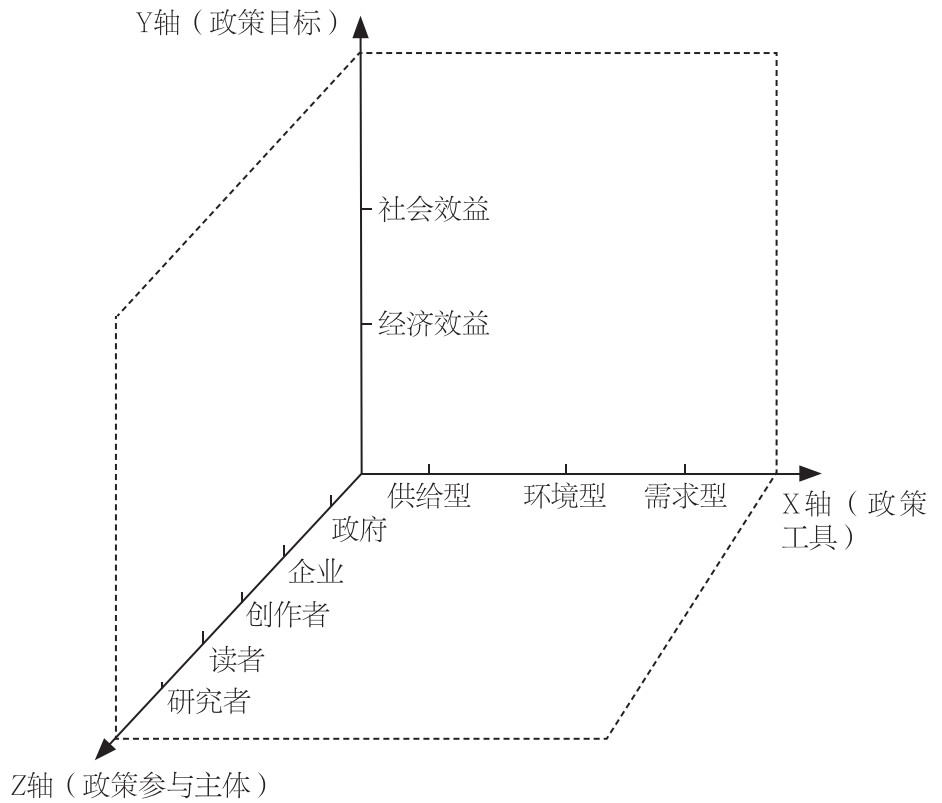
图 1  我国网络文学产业政策文本三维分析框架
表 1  X维度政策工具类型、子工具及含义
表 2  Y维度政策目标及含义
表 3  我国网络文学产业政策编码归类示例
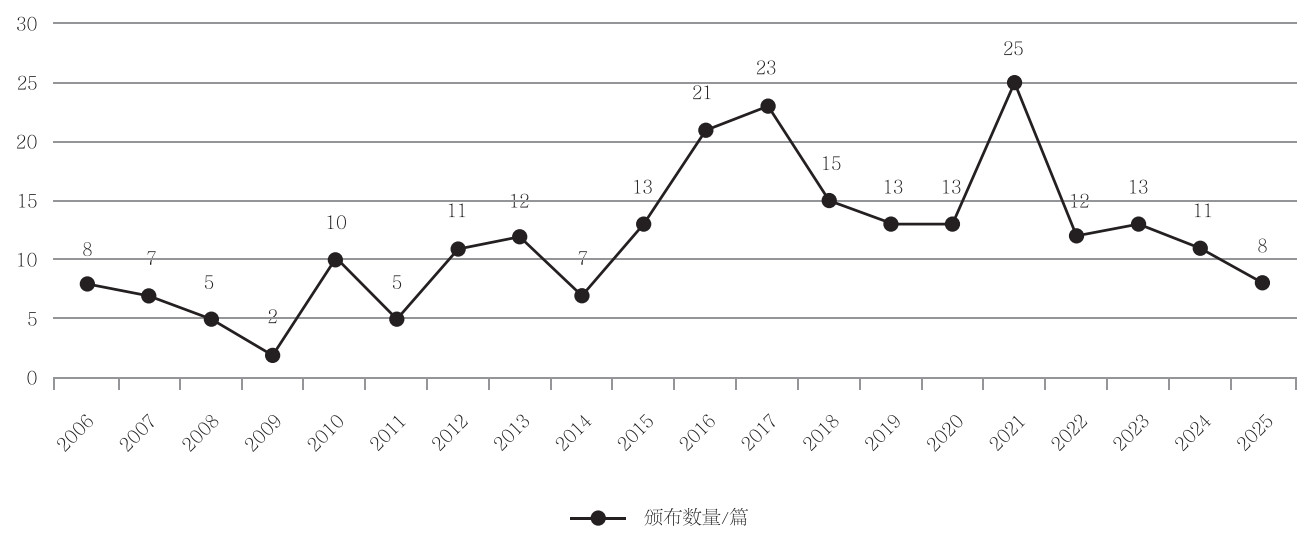
图 2  我国网络文学产业政策颁布时间演进脉络
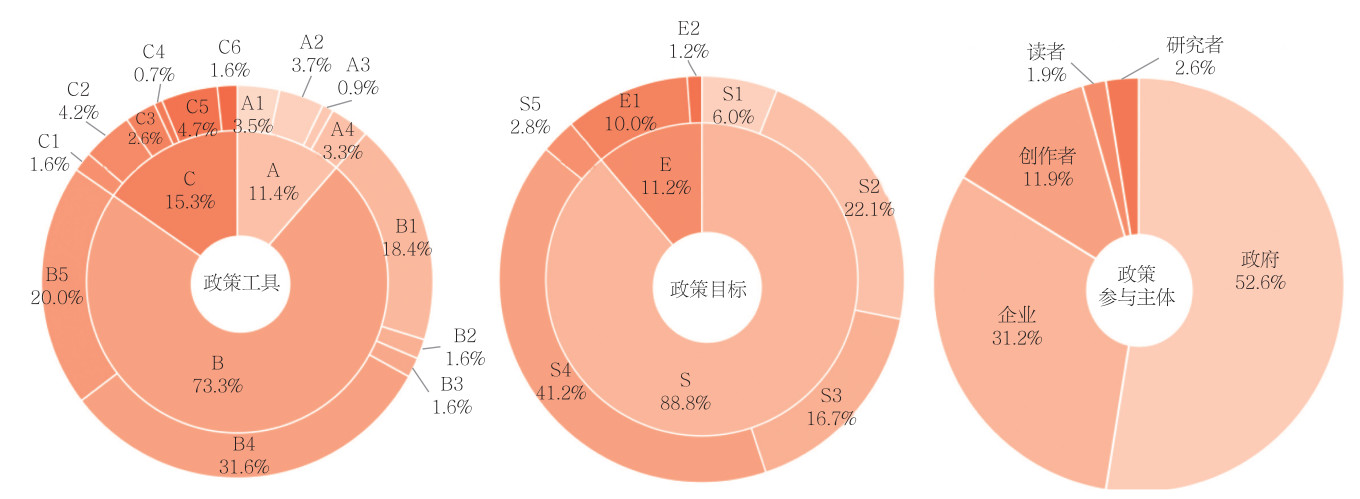
图 3  政策工具、政策目标、政策参与主体频数统计
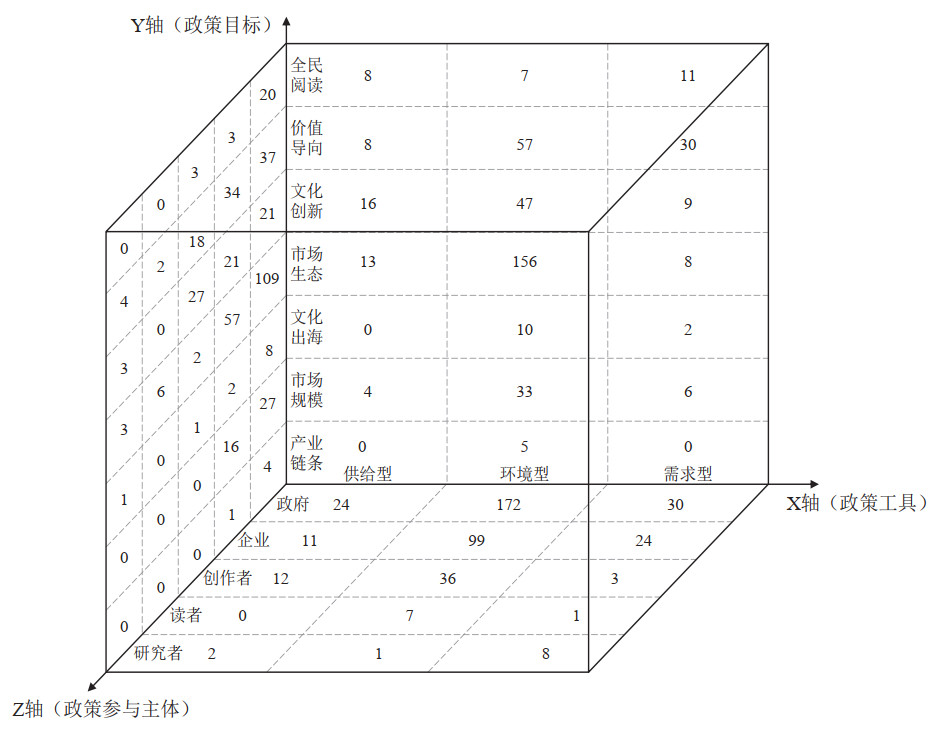
图 4  政策工具—政策目标—政策参与主体三维分析图
1 欧阳友权. 网络文学概论[M]. 北京: 北京大学出版社, 2008: 4.
2 林泽瑞. 文学内容、出版业态与产业价值:网络文学研究评述[J]. 出版与印刷, 2022 (2): 21- 31.
3 贺予飞. 商业生态系统理论与网络文学产业的关联逻辑[J]. 福建论坛(人文社会科学版), 2020, 12 (12): 57- 65.
4 中国社会科学院文学研究所《中国网络文学发展研究报告》课题组. 2025中国网络文学发展研究报告[EB/OL]. [2026-04-27](2026-04-20). https://www.cssn.cn/skgz/bwyc/202604/t20260420_5981165.shtml.
5 黄先蓉, 陈文锦. 试论出版政策法规对网络文学高质量发展的引导[J]. 中国编辑, 2022 (7): 56- 61.
6 张浩翔, 禹建湘. 网络文学IP跨媒介产业的数字化出版路径[J]. 出版广角, 2024 (13): 62- 68.
7 范俊钊. 我国网络文学政策发展研究:以2010—2020年为例[J]. 科技传播, 2021, 13 (24): 144- 149.
8 黄先蓉, 贺敏. 政策工具视角下我国网络文学治理政策文本分析[J]. 出版发行研究, 2021 (5): 43- 49.
9 曾维新. 中国网络文化产业政府补助研究[D]. 武汉:中南财经政法大学,2019.
10 张景淇. 中国网络文化政策变迁研究(1994—2022)[D]. 北京:中共中央党校(国家行政学院),2024.
11 赵礼寿, 朱赟, 马丽娜. 区域网络文学产业发展研究:以杭州为例[J]. 新媒体研究, 2022, 8 (4): 73- 77.
12 毛文思. 我国网络文学区域化、差异化发展路径探析:以北京、上海、浙江三地网络文学相关政策为出发点[J]. 科技与出版, 2019 (9): 130- 135.
13 刘玲武, 胡海, 刘菡. 我国出版融合政策体系研究:基于102项政策文本的“主体—路径—工具”三维框架分析[J]. 科技与出版, 2025 (7): 68- 80.
14 Howlett M . Policy instruments,policy styles,and policy implementation:National approaches to theories of instrument choice[J]. Policy Studies Journal, 1991, 19 (2): 1- 21.
doi: 10.1111/j.1541-0072.1991.tb01878.x
15 Rothwell R , Zegveld W . Reindustrialization and Technology[M]. London: Longman Group Limited, 1985: 83- 104.
16 马续补, 吕肖娟, 秦春秀, 等. 政策工具视角下我国公共信息资源开放政策量化分析[J]. 情报理论与实践, 2019, 42 (5): 46- 50.
17 卿倩, 李桂华. 政策工具视野下我国省级全民阅读政策研究[J]. 中国图书馆学报, 2020, 46 (3): 88- 101.
18 代沁泉, 熊回香, 杜瑾, 等. 我国省级非物质文化遗产保护政策研究及启示:基于“工具—主体—目标”三维框架的探析[J]. 情报科学, 2023, 41 (2): 1- 9.
19 孙晓翠, 杨名柳, 孙瑞淇. 我国出版政策研究:历时演变、体系结构、逻辑进路:基于1979—2023年出版政策文本分析[J]. 出版发行研究, 2025 (4): 30- 38.
20 王国华, 李文娟. 政策工具视角下我国网络媒体政策分析:基于2000—2018年的国家政策文本[J]. 情报杂志, 2019, 38 (9): 90- 98.
21 沈舒悦, 曾粤亮. 我国公共数字文化服务政策文本量化研究[J]. 图书馆论坛, 2023, 43 (11): 50- 58.
22 张窈, 储鹏. 我国数字出版政策工具选择体系及其优化策略研究[J]. 科技与出版, 2021 (2): 31- 42.
doi: 10.16510/j.cnki.kjycb.2021.02.001
23 欧阳友权. 中国网络文学:扬帆时代,逐梦前行[N].文艺报,2024-10-21(2).
24 邓祯. 网络文学的海外传播与中国文化形象构建[J]. 中国编辑, 2019 (3): 8- 13.
25 李贞强. 做新时代党的出版政策忠实践行者[J]. 中国出版, 2025 (1): 11- 17.
26 贺子岳, 梅瑶. 泛娱乐背景下网络文学全产业链研究[J]. 出版广角, 2018 (4): 40- 43.
27 周志雄. 中国网络文学出海的三个支点[J]. 南京师大学报(社会科学版), 2025 (2): 160- 168.
28 于准. 全民阅读背景下的移动网络文学内容建设[J]. 中国编辑, 2018 (6): 26- 30.
29 曾一果, 杜紫薇. 数字媒介时代网络文学IP改编的再思考[J]. 中国编辑, 2021 (6): 75- 78.
[1] 李慧,苏莉娜,周会霞,黎霜霜,王梦婷,谢邦彦,刘广宇. 中国科技期刊使用人工智能政策的研究及对策建议——基于40份科技核心期刊政策文本的Nvivo分析[J]. 科技与出版, 2026, 45(2): 96-107.
[2] 刘玲武,胡海,刘菡. 我国出版融合政策体系研究——基于102项政策文本的“主体—路径—工具”三维框架分析[J]. 科技与出版, 2025, 44(7): 68-80.
[3] 崔丽媛,朱亚鑫,曲波. 政策工具视角下法国钻石开放获取政策文本分析及其启示[J]. 科技与出版, 2025, 44(12): 75-84.
[4] 刘玲武,胡海,张天奕. 基于“工具—参与主体—效力”三维框架的我国动漫产业政策评价研究*[J]. 科技与出版, 2024, 43(11): 63-79.
[5] 何珊. 政策工具视角下我国出版公共服务政策优化对策分析[J]. 科技与出版, 2023, 42(2): 151-160.
[6] 张恰. 我国编辑专业化政策建设的回顾与展望[J]. 科技与出版, 2022, 41(7): 141-147.
[7] 郝东杰. 后疫情时代出版产业发展的财税政策工具供给研究[J]. 科技与出版, 2022, 41(6): 48-53.
[8] 张窈, 储鹏. 我国数字出版政策工具选择体系及其优化策略研究[J]. 科技与出版, 2021, 40(2): 31-42.
[9] 高虹. 2000—2019年政府支持期刊发展的政策文本量化研究*[J]. 科技与出版, 2020, 39(10): 128-135.