Please wait a minute...
科技与出版  2026, Vol. 45 Issue (6): 58-67    
产业观察
文化折扣理论视角下传统文化图书国际传播实践与进路——基于“经典中国国际出版工程”项目334本图书的实证分析
彭肇一1,赵一菲2,林洛如1
1. 武汉体育学院新闻传播学院,430079,武汉
2. 西安交通大学新闻与新媒体学院,710049,西安
International Dissemination of Traditional Chinese Cultural Books through the Lens of Cultural Discount Theory: Current Practices and Future Pathways
PENG Zhaoyi1,ZHAO Yifei2,LIN Luoru1
1. School of Journalism and Communication, Wuhan Sports University, 430079, Wuhan, China
2. School of Journalism and New Media, Xi'an Jiaotong University, 710049, Xi'an, China
全文: HTML    PDF(1850 KB)  
输出: BibTeX | EndNote (RIS)      
摘要: 

随着中华文化“走出去”战略的深入推进,传统文化图书国际传播已成为构建国家文化软实力的重要途径。本文依托文化折扣理论,以2015—2025年“经典中国国际出版工程”项目334本相关图书作为研究样本,采用量化分析与质性解读相结合的方法,对传统文化图书国际传播的内容供给、演进趋势、目标市场等方面展开系统性梳理,同时指出当前出版实践中面临的结构性挑战。基于此,提出提升传统文化图书国际传播效能的优化路径。在内容转型上,推动图书选题从宏大阐释向生活共鸣转型;在市场重塑上,构建梯次分明与在地融合的市场格局;在受众触达上,重视海外读者的真实反馈与互动体验,激活社交阅读生态。

关键词 传统文化图书国际传播经典中国国际出版工程    
Abstract

With the continued advancement of China's strategy to promote fine traditional culture abroad, the international dissemination of books on traditional Chinese culture has become an important pathway for enhancing the nation's cultural soft power and shaping China's international image. This study uses books funded by the Classic China International Publishing Project as research samples. Employing a combination of quantitative statistics and qualitative analysis, it systematically examines characteristics of thematic distribution, diachronic evolution, target markets, and international reception. To move beyond descriptive statistical analysis, this paper introduces the cultural discount theory as an entry point for measuring the difficulty of cross-cultural communication across various types of books. The findings reveal that current international communication practices of traditional cultural books exhibit a content structure characterized by "high-context content dominance supplemented by low-context content." The focus primarily lies on historical and institutional civilization, literary arts and aesthetic culture, as well as philosophical thought and classical texts, with the overall content oriented toward specialized reading. In terms of historical evolution, publishing houses have made dynamic adjustments by reducing cultural discounts, shifting the emphasis of international dissemination from classical interpretation to life aesthetics and intangible cultural heritage and folk customs. Regarding market distribution, English and other major Western languages dominate; the Japanese and Korean markets are relatively mature, while markets for other less common languages remain fragmented. Furthermore, the international dissemination of traditional cultural books currently faces challenges, leading to a certain degree of loss in cultural value during circulation. Firstly, the concentration effect of "high-context" content in books is pronounced, with philosophical and historical institution-related publications accounting for a significant proportion, which confines the audience to specialized circles, making it difficult to reach the general public. Content on universally applicable aesthetics of life remains relatively scarce. Secondly, the dissemination efforts are predominantly concentrated in English-speaking regions, and over-reliance on a single channel hinders entry into the mass market. Thirdly, most books have not yet genuinely integrated into overseas public knowledge service systems, and their penetration into the general reading market remains notably insufficient. In response, the international communication of Chinese traditional cultural books requires further enhancement in content supply, market strategy, and audience reach. In terms of content, publishing institutions should shift book topics from grand theoretical interpretations to those that resonate with daily life, incorporating more everyday elements and contemporary perspectives, while focusing on themes that transcend national boundaries and evoke universal empathy. Regarding market strategy, a well-structured and locally integrated dissemination ecosystem should be established with an open and inclusive joint editing mechanisms, cultivating local translation talent, and co-building distribution channels to integrate books into the local cultural context, thereby reducing comprehension barriers caused by cultural differences. For audience engagement, genuine feedback and interactive experiences from overseas readers must be prioritized, and social reading ecosystems should be cultivated and activated to extend the book lifecycle. Thus, we can truly transition from cultural export to mutual cultural appreciation, elevating Chinese stories into wealth for humanity.

Key wordsClassic China International Publishing Project    cultural discount    traditional Chinese cultural books    international dissemination    cultural soft power
出版日期: 2026-07-14
基金资助:湖北省教育厅哲学社会科学研究项目重点项目“楚文化IP的国际传播:湖北主流媒体的实践演进与发展路径研究”(25D071)

引用本文:

彭肇一,赵一菲,林洛如. 文化折扣理论视角下传统文化图书国际传播实践与进路——基于“经典中国国际出版工程”项目334本图书的实证分析[J]. 科技与出版, 2026, 45(6): 58-67.
PENG Zhaoyi,ZHAO Yifei,LIN Luoru. International Dissemination of Traditional Chinese Cultural Books through the Lens of Cultural Discount Theory: Current Practices and Future Pathways. Science-Technology & Publication, 2026, 45(6): 58-67.

链接本文:

http://kjycb.tsinghuajournals.com/CN/      或      http://kjycb.tsinghuajournals.com/CN/Y2026/V45/I6/58

表 1  图书主题类别划分
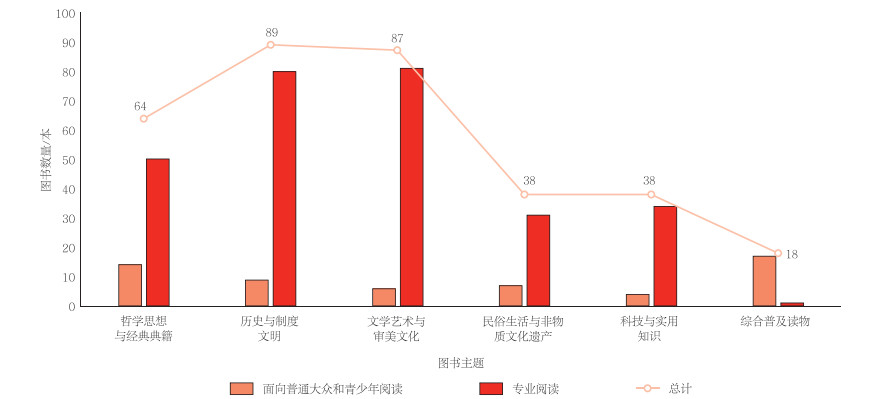
图 1  图书主题分布结构
表 2  各类主题图书占比
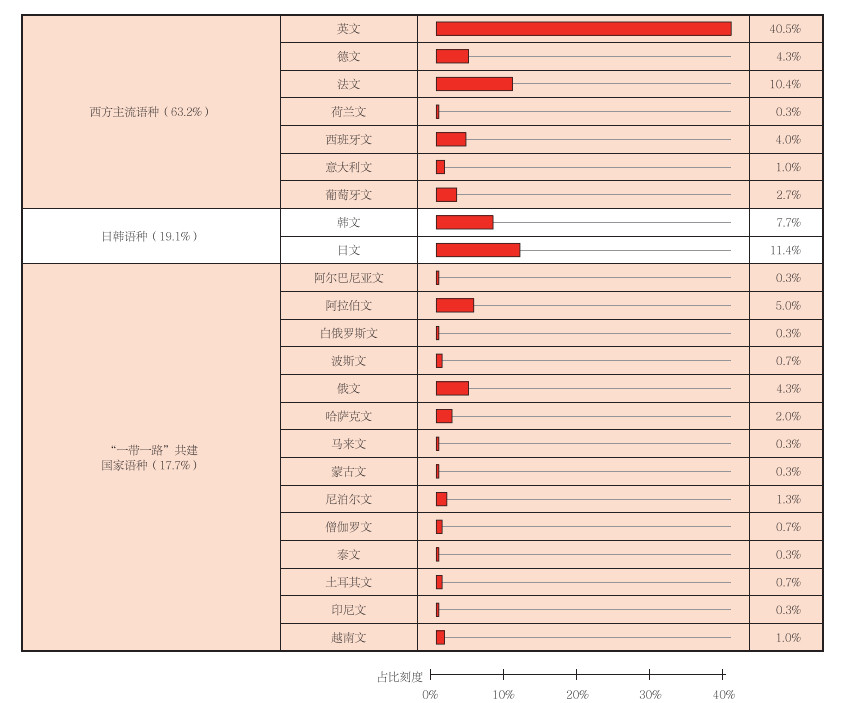
图 2  图书语种分布
1 秦洪武, 孔蕾, 徐欣. 《论语》英语多译本受纳状况多维数据分析[J]. 外语教学与研究, 2020 (4): 580-593, 641.
2 中共中央关于制定国民经济和社会发展第十五个五年规划的建议[EB/OL]. [2026-02-15]. http://www.xinhuanet.com/politics/zywj/20251029/dd2144257406454ebf54142ce922b26e/c.html.
3 习近平: 高举中国特色社会主义伟大旗帜?为全面建设社会主义现代化国家而团结奋斗—在中国共产党第二十次全国代表大会上的报告[EB/OL]. [2026-02-15]. http://www.news.cn/politics/cpc20/2022-10/25/c_1129079429.htm.
4 陈盼盼, 李明德. 精神谱系图书在中华优秀传统文化传播中的价值意蕴与发展路径: 以西迁精神系列图书为例[J]. 科技与出版, 2023 (10): 31- 39.
5 蒋琤琤, 韩建民. 面向国际市场的传统文化类主题出版传播路径新探[J]. 出版发行研究, 2024 (9): 5- 13.
6 闫利超, 李明德, 焦铭. 文明交流互鉴视域下中国出版"走出去"的思考[J]. 数字出版研究, 2026, 5 (3): 129- 136.
7 揭其涛. 矛盾显影、再书写与协商博弈: 全球知识秩序中中国出版文化主体性的生成机制[J]. 数字出版研究, 2026, 5 (3): 51- 60.
8 潘文年, 梁楚翰. "全球中国"视域下中国出版国际传播效能提升路径析论[J]. 现代出版, 2025 (3): 65- 73.
9 孙德宏, 臧永清. 既要"走出去", 更要"走进去": 中国文学出版国际传播对谈录[J]. 出版发行研究, 2024 (3): 5- 11.
10 李佳, 刘婧姝. 海外汉学家参与中国出版国际传播的合作机制、问题及建议[J]. 中国出版, 2024 (13): 13- 17.
11 张岩. 中国出版物国际传播渠道建设创新研究[J]. 中国出版, 2023 (8): 43- 47.
12 张纪臣. 数字时代中国文化国际话语权研究: 论我国出版产业国际传播能力建设[J]. 中国出版, 2020 (2): 18- 25.
13 黄国彬, 张家烁, 戴畋. 基于结构主题模型(STM)的中国图书对外出版主题研究: 以"经典中国国际出版工程"为例[J]. 出版广角, 2025 (7): 39- 49.
14 Hoskins C , Mirus R . Reasons for the US dominance of the international trade in television programmes[J]. Media, Culture & Society, 1988, 10 (4): 499- 515.
15 爱德华·霍尔. 超越文化[M]. 北京: 北京大学出版社, 2010: 92- 102.
16 中共中央办公厅、国务院办公厅印发关于实施中华优秀传统文化传承发展工程的意见[EB/OL][2026-02-06]. http://culture.people.com.cn/GB/n1/2017/0126/c87423-29049971.html.
17 潘文年, 梁楚翰. "全球中国"视域下中国出版国际传播效能提升路径析论[J]. 现代出版, 2025 (3): 65- 73.
18 吴瑛, 黄泓晟, 徐昊东. 中华优秀传统文化国际传播的"文化中介"模型构建: 基于《论语》走向世界的研究[J]. 新闻界, 2024 (6): 74- 88.
19 担负起新的文化使命?努力建设中华民族现代文明[N]. 人民日报, 2023-06-03(1).
[1] 刘忠波,兰诗雨. 日本漫画出版社国际传播策略研究——以四大漫画出版社为例[J]. 科技与出版, 2026, 45(2): 33-41.
[2] 赵超霖. 国民经济中长期规划类出版物的[J]. 科技与出版, 2025, 44(9): 117-124.
[3] 陶继华,叶红艳. 国际传播背景下学术期刊英文摘要推广的价值、方法与路径[J]. 科技与出版, 2025, 44(3): 124-132.
[4] 刘洁,包玲. 人文关怀视角下医学期刊英文包容性表达探析[J]. 科技与出版, 2025, 44(10): 151-160.
[5] 孙玮. 以国际出版为媒推动“中国式现代化”主题的海外传播[J]. 科技与出版, 2024, 43(4): 22-27.
[6] 孙玮,赵海云. 以国际出版为媒推动党的创新理论海外传播[J]. 科技与出版, 2024, 43(11): 42-49.
[7] 张窈,崔浩楠. 文化资本视域下法国海外阅读推广实践与启示[J]. 科技与出版, 2024, 43(10): 135-144.
[8] 王孜. 刍议中医药英文学术期刊的困境与突破*[J]. 科技与出版, 2023, 42(6): 33-40.
[9] 孙玮. 如何以学术话语稳步提升中国主题出版的国际传播力[J]. 科技与出版, 2023, 42(1): 60-65.
[10] 王壮,郭雪,卢明嘉,赵军武. 创新推动我国学术出版高质量“走出去”*[J]. 科技与出版, 2022, 41(8): 22-29.
[11] 孙云鹏. 新时代出版“走出去”工作的探索与思考[J]. 科技与出版, 2022, 41(2): 63-67.
[12] 张彩霞,杨永军. 新时代我国学术期刊国际传播能力提升路径研究*[J]. 科技与出版, 2022, 41(11): 86-90.
[13] 张搴,李芳. 专题数据库出版服务平台的影响力和传播力提升路径研究*[J]. 科技与出版, 2022, 41(11): 90-94.
[14] 戚德祥, 孙红. 中国出版国际传播能力建设研究*[J]. 科技与出版, 2021, 40(11): 6-12.
[15] 俞玮奇, 韩进拓. 国际中文教育图书的海外出版传播对策研究*[J]. 科技与出版, 2021, 40(11): 34-39.